In 1992 a small group of researchers met in Rome, under the banner of the World Health Organization, to draw a few lines on a chart. Bone density falls along a smooth curve as people age, with no natural cliff where healthy turns into sick, and the epidemiologists in the room needed cutoffs so their studies could be compared. They settled on a standard-deviation score, the T-score, and carved the continuum into bands. Below minus 2.5 they called osteoporosis. The wide gray strip just above it, from minus 1 to minus 2.5, they named osteopenia, Greek for poverty of bone. It was a bookkeeping category, drawn by people who count things for a living.
The man who chaired that meeting, Dr. John Kanis, has been plain about what they thought they were doing. “We never imagined,” he later said, “that people would come to think of osteopenia as a disease in itself to be treated.” Read the years that followed and you see why he keeps having to say it.
Three years after Rome, Merck brought Fosamax to market. Alendronate was a real drug for a real disease: in women with established osteoporosis it slowed bone loss and cut fractures. The problem, from a sales standpoint, was arithmetic. The pool of women below the osteoporosis line was finite. The pool sitting in the gray band the Rome committee had just drawn was enormous, and almost none of them knew they were in it, because in 1995 the machines that measured bone density lived in academic centers, not strip-mall clinics.
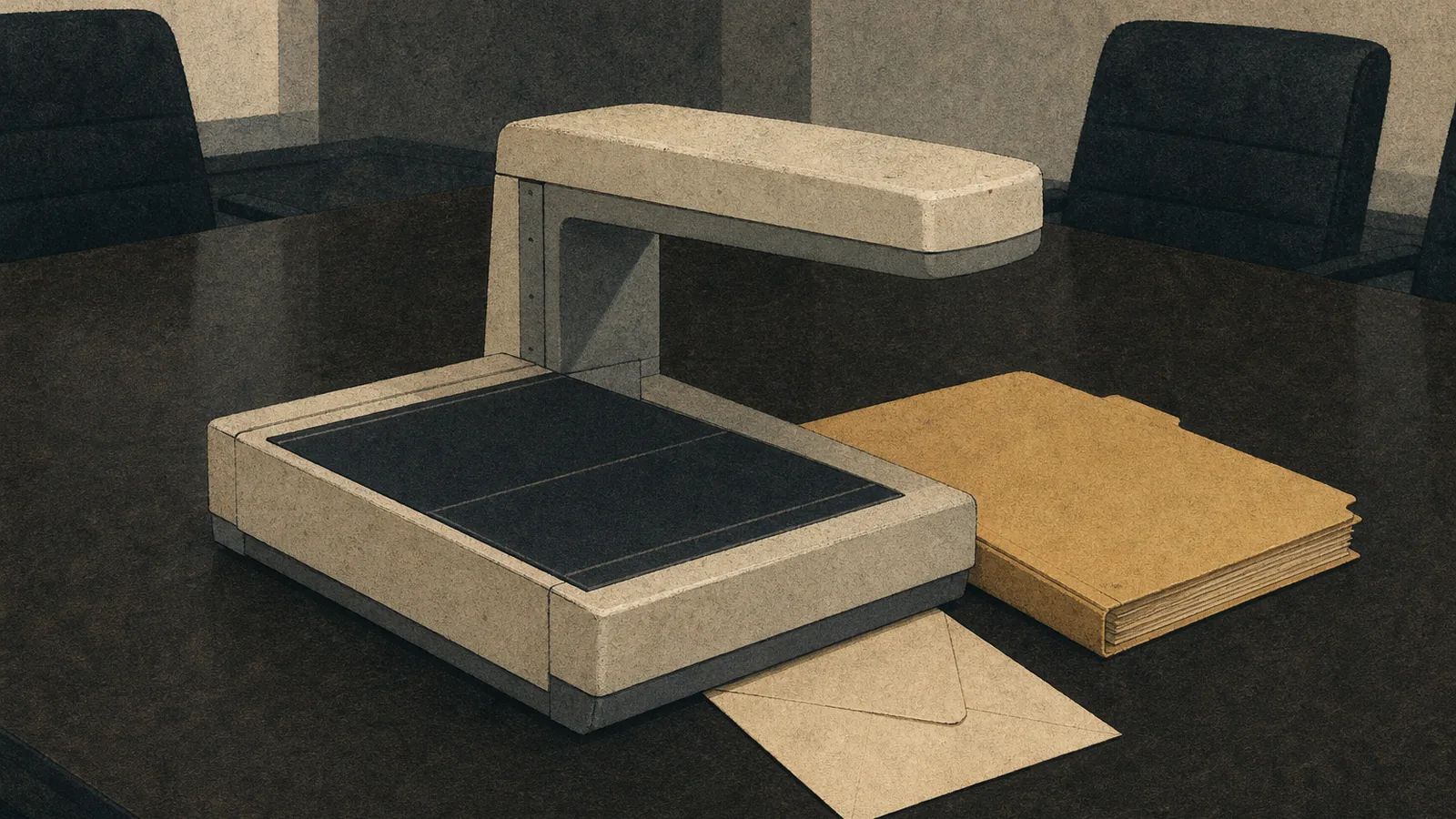
So Merck built the funnel from one end to the other. The company stood up a nonprofit, the Bone Measurement Institute, and used it to underwrite cheaper portable scanners for the heel and wrist, the kind that fit in a family practice. It lobbied to get the machines installed and lobbied Medicare to pay for the scans. It produced a low-dose Fosamax aimed at the newly scannable. Then came the television ads telling women to ask their doctor about their number. Scanner, scan, reimbursement, a color-coded result with a yellow band for osteopenia, a prescription. Each step fed the next. Bone-density screening in North America rose 263 percent between 2002 and 2007, the number of people on Fosamax climbed 153 percent over the same years, and by 2008 the drug was clearing more than 3.2 billion dollars annually. When the Surgeon General issued the first federal report on bone health in 2004, the official count held 10 million Americans with osteoporosis and another 34 million with low bone mass. The gray band had become a population.
Which leaves the question worth asking early. If your scanner returns a T-score of minus 1.8 and a prescription follows, does swallowing the drug for years actually keep your bones from breaking?
The place to look is the Fracture Intervention Trial, the pivotal alendronate study, Merck-funded, the one the edifice rests on. For women who already had osteoporosis it delivered, cutting clinical fractures by 36 percent, a relative risk of 0.64 and statistically firm. Then the trialists turned to the women the marketing depended on, the ones with low bone density but no prior fracture. Across that whole group alendronate reduced clinical fractures by 14 percent, and the result did not reach significance. Narrow to the osteopenia band itself, the scores sitting above the osteoporosis line, and the benefit disappeared: a relative risk of 1.08, the treated women breaking bones at a hair’s higher rate than the women on placebo. Alendronate moved the bone-density number it was built to move. For the screen-detected woman in the gray band, it did not move the thing the number was supposed to predict.
A later reanalysis, pooling the trial’s two arms, did find a vertebral-fracture benefit reaching down into the osteopenia band. But the authors were clear that the benefit was concentrated in women who already carried a prior vertebral fracture or other real risk factors, not the worried-well a heel scanner turns up at a wellness fair. And the fractures it counted were mostly morphometric, the kind seen only on an X-ray, most of which cause no symptoms and which the patient would never otherwise know she had.
Even in genuine osteoporosis the arithmetic is humbling. By one accounting, 88 women take the drug for years to prevent a single hip fracture, and one estimate puts the number needed to harm, counted as patients who quit over side effects, at 16. The harms are not exotic. Bisphosphonates can ulcerate the esophagus, which is why the label orders you to swallow the pill with water and stay upright for half an hour afterward. They have been linked to osteonecrosis of the jaw, the bone dying and working its way out through the gum. And long-term use has been tied to atypical femoral fractures: the thigh bone snapping cleanly, sometimes mid-stride, in a woman taking the drug for the express purpose of keeping her bones from breaking.
None of this is buried, which is what makes this week instructive. The wellness wires lit up again with a republished explainer warning that osteopenia is “silently weakening bones in millions of people,” that it “develops silently,” that many people learn of it only after “a fracture or bone scan.” The original piece is competent and well-meaning, and it reproduces, almost word for word, the framing Kanis spent thirty years trying to head off. The history has been sanded clean off. What is left is the silhouette the marketing pressed into the culture: a number, a worry, and the firm suggestion that something ought to be done about it.
The clinicians who set bones will tell you the gray band carries real information, that a low score alongside a prior fracture and the right risk factors is worth acting on. They are right, and it is worth saying plainly. But a risk marker is not a disease, and a number a portable scanner pulls from a healthy woman’s heel at a health fair is not a diagnosis. Population screening finds the band. It does not find the fracture coming, and for most of the women it labels, the drug that follows treats a statistic rather than a person.
Kanis and his colleagues drew a line in Rome to help statisticians sort their columns. What grew on top of it, the scanner networks and the billion-dollar franchise and the 34 million names on the federal tally, was never theirs to authorize. The chairman has spent the decades since saying so to anyone who will listen, which is its own quiet verdict on what he watched happen to a number he helped invent.
Sources
- The Ethical Nag – “We never imagined people would think of osteopenia as a disease”: the Kanis quote, Merck’s Bone Measurement Institute, and the screening and Fosamax sales figures
- NPR – How A Bone Disease Grew To Fit The Prescription
- JAMA / Fracture Intervention Trial (Cummings et al., 1998) – alendronate in women with low bone density but no prior vertebral fracture: no significant clinical-fracture benefit above the osteoporosis line
- Mayo Clinic Proceedings (Quandt et al., 2005) – alendronate and vertebral fracture in the FIT osteopenia subgroup (T-scores -1.6 to -2.5), benefit concentrated in higher-risk women
- Science-Based Medicine – Osteoporosis Drugs: Good Medicine or Big Pharma Scam? (NNT, NNH, and bisphosphonate harms)
- UConn Health – Surgeon General Warns of Bone Break Epidemic (2004 report; 34 million Americans with low bone mass)
- ScienceDaily – Osteopenia is silently weakening bones in millions of people (2026 coverage)
- The Conversation – Osteopenia: loss of bone mineral density affects millions of people