A family that hears the letters DIPG in a consult room is, in almost every case, being handed a calendar. Diffuse intrinsic pontine glioma sits in the pons, the stretch of brainstem that runs breathing and heartbeat, which is why surgeons cannot cut it out and why median survival runs about 9 to 10 months, with fewer than one child in a hundred alive at five years. More than two hundred trials have been run against it. Radiation buys a few months. Nothing else has moved the number.
So when a team at Children’s National Hospital published a phase 1 trial in Nature Medicine on June 30 reporting that a T-cell therapy was safe in children with DIPG and other recurrent brain tumors, and that a handful of them were still alive years later, it landed as the rare piece of good news in a field that mostly files obituaries. The coverage moved fast toward the word families want and a safety study cannot deliver. One outlet ran the phrase “early survival gains” in the headline. Read what the trial actually did, though, and this is not a cure story. It is a safety-and-delivery story, and in DIPG that distinction is close to the whole game. What makes it worth the ink is how it got there: no gene editing, no hole in the skull, and no venture fund behind it.
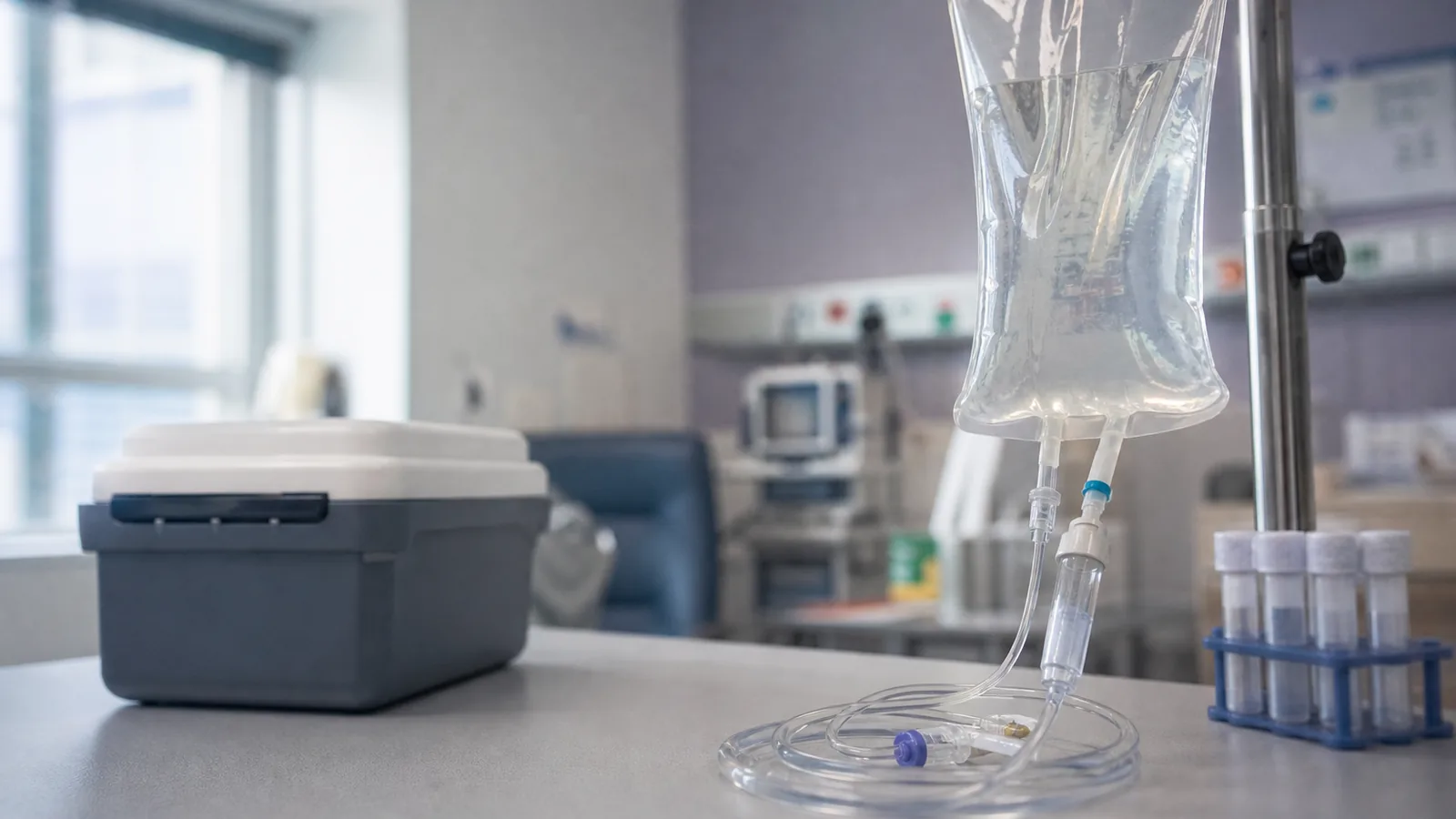
Start with what the therapy is not. Called TAA-T, for tumor-associated antigen-specific T cells, it is not a CAR-T product. Nobody took a virus and rewrote these children’s T cells to carry a synthetic receptor. The team drew peripheral blood and expanded the patient’s own T cells against three proteins that these tumors tend to overexpress: WT1, PRAME, and survivin. The cells that came back were the child’s own immune cells, coached rather than engineered, and they went in through an ordinary intravenous line.
That last detail carries more weight than it sounds. The engineered competitor for these tumors takes a harder road into the body: the B7-H3 CAR-T program for DIPG, also in Nature Medicine, has to drip its cells directly into the brain’s ventricles through a surgically implanted catheter, and it carries the inflammatory neurotoxicity that engineered products are known for. The ReMIND cells did not. They were infused into a vein, across three dose levels from 2 × 10⁷ up to 8 × 10⁷ cells per square meter, and the trial reported them as generally well tolerated, a milder safety readout than what the catheter-delivered engineered programs have logged in their own early trials. For a treatment aimed at very sick children, a clean safety sheet is not a footnote. In a phase 1, it is most of the point.
Hold onto that, because ReMIND was a dose-finding safety and feasibility study, not an efficacy trial. There was no control arm, the population mixed newly diagnosed DIPG with several kinds of recurrent CNS tumor, and 33 children and young adults were infused. The honest tally was 1 complete response and 3 long-term responders. Read generously, that is a signal this approach can do something durable in a disease where durable is nearly unheard of. Read strictly, it is one lasting remission in a group where a small minority of patients outlive the median anyway, with no comparison arm to say the cells were the reason. Both readings are true at once, and the distance between them is exactly where a press release likes to live.
Catherine Bollard, the chief research officer at Children’s National who has spent years on this platform, said the honest version herself: “even in this early-stage trial focused on safety, we were encouraged to see lasting clinical benefit.” Encouraged, in an early-stage trial focused on safety. That is a scientist describing what she saw, and it is a good deal more restrained than “survival gains.” The restraint is the credible part.
There is a quieter story under the clinical one, and it is about what gets funded. This is analysis, not something in the paper, but the political economy is hard to miss. The engineered cell-therapy field runs on venture money and patent estates, because a rewired receptor is a product a company can own. A protocol that expands a child’s own T cells against natural tumor proteins is harder to fence off and therefore harder to capitalize, and this one was carried instead by public and philanthropic money: the Cancer Grand Challenges NexTGen team, Cancer Research UK, the National Cancer Institute, and the Chance for Life Foundation. The approach that turned in the cleaner safety profile and the simpler delivery is also the one the market has the least reason to build. That is not a knock on anyone at Children’s National. It is a note about which good ideas have to survive on grant cycles instead of term sheets.
The team is already moving the platform into two follow-on trials, including one that builds the T cells against antigens read off each child’s own tumor tissue rather than a fixed set of three. Whether any of it extends life in a controlled comparison is the question ReMIND was never built to answer, and it will take a larger trial with a real endpoint to settle. For now the accurate sentence is the one Bollard said, not the one the headlines reached for. Thirty-three young patients got an experimental therapy that did not make them sicker, and a few of them are still here. In DIPG, that is not nothing. It is also not a cure, and the people who did the work are the ones being clearest about the difference.
Sources
- Nature Medicine – Multi-antigen-targeting T cells in pediatric central nervous system tumors: a phase 1 trial (2026)
- News-Medical – First-in-human trial tests safer T-cell therapy for pediatric brain cancers (June 30, 2026)
- Neuro-Oncology – EPCT-24, The ReMIND Trial: Multi-Antigen Targeted T Cells for Pediatric CNS Tumors (abstract)
- Nature Medicine – Intracerebroventricular B7-H3-targeting CAR T cells for diffuse intrinsic pontine glioma: a phase 1 trial (2024)
- Medical Xpress – New T-cell therapy targets three tumor proteins, shows early survival gains (June 2026)
- ClinicalTrials.gov – IMPACT (NCT06193759), a follow-on adoptive cell therapy trial for pediatric brain tumors
- StatPearls (NCBI Bookshelf) – Diffuse Intrinsic Pontine Glioma: prognosis and survival