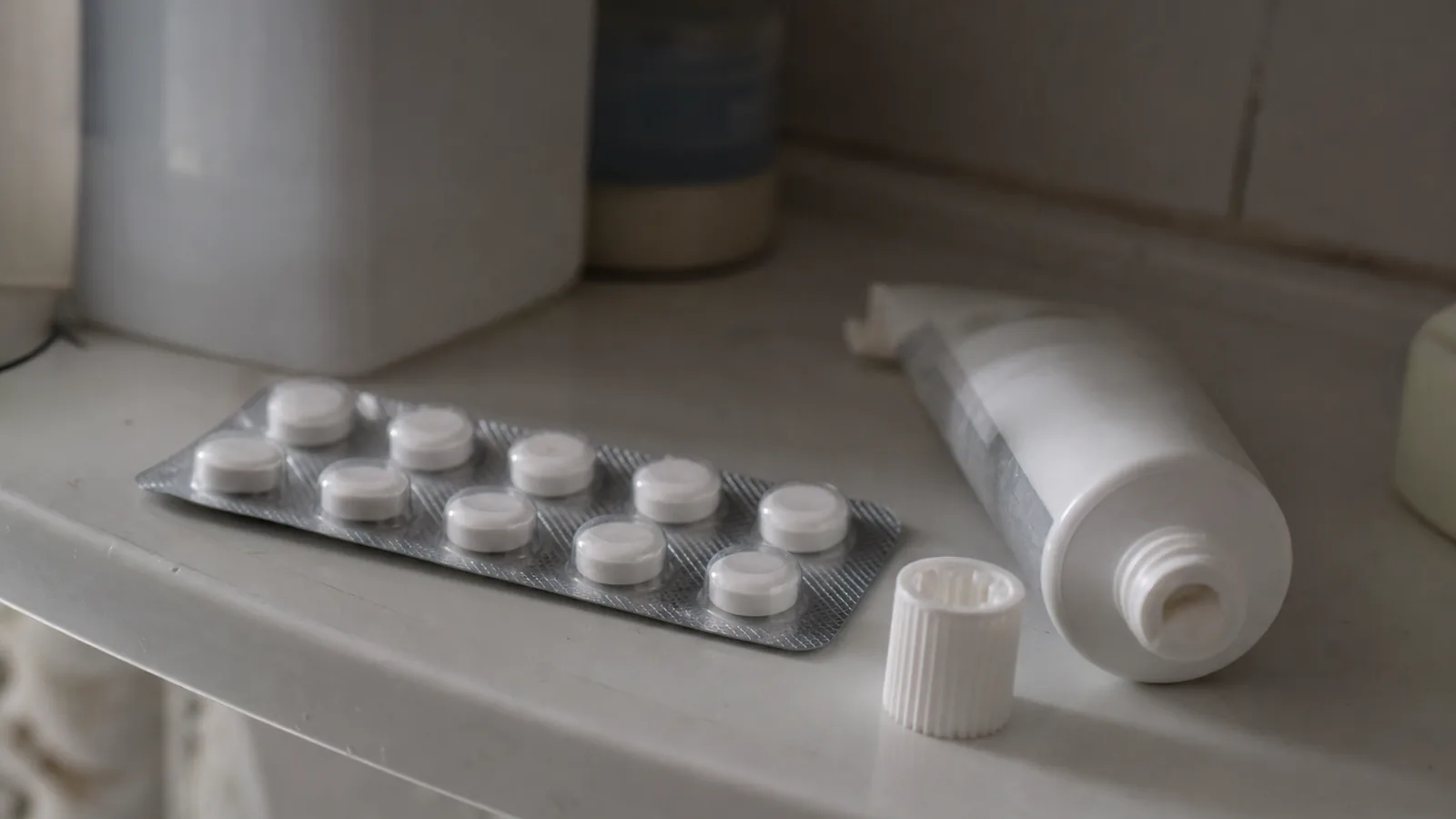
It is two in the morning and someone is clawing at their own skin, reaching for the same little pill that calms hay fever and hives, because the box in the cabinet says antihistamine and the itch feels like an allergy. It will not work, and it was never going to. A mosquito bite is a histamine itch: a mast cell dumps histamine, a nerve ending fires, you scratch, and an antihistamine quiets it. The itch of atopic dermatitis only feels the same. It runs on different wiring, and for the better part of a century medicine treated the two as one problem, reaching for an H1 blocker and waiting for relief that mostly never came.
It runs on cytokines, the inflammatory signaling proteins the immune system pours into atopic skin, chiefly interleukin-4, interleukin-13, and the one researchers now call the itch cytokine, interleukin-31. Those proteins talk directly to sensory nerves, and the receptors that carry the IL-4 and IL-13 signal sit on the itch neurons themselves. Histamine is mostly a bystander in that conversation. Block it and you have jammed a frequency the itch was never broadcasting on, which is why the trials keep coming back with the same disappointing answer, and why a network meta-analysis reported this week concluded that antihistamines carry only a slight benefit for atopic dermatitis and should not be part of routine management.
If that finding sounds new, it is only because practice never caught up to the evidence. We have seen this before. The Cochrane reviewers, whose job is to pool the trials and report what they actually show, ran the question two ways.
First, whether antihistamines work on their own, as monotherapy. The answer, first published in 2000 and confirmed on later searches, was that they could not say: after screening 757 references, not a single randomized controlled trial met the bar to test the question properly. A treatment handed to millions had never been cleanly tested against placebo as a standalone therapy for the disease.
Then the more realistic question, the one that matches how doctors actually prescribe: does adding an oral antihistamine on top of standard topical treatment help? Here there was data. The 2019 Cochrane review pooled 25 randomized trials and 3,285 participants across every age group, and the result was underwhelming in a precise way. Fexofenadine produced what the reviewers called a small improvement in patient-rated itch, a signal faint enough to sit at the edge of clinical meaning. Cetirizine did no better than placebo, and neither did loratadine. The drugs were safe, the reviewers noted, which is the polite way of saying they mostly did nothing. Review author Uwe Matterne put it plainly: the findings “may challenge the prescribing of H1 antihistamines as we found no convincing evidence that H1 antihistamines help patients with eczema.”
So why does the prescription pad keep reaching for them? Because the mental model is intuitive, cheap, and hard to kill. Histamine equals itch is the first thing anyone learns about allergy, and eczema lives in the allergy family. The pills are over the counter, generic, and nearly free. A parent wants to hand a scratching child something, and a doctor with seven minutes wants a step to offer before the stronger drugs. None of that is villainy. It is inertia, and inertia is its own kind of force. A 2018 assessment in the Journal of the American Academy of Dermatology walked through the same evidence and landed in the same place: no good support for using antihistamines to treat the itch of atopic dermatitis, and yet the habit persists.
There is one honest carve-out, worth naming because it is the reason the drugs are not quite useless. The old first-generation sedating antihistamines, the diphenhydramines and hydroxyzines, make you drowsy. For a patient whose sleep is being shredded by nighttime scratching, that sedation can buy a few hours of rest, not by touching the itch but by knocking the person out around it. That is where the guidance has landed. The standard clinical references, including the American Family Physician review of atopic dermatitis, do not recommend antihistamines to treat eczema itch, but they leave room for short-term use of a sedating antihistamine when sleep loss from the itch is the real problem. The non-sedating second-generation drugs, the cetirizines and loratadines sold as daytime allergy relief, do not even get that: no meaningful benefit for the itch and no sedation to fall back on. A 2021 retrospective cohort in the journal Itch found the same split, with what real-world benefit there was concentrated in sleep rather than in the disease itself.
Then researchers aimed at the right target, and the itch broke. Dupilumab, a biologic that blocks the shared receptor for interleukin-4 and interleukin-13, was tested against placebo in patients with moderate-to-severe atopic dermatitis, many of whom had already scratched through every antihistamine in the pharmacy. In the pooled SOLO trials, weekly worst-itch scores fell 47.5 percent on dupilumab against 20.5 percent on placebo, with the itch easing inside the first two weeks and the inflammation lifting alongside it. You do not get that result by blocking histamine, because histamine was never running the show.
None of this makes the new analysis a revelation. It makes it a receipt, the latest in a paper trail more than 20 years long that keeps telling a system the same thing while the system keeps not listening. What is left is not whether antihistamines work for eczema but how long a treatment survives on habit after the evidence has quietly walked away. Watch the next revision of the atopic dermatitis treatment guidelines, and whether “not routinely recommended” finally hardens into “stop.” The mechanism made that call a long time ago. The paperwork is still catching up.
Sources
- Cochrane – Matterne et al., oral H1 antihistamines as add-on therapy to topical treatment for eczema (2019, 25 RCTs, 3,285 participants)
- Cochrane News – featured review summary and Uwe Matterne quote
- Systematic Reviews – Cochrane review on oral H1 antihistamines as monotherapy for eczema (no qualifying RCT among 757 references)
- MedPage Today – “Antihistamines Panned for Eczema,” reporting on the 2026 network meta-analysis
- Journal of the American Academy of Dermatology – assessment of antihistamines in the management of atopic dermatitis (2018)
- Journal of the American Academy of Dermatology – dupilumab itch improvement, pooled SOLO 1/2, AD-ADOL, CHRONOS (2020)
- New England Journal of Medicine – SOLO 1 and SOLO 2, dupilumab versus placebo in atopic dermatitis
- Allergy – Datsi et al., “Interleukin-31: the ‘itchy’ cytokine in inflammation and therapy” (2021)
- Type 2 cytokines (IL-4/IL-13) sensitize human sensory neurons to itch-associated stimuli
- American Family Physician – Atopic Dermatitis: Diagnosis and Treatment, guideline summary (2020)
- Itch – effectiveness of antihistamines for itch and sleep disturbance in atopic dermatitis, retrospective cohort (2021)