On Tuesday, in a federal courthouse in Greenbelt, Maryland, a seventy-eight-year-old scientist named David Morens stood up and pleaded guilty to a felony. For sixteen years, from 2006 until late 2022, he had been the senior adviser to Anthony Fauci at the National Institute of Allergy and Infectious Diseases, close enough to the center that he once described his options for reaching the boss as either sending material to “Tony on his private gmail” or handing it to him at work or at his house. What he admitted to was one count of conspiracy to commit offenses against and defraud the United States, and it had two moving parts. One was running official government business through a personal Gmail account to defeat the Freedom of Information Act. The other was the wine. Prosecutors dropped four remaining counts in exchange, and he is scheduled to be sentenced on November 12 before U.S. District Judge Paula Xinis, facing up to five years in prison.
- 2006becomes Fauci's senior adviser
- 2020routes NIH business through Gmail
- 2022leaves NIAID
- 2026pleads guilty
learned from our FOIA lady here how to make emails disappear after I am FOIA'd but before the search starts
Start with the Gmail. After COVID-19 reached the United States in 2020, Morens routed NIH correspondence about the pandemic and its origins through his private account, with FOIA avoidance at the center of the reason. “I tried to always communicate on gmail,” he wrote in one message later pried loose by the House Select Subcommittee on the Coronavirus Pandemic, “because my NIH email is FOIA’d constantly.” He said he would “delete anything I don’t want to see in the New York Times.” And in the line that ends any argument about intent, he wrote that he had “learned from our FOIA lady here how to make emails disappear after I am FOIA’d but before the search starts.”
Read that again. Not before a request arrived. After the request, before the search. That is not a man cutting corners on recordkeeping. That is a public official who understood the machinery of transparency well enough to reach inside it and switch it off.
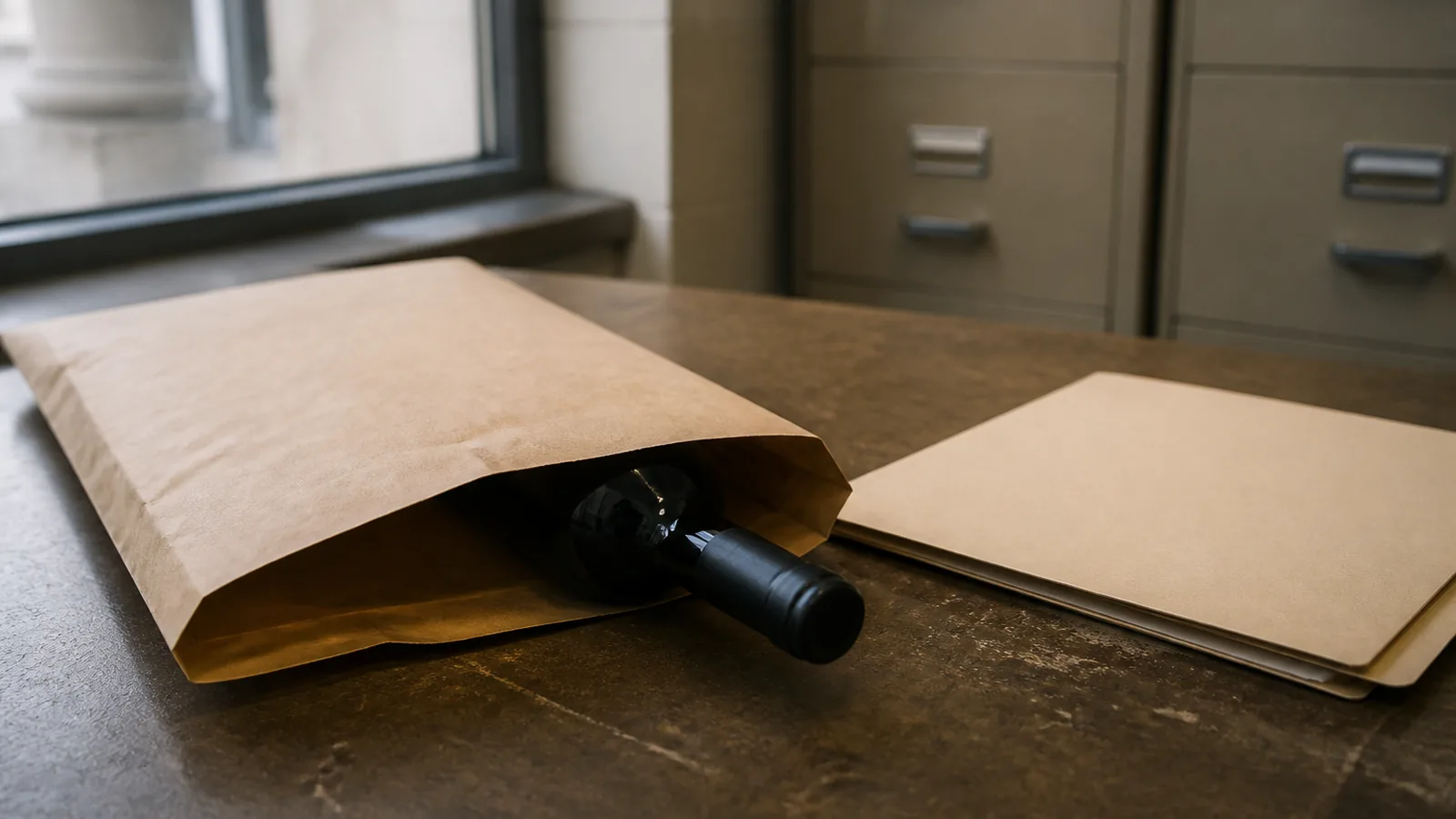
Then there is the wine. Two bottles arrived at his Maryland home in June of 2020, labeled, in the government’s telling, for his “behind-the-scenes shenanigans,” and according to the charging documents Morens then identified an official act he could perform to deserve the gift: authoring a commentary in a prominent medical journal advocating that COVID-19 had natural origins. The gifts came by way of Peter Daszak, head of EcoHealth Alliance, the nonprofit that had routed NIH money to the Wuhan Institute of Virology before the agency ended the grant over how the work was handled. To Daszak, Morens wrote what a prosecutor could only dream of finding: “Let’s win this anti science battle, get you refunded and uber funded, then settle scores and kick some ass.”
Sit with the sequence, because the establishment has spent five years asking you not to. The funding stake belonged to Daszak and EcoHealth. Morens’s stake was quieter, and cheaper to buy: proximity, reputation, and the wine on his doorstep. In exchange he lent his name to a journal verdict declaring the lab-leak answer settled, all while teaching himself, in his own words, how to make his correspondence disappear on a schedule. The plea agreement names Daszak and retired professor Gerald Keusch as co-conspirators. Neither has been charged. Fauci was not charged either, and could not easily be: before leaving office, President Biden issued him a preemptive pardon covering January 2014 through January 2025. Morens was the one who signed, and the one without a pardon.
When Morens was first indicted in April 2026, one prominent account in Science reported that his arrest was “decried as political”, the implication being that a records case against a beloved institution was really a vendetta dressed in a subpoena. That framing does not survive a guilty plea. You cannot conspire to defraud the government by accident, and you do not plead to a felony to spare yourself a political inconvenience. The emails were supposed to be gone. They weren’t. Congressional investigators recovered them, the Justice Department built its case around them, and the man who wrote them stood in a courtroom this week and conceded the point. An FBI investigation, its director Kash Patel says, remains open.
For the better part of five years, the official posture held that questioning the pandemic’s origins was itself a kind of misconduct, that the natural-origin account was settled, and that the people saying otherwise were beneath engagement. One of the men who helped build that account has now admitted he was accepting gifts and erasing the paper trail while he did it. David Morens spent a career at the top of American public health, and he will be sentenced in November for teaching himself how to make the record disappear. The record, in the end, was the one thing he could not delete.
Sources
- U.S. Department of Justice – Former Senior NIAID Official Pleads Guilty to Charges Connected to Concealing Federal Records (2026)
- STAT – Fauci adviser David Morens pleads guilty to conspiracy to defraud the government (2026)
- The Epoch Times – 5 Things to Know About Former Fauci Aide Pleading Guilty (2026)
- STAT – Morens indicted on charges of concealing emails, avoiding records requests (April 2026)
- U.S. House Committee on Oversight – Wenstrup reveals emails from Fauci ally
- Science (AAAS) – Arrest of Fauci aide for records violations decried as political (2026)