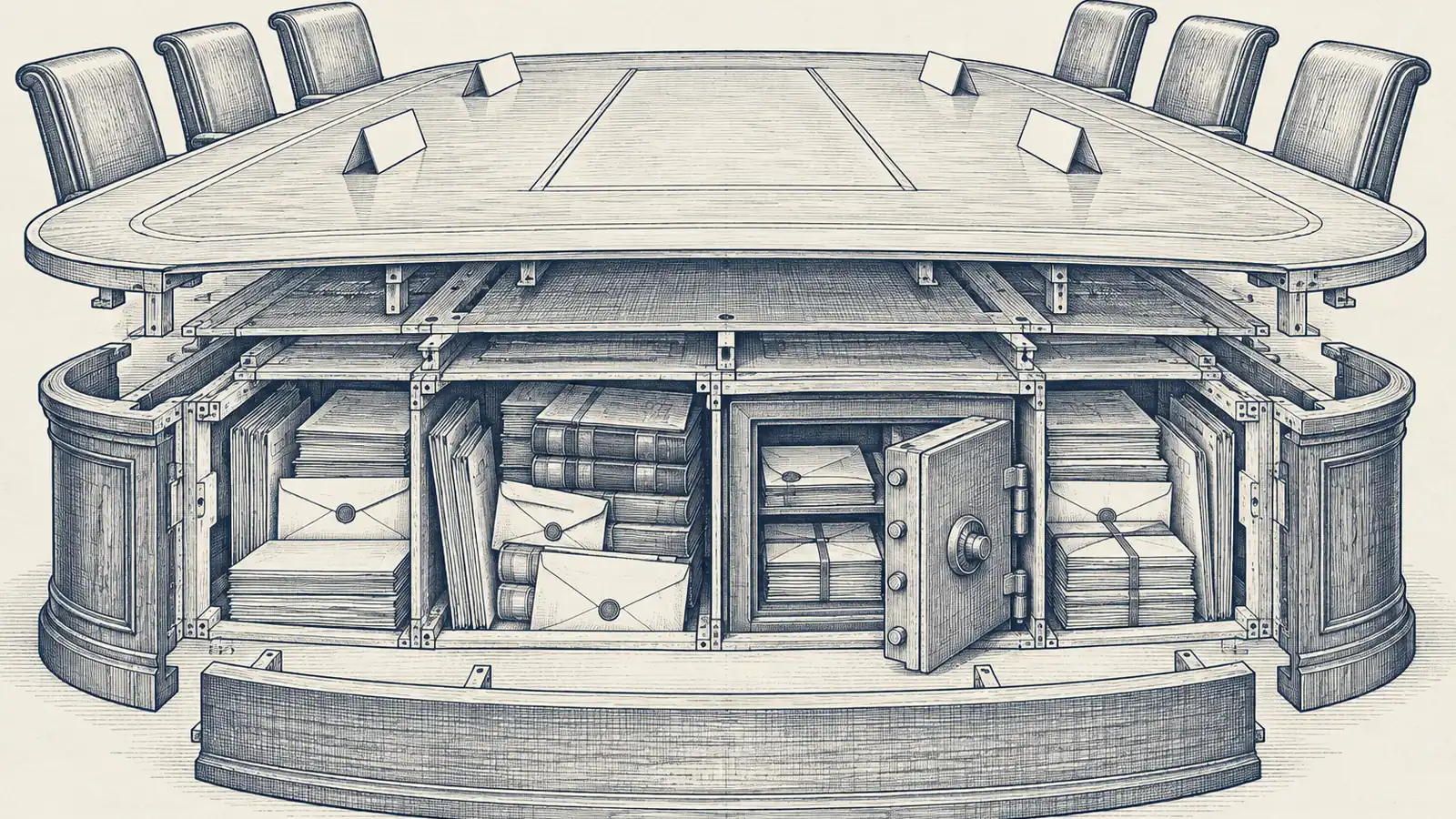
Every grassroots movement that lasts long enough reaches the moment when the industries it once organized against decide sponsorship is cheaper than a fight. The Tea Party learned it within two election cycles, its small-donor anger absorbed into establishment PACs. The organic-food movement learned it slower, over decades, until it shared warehouse shelves with the conglomerates that had dismissed it. The mechanism is rarely a briefcase of cash. It is proximity: once a movement touches real power, nearness to that power becomes the most valuable thing it owns, and proximity is exactly what corporations know how to buy.
Hold that pattern in mind when you read the guest list for the 2026 MAHA Summit, held this week at the Waldorf Astoria in Washington. Make America Healthy Again rose in 2024 on a specific and genuinely populist anger, that pharmaceutical companies, health insurers, and the federal agencies meant to police them had merged into one captured apparatus profiting from a sick country. This week that apparatus bought tables.
Consider who got the microphone. A morning panel on health care affordability, STAT reported, featured executives from UnitedHealth and Elevance, two of the nation’s largest health insurers, who used their time to tout artificial-intelligence initiatives and defend prior authorization, the paperwork gauntlet insurers use to delay and deny care and that patients across the political spectrum despise. A health-freedom movement handed its stage to the insurance lobby so the lobby could defend the one practice its customers hate most.
Then look at who paid. The companies that gave $300,000, according to STAT, included Hims & Hers and Noom, which both sell GLP-1 weight-loss drugs, the artificial-intelligence firms Anthropic and OpenAI, and the retailer Walmart. A marquee sponsor was Grail, a company whose Galleri multi-cancer blood test was sitting in front of the FDA. The product on sale here was not a booth. It was the room.
This is the mechanism of capture rendered almost embarrassingly literal. Politico put numbers on the rest of the market: sponsorships ran roughly $50,000 to $100,000, a leadership circle went for $6,000 a year, and startups negotiated in for as little as $20,000. What every tier bought was proximity to the officials who make the decisions these companies live and die by: Kyle Diamantas, the FDA’s acting commissioner; Jay Bhattacharya, the NIH director; Mehmet Oz, the CMS administrator; and Chris Klomp, the nominee for HHS deputy secretary. Sponsors were sold private dinners and floor access to all four.
The sponsors were not shy about why. Kevin Miller, who runs a service called Peptide Tracker, told Politico that “you can’t have a better stamp of approval than being associated with MAHA.” Evan Miller of Gameday Men’s Health described “a lot of tailwinds that we can take advantage of.” Neither was confessing anything. They were describing the value proposition accurately.
The people who built the movement noticed. Robert Malone, one of the most prominent critics of the COVID-19 vaccine mandates and a foundational MAHA voice, told supporters to “read the list of speakers and weep,” writing that “MAHA-gov and MAHA-inc have completely divorced themselves from the health freedom movement.” He called it “sickening,” the Washington Examiner reported. Mary Talley Bowden, the Houston physician who spent the pandemic fighting the mandates, said grassroots MAHA had “devolved into a cesspool of corporate interests” and that the medical-freedom people “are not part of all this administration MAHA effort at all.” Kelly Ryerson, the regenerative-farming advocate known as Glyphosate Girl, said the lineup “does not reflect the issues that birthed the original MAHA movement” and “could not be less MAHA.” One volunteer, Scarlett Fang, put it flattest: “This is the opposite of going against corporate capture. This is complete corporate capture.”
They are describing what the money already shows. According to Politico, MAHA PAC funding from January 2025 through April 2026 came nearly 90 percent from just ten entities, half of them tied to the drug industry. The movement that was built to name industry money is now largely built on it.
| Measure | Share |
|---|---|
| of MAHA PAC donations | 90 percent |
Here the house rule applies: health-populism outranks partisan loyalty. This is not the establishment smearing a scrappy insurgency. The insurgency’s own founders are the ones raising the alarm, and they are right to. The warning was already flashing in March, when a Trump executive order eased restrictions on glyphosate, the herbicide at the center of MAHA’s fight over the food supply, and left Kennedy exposed between the chemical lobby and the base that put him where he is. A movement that cannot hold its own founding issue against a chemical company’s lobbying is being managed, not led.
The tell to watch is already in motion. Six days before the summit, an FDA advisory panel voted to back Grail’s Galleri test, the first multi-cancer blood screen to get that far. Then the company’s chief executive turned up at the Waldorf as a marquee sponsor, at a summit where the FDA’s own leadership spoke. The final approval decision still sits with the agency. When it lands, the question is not only whether the test clears. It is whether anyone inside MAHA-gov, the movement built to name exactly this kind of proximity, says a word about the room where the sponsor and the regulator met.
Sources
- STAT – At MAHA Summit, a grassroots movement goes corporate (2026)
- Politico (via Yahoo News) – Corporate America is paying for access to RFK Jr. (2026)
- Washington Examiner – MAHA activists upset over corporate sponsorship for summit featuring RFK Jr. and Vance (2026)
- NPR – FDA advisory panel recommends a first: multi-cancer blood test (2026)
- BMJ – Trump’s glyphosate order infuriates MAHA movement, leaving RFK Jr exposed (2026)