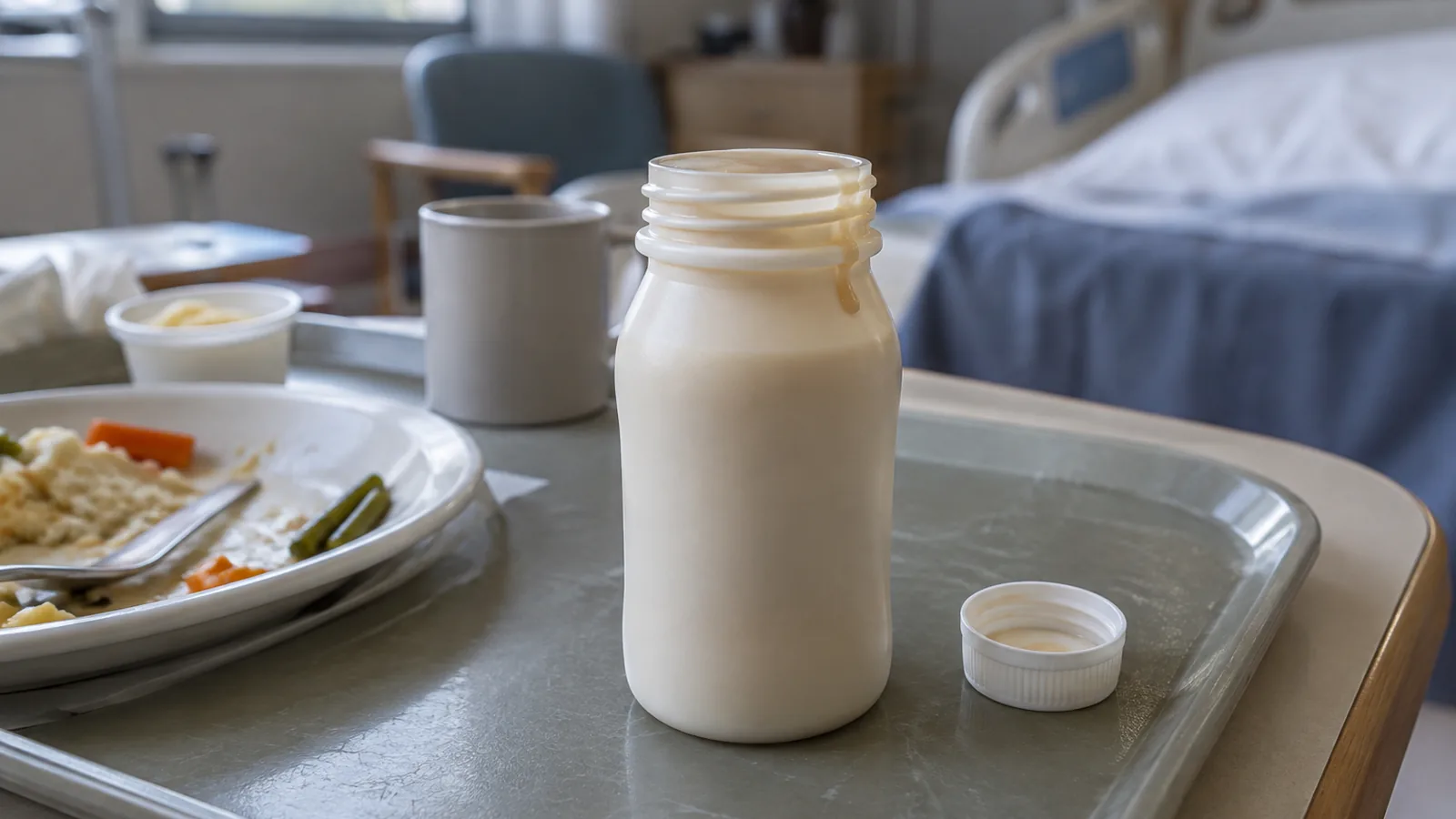
Every meal ordered off Memorial Sloan Kettering’s room-service menu arrived with a printout, and the patients eating those meals were invited to mark what they had actually consumed. Most of them were in the hospital for stem-cell or bone-marrow transplants, and all of them were on antibiotics. Those marked-up sheets became the backbone of a paper published September 30 in Nature, and its central finding would fit on the tray. Among the 173 patients tracked, microbiome diversity dropped 24 percent for every additional 100 grams of sugar in the diet while they were on antibiotics. By MSK’s own arithmetic, a hundred grams is roughly the sugar in two cans of soda.
Makes me wonder about whether we should change the diet of hospitals.
Nutrition research almost never gets to work this way. Most diet studies ask people to recall what they ate, a method that co-senior author Jonas Schluter of NYU’s Grossman School of Medicine described with some tact: “When asked to report everything that we eat and drink, we usually don’t remember everything.” At MSK the kitchen kept the receipts and the researchers had the recipes, and the team matched that intake against more than 1,000 stool samples from 158 of the patients. Even the size of the dataset depends on which press office you ask. NYU’s release counts 9,419 meals, while Schluter, quoted in MSK’s release, says “there were more than 40,000 meals recorded, giving us a dataset that’s unprecedented.” Either number dwarfs what a food questionnaire collects.
What the sugar seemed to feed was Enterococcus. Antibiotics clear the gut by design, and on a transplant ward the pressing question is what grows back into the empty space. Higher sugar intake, sucrose and fructose included, went with more Enterococcus, a bacterium that can crowd out other gut microbes and raise the risk of bloodstream infections. “In bone marrow transplant specifically, we found that Enterococcus can make certain complications of transplant worse,” co-senior author Jonathan Peled of MSK told the Associated Press.
First author Anqi Dai did not go looking for any of this. “This was not something we set out to find,” she said, and her first instinct was that something else, such as the patients’ illness or the intensity of their treatment, explained the pattern. “We went back and adjusted for the severity of both their disease and treatment.” The link held. So did a grimmer one: patients who ate more sugar than average had about a 12 percent higher risk of dying after their transplants. Peled called that “a modest change in their risk profile,” which is a fair description from the statistician’s chair and a somewhat different one from the hospital bed.
An association in very sick people cannot show which way the arrow points, so the team turned to mice. In animals given the broad-spectrum antibiotic biapenem along with dietary sucrose, gut Enterococcus rose 16.3-fold by day three and 33.4-fold by day six. Mice on the same high-sucrose diet without the antibiotic showed no rise in Enterococcus. The sugar alone did not do it. The sugar after the antibiotic did.
That brings the study back to the tray. The foods that appeared to do the most damage were nutritional shakes and smoothies, the very items often recommended for sick patients, and the researchers suspect their sugar content is the reason. Dr. Anthony Maresso, a microbiology professor at Baylor College of Medicine who was not involved in the work, drew the obvious conclusion when the AP asked him: “Makes me wonder about whether we should change the diet of hospitals.”
Most of the money behind the paper is public or charitable: NIH and National Cancer Institute grants, plus the Susan and Peter Solomon Microbiome, Nutrition, and Cancer Program at MSK and the Parker Institute for Cancer Immunotherapy. Schluter discloses microbiome-related intellectual-property applications, an advisory-board seat and equity in Jona Health, and a cofounder role at Postbiotics Plus Research. Peled’s disclosures are posted on his MSK page. Whatever those stakes are worth, the intervention this paper points to is one nobody can patent.
Nobody has yet run the trial that would settle the question. What exists is observational data from very sick people plus a mouse model, and Peled is careful about how far he lets it travel. “We don’t yet have evidence to say that everyone taking antibiotics should avoid sugar,” he said. Maresso raised the question most readers will have: whether a high-sugar diet during an ordinary outpatient course of antibiotics, for an ear infection, say, affects infection risk later. That remains untested, though the cost of acting on it anyway is a week without soda.
Peled’s view is that “avoiding sugar while taking antibiotics ought to be feasible for any patient.” In this study, the sugar came up from the hospital’s own kitchen, printout attached.
Sources
- Nature: Dai, Ballweg, Jogia et al., “Sugar-rich foods exacerbate antibiotic-induced microbiome disruption” (2026)
- Memorial Sloan Kettering: Study Suggests Sugar Can Worsen Common Intestinal Side Effect of Antibiotics
- ScienceDaily (NYU Langone release): Taking antibiotics? Sugar may be making the damage worse
- Associated Press via KSL: Eating sugar while taking antibiotics might harm gut bacteria