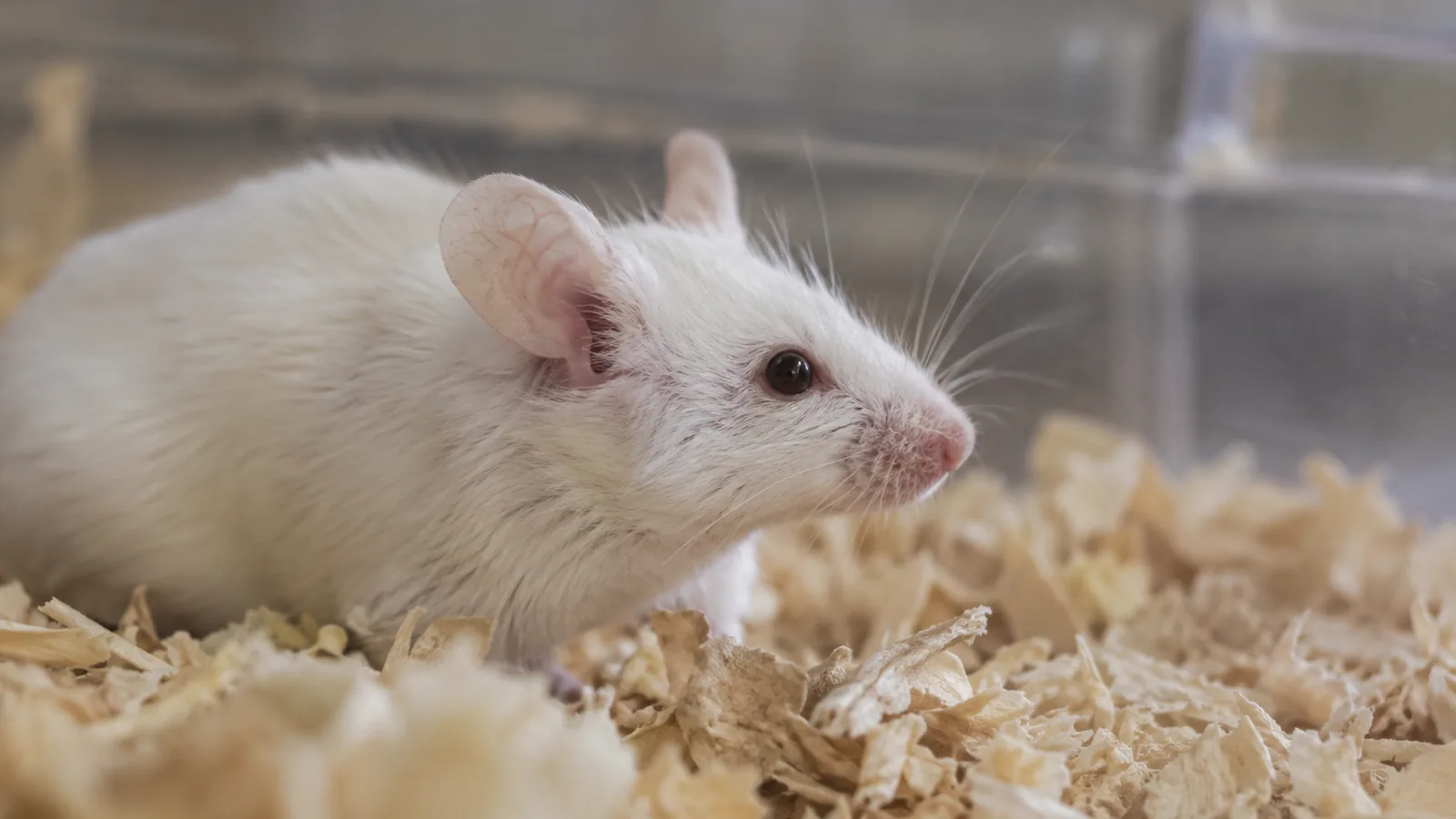
Yeni Yücel and Neeru Gupta have spent the better part of two decades arguing that the eye drains more than the textbooks allow, and their newest exhibit is a mouse. Yücel directs ophthalmic pathology at the University of Toronto. Gupta heads ophthalmology and visual sciences at the University of British Columbia. Their team placed a fluorescent tracer in the thin space at the back of the animal’s eye and followed it. Within 20 minutes it had reached a lymph node in the neck, on the same side as the treated eye.
“We were surprised to see such a direct route for fluid to leave the eye and connect with the lymphatic system,” Yücel said in UBC’s July 17 announcement.
The 2026 paper in Translational Vision Science & Technology calls the route the posterior ocular lymphatic outflow pathway, or POLO. It runs through small lymphatic vessels in the choroid, the blood-rich layer beneath the retina, which the team found using MRI, near-infrared imaging and microscopy. As mouse anatomy goes, it is careful work. Three months later it reached a general audience as something else. A ScienceDaily repost of the UBC release ran under the headline “The eye has a hidden cleanup system scientists never knew existed,” with a summary that took it straight to the clinic: the finding “could open the door to new treatments for glaucoma, macular degeneration, and other causes of blindness.”
Set the headline beside the experiment and the gap is wide enough to drive a grant cycle through. According to the paper’s abstract, the team tracked an albumin-based tracer as it moved out of the back of adult mouse eyes, toward the nasal side of the orbit and on to the neck. The authors suggest it may matter for fluid clearance, eye pressure and drug delivery. The word “cleanup” sells waste removal in a diseased eye, but that is the hoped-for job of the pipe, not something the abstract reports measuring. Near its end, the UBC release admits the larger point: further research is needed to understand how the pathway operates in humans. Neither the release nor its October repost says how many mice were studied, and that is the first number anyone looks for in a preclinical result.
This group has not been shy about that number before. In 2013 Gupta and Yücel reported that latanoprost, a common glaucoma drop, increased lymphatic drainage from mouse eyes. That abstract gave the count up front: 11 treated animals and 11 controls, with drainage into the lymph node running at 1.23 per hour in the treated mice against 0.30 per hour in the controls. It is the closest this line of work has come to a treatment signal, and it came 13 years before anyone described the back-of-the-eye route.
The pair has made this kind of leap before, and the earlier one held. In 2009 they described a lymphatic-related drainage route at the front of the eye, the uveolymphatic pathway, which was later confirmed in human tissue. The front-of-the-eye route was checked in people. The back-of-the-eye route has not been. To get from here to a patient, someone has to find the choroidal vessels in human eyes, show that the drain falters in glaucoma or macular degeneration, and then open it up without doing harm. All three steps are still ahead.
- 2009Front-of-eye uveolymphatic pathway described, later confirmed in human tissue
- 2013Latanoprost raises lymphatic drainage from mouse eyes
- 2026Back-of-eye POLO pathway mapped in mice
UBC’s release closes with a list of eight backers. The Canadian Institutes of Health Research and the Glaucoma Research Society of Canada come first. Fourth, among a run of endowed chairs and research funds, is the Canadian Space Agency, and the release says nothing else about it. Yücel’s research profile at Unity Health Toronto explains the connection. It calls the eye lymphatics work “highly relevant to understanding Spaceflight-Associated Neuro-ocular Syndrome (SANS)” and says Yücel’s work in that field “is supported by the Canadian Space Agency.”
SANS is what long stays in orbit do to the eye. A 2020 review in npj Microgravity found clinically significant swelling of the optic disc in about 15 percent of astronauts after long-duration spaceflight. More than 20 percent had folds in the choroid, the same layer where POLO’s vessels run. The leading suspect is the shift of body fluid toward the head in weightlessness, which backs up the veins around the eye, though the review’s authors admit that no single mechanism has been proven.
| Measure | Share |
|---|---|
| of astronauts with clinically significant optic disc swelling after long-duration spaceflight | about 15 percent |
The release pitched the discovery to people losing their sight to glaucoma and macular degeneration, who will have to wait for a human study. The space agency appears once in that release, as fourth on a list of eight. It was already paying Yücel to work out why astronauts’ optic discs swell in orbit, and nobody had to tell it why a drain at the back of the eye might be worth a look.
Sources
- Sauntharrajan, Gupta et al., Translational Vision Science & Technology (2026)
- University of British Columbia, Researchers discover the eye’s hidden cleanup system (July 17, 2026)
- Tam, Gupta, Zhang and Yücel, Latanoprost Stimulates Ocular Lymphatic Drainage, Translational Vision Science & Technology (2013)
- Lee et al., Spaceflight associated neuro-ocular syndrome (SANS) review, npj Microgravity (2020)
- Unity Health Toronto, Yeni Yücel research profile
- ScienceDaily, The eye has a hidden cleanup system scientists never knew existed (October 11, 2026)
- Earth.com, Hidden drainage vessels in the eye could help explain vision loss