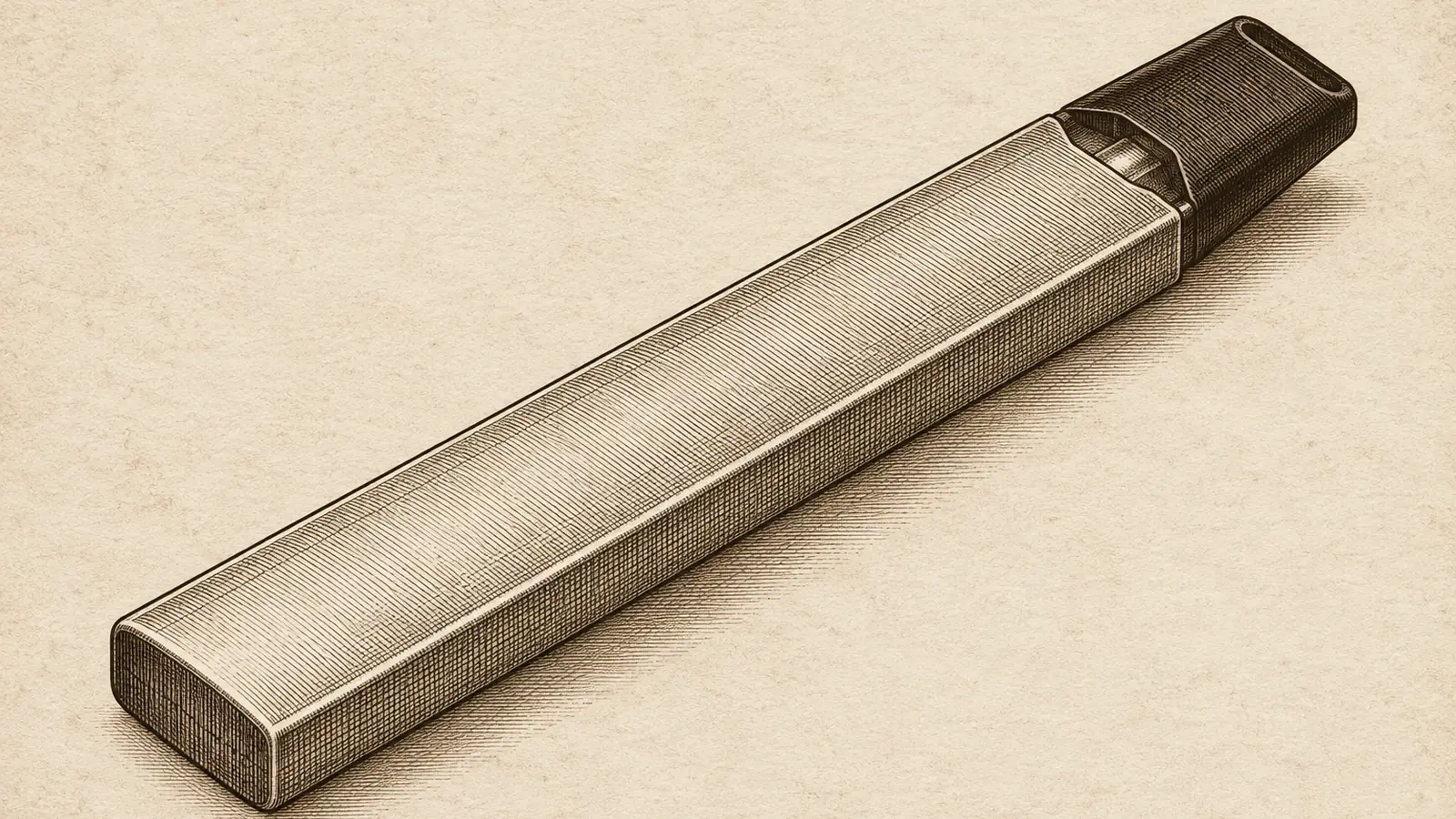
I always took “not FDA-authorized” on a vape as a verdict. I pictured someone at the agency picking the thing up, studying what was in it, and saying no. Then I learned the FDA has authorized 75 nicotine products out of roughly 26.6 million applications filed since October 2020, and that picture fell apart.
in no event later than 180 days after the receipt of an application
The figures come from a Reuters tally of FDA data, reported by 2Firsts, and the breakdown is worse than the ratio. The agency received 26.6 million applications through March 2026. It refused to accept 19.8 million of them and refused to file another 5.2 million, and both of those procedural screens come before any substantive scientific review starts. Only 75 ended in a marketing order. If you were hoping for a filter, you got a wall with a mail slot cut in it.
On September 28 the agency announced it intends to evaluate changes to its Premarket Tobacco Product Application framework, up to and including new rulemaking to replace it. As reasons it cited its own experience running the 2021 rule, the spread of an illicit, unregulated market, the pace of new products, and recent judicial developments. Then it named the development it meant: a federal lawsuit in the Northern District of Texas challenging the current framework.
That suit landed on September 2, and the plaintiffs are worth a look. Helix Innovations, which makes on! nicotine pouches, and NJOY are both subsidiaries of Altria, which also owns the Marlboro maker Philip Morris USA. Along with the Texas Food & Fuel Association and two Texas retailers, they asked a federal judge in Lubbock to throw out the 2021 rule entirely. Twenty-six days later the FDA was talking about writing a new one. I can’t prove the lawsuit caused the turn, and the agency hasn’t said it did. Still, I can’t remember the last time I saw a regulator move that fast on anything.
The fight is over a stopwatch, and that’s where I got hooked. Congress wrote the deadline in plain words: under the Tobacco Control Act the FDA must act “as promptly as possible, but in no event later than 180 days after the receipt of an application.” So wait, how does an on! pouch application filed in 2020 sit for more than 2,270 days, which is how long the plaintiffs say it had been pending when they sued? It comes down to the word “receipt.” The FDA’s own regulation runs the 180 days from an application “that meets the applicable filing requirements.” That means the clock doesn’t start when the box lands on the agency’s dock. It starts only after an acceptance review and then a filing review decide the box counts. The plaintiffs argue the FDA uses those acceptance, filing and completeness calls to decide when the clock begins at all, and the court now has to answer that question.
| Measure | Value |
|---|---|
| on! pouch application pending, per plaintiffs | more than 2,270 days |
| statutory deadline | 180 days |
Even when the FDA says yes, the two sides can’t agree on how long it took. Helix resubmitted six on! PLUS applications in December 2024 and got them authorized in December 2025. Helix counts that as 361 days, while the FDA measured from the start of substantive scientific review. The HHS Office of Inspector General audited a sample of 15 authorized e-cigarette products and found that the FDA missed the 180-day timeline for every one. Those were the products the agency approved, and even they didn’t get an answer on time. When the success stories blow the deadline too, the deadline has stopped meaning anything.
I’m not cheering for Altria, and you shouldn’t either. Three Reynolds companies, R.J. Reynolds Vapor, Modoral Brands and American Snuff, have now asked to join the case. So two of the country’s biggest tobacco families are the ones forcing a regulator to reconsider a pathway that was supposed to keep them in check. What sticks with me is who’s missing. Whatever smaller companies ran this six-year gauntlet aren’t plaintiffs, and if the system gets fixed, the fix will be argued over by the giants.
Meanwhile, plenty of vapes reached store shelves without passing through this system at all. In a single 2021 action the FDA issued marketing denial orders for more than 946,000 flavored vaping products, but people didn’t stop wanting flavored vapes because the paperwork went away. Last year FDA Commissioner Marty Makary told Spotlight on America that up to 85% of the vaping products in shops are illegal and mostly from China. He described FDA inspectors sending illegal shipments back onto the ships while the Chinese manufacturers simply went to the next port. “It was a joke,” he said. “They were laughing at us.” His team seized nearly 5 million products in one Chicago bust. By the commissioner’s own account, the agency rejected products that were trying to come in legally while rejected shipments looked for another port. That rulebook wasn’t keeping anything out of anyone’s lungs.
So what happens now? Nothing automatic. The FDA says it will keep reviewing applications under the existing public-health standard while it drafts a replacement, with public input and no timeline. A new framework could be faster and clearer, or it could be the same wall with fresher paint. What the agency has done is concede that the current system failed on its own terms, and it named a tobacco conglomerate’s lawsuit in the notice saying so.
I don’t vape, and nicotine is no health food. My quarrel is with a regulator that let a statutory deadline lapse for six years and called the delay rigor. So I’m setting two rules for myself. I won’t read “not FDA-authorized” as “examined and rejected,” because about 25 million of these applications never reached a scientific reviewer. And I won’t trust the replacement framework until it shows me decisions made inside the 180 days Congress wrote down.
Sources
- FDA: FDA intends to evaluate changes to the PMTA regulatory framework
- 2Firsts: Altria subsidiaries sue FDA to vacate 2021 PMTA rule
- 2Firsts: Reynolds seeks to join Altria lawsuit over the PMTA rule and the 180-day deadline
- 21 U.S.C. § 387j, Legal Information Institute
- Vermont Public / NPR: FDA denies more than 946,000 flavored vaping products
- WJLA Spotlight on America: Illegal Chinese vapes flood US market