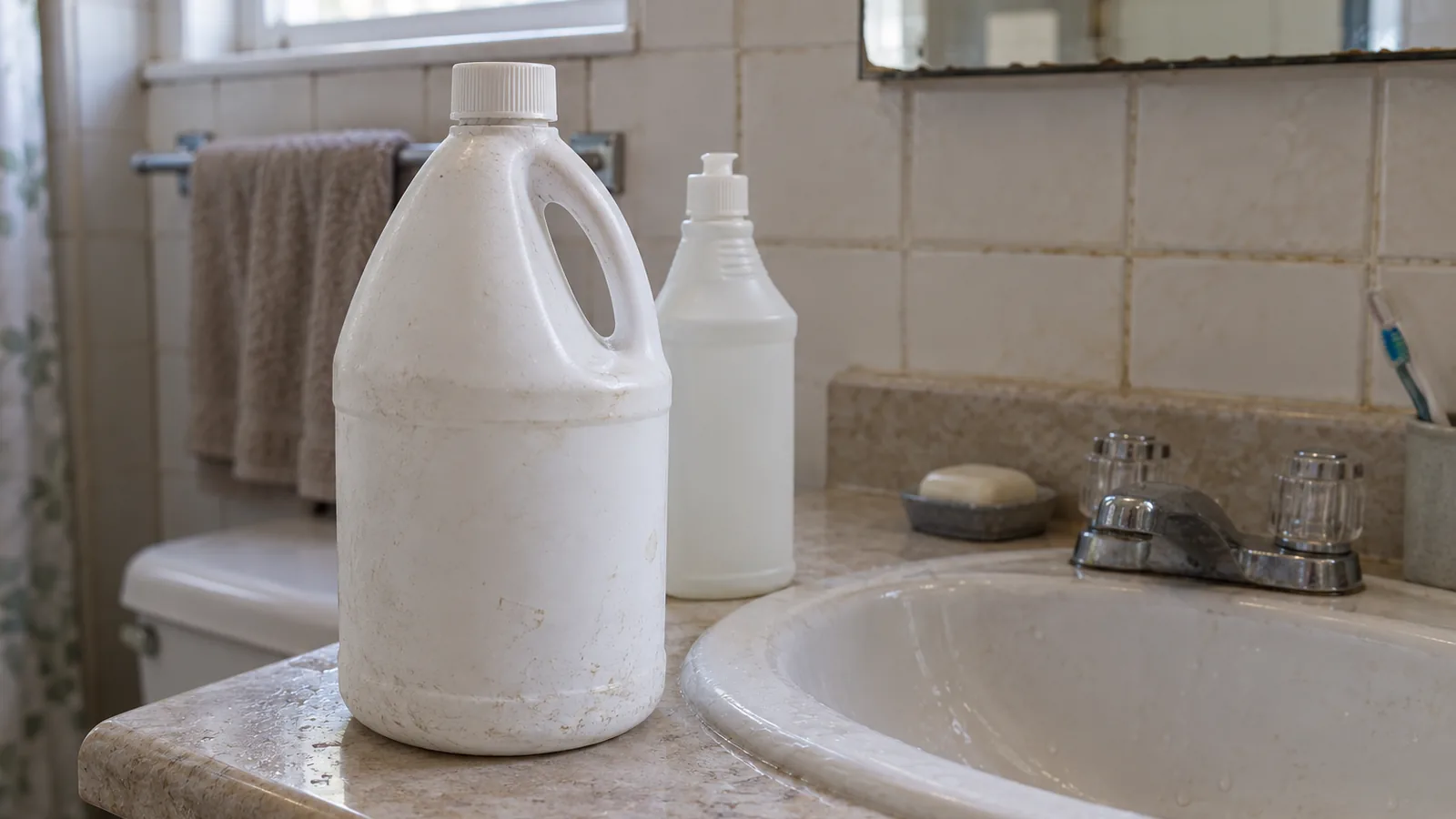
Somewhere in the spring of 2020 I became the kind of person who kept a spray bottle in every room. Bleach for the counters, a separate cleaner for the bathroom, and a vague, anxious sense that if a surface was not stinging my eyes a little, I had not done the job. I was not alone, and that instinct, it turns out, had a body count attached to it.
A national study out of France, published this month in Environmental Health, tracked domestic chlorine gas exposures across sixteen years, the kind that happen when someone mixes a hypochlorite bleach with an acidic product in their own home. The researchers found the trend climbing over the full period with a clear break around 2018, after which it accelerated, and they pinned down who ends up worst off: older people, active smokers, and anyone with pre-existing airway disease. These are not industrial accidents. They are people cleaning their kitchens.
I expected the pandemic spike to be a blip that passed. It was not. In the United States, a 2024 analysis in Clinical Toxicology pulled eight years of poison center records, 2015 through 2022, and counted 75,186 adult chlorine and chloramine gas exposures. The yearly total rose 68 percent over that window, and the single largest increase was a 39.8 percent jump between 2019 and 2020, exactly when the country was told to disinfect its way out of a respiratory virus. Then the line did not fall back. The authors put it plainly: no return to pre-pandemic levels.
So I went looking for the chemistry, because I wanted to understand how a kitchen cleanup turns into a poisoning at all. Bleach is sodium hypochlorite. Pour an acid on it, say a toilet-bowl cleaner, a lime-scale remover, even strong vinegar, and it dumps its chlorine back out as a gas. Add ammonia instead and you get chloramine. Either way the gas does not politely stay in the bowl. It pours up into the small, wet, warm space around your face.
Here is where I had to stop and think about my own anatomy. You might assume a gas that dissolves easily in water is the dangerous one, because it would soak into the first wet thing it touches. Chlorine is the opposite kind of trouble. It is only modestly soluble, so instead of stopping at your lips it rides deeper, and your eyes, your nose, the lining of your throat and the fine branches of your lungs are all wet surfaces waiting for it. On contact the gas dissolves and reconstitutes as acid right on the tissue, hydrochloric acid plus a spray of oxidants, burning the mucosa where it lands. That is why a lungful of it coughs you half to death in seconds. You have manufactured a corrosive at face height in an unventilated bathroom.
Most people, mercifully, get away with it. In the US data, coughing, choking, and throat irritation led the symptom list, and the single most common treatment was simply fresh air. But most is not all. The same records logged 1,511 hospital admissions, 571 people sent to critical care, 153 intubated and ventilated, and 26 deaths. There are published intensive-care case reports of acute respiratory distress syndrome traced to mixing cleaning products in a closed room. You can do lasting damage to your lungs reaching for a sparkling tub.
Who is getting hurt tells you this is a home story, not a factory story. More than 85 percent of these US exposures happened in the victim’s own residence, and that home share rose during the pandemic, from 82.6 percent before it to 88.7 percent during it, while workplace cases fell. Women accounted for 62.6 percent of the exposures, which fits an uncomfortable pattern about who does the household cleaning. And roughly half of the confirmed chlorine-gas cases traced to exactly the mistake I kept almost making: an acid mixed with bleach.
Here is where I stop being charitable about the messaging. The spike was not a secret that surfaced years later. The CDC’s own scientists watched it happen in real time. In an April 2020 report in MMWR, poison centers logged 45,550 cleaner and disinfectant exposure calls in just the first three months of the year, up more than 20 percent for cleaners over the prior year, with the daily count spiking the moment the national disinfection drumbeat started. The agency hedged that it could not prove the exposures were caused by COVID cleaning, then noted in the same breath a “clear temporal association with increased use of these products.” The harm arrived on schedule, and they said so.
And what was all that frantic surface-scrubbing buying us? By April 2021, the CDC conceded in its own science brief that catching the virus from a contaminated surface was a low-probability event, on the order of less than 1 in 10,000 per contact, far behind breathing shared air. The disinfect-every-doorknob theater that drove a nation to its spray bottles was, by the public-health establishment’s own later accounting, aimed at a route of transmission that barely mattered. The fomite panic was oversold, and the chlorine burns piling up in poison center logs were the real cost of selling it.
What stays with me is the shape of the whole thing. A genuinely airborne virus got met with a campaign about surfaces, the campaign pushed people to combine chemicals they did not understand inside closed rooms, poison centers caught the resulting burns in their call logs, and when the surface risk was finally walked back, the correction never got anything close to the reach of the original warning. The French numbers, still climbing through 2025, suggest the habit has outlived the fear that created it.
I did break the spray-bottle reflex, and the chemistry is why. I keep one cleaner under my sink now, and I never pair it with anything. If something needs bleach, it gets bleach and water and an open window, and nothing acidic comes near it until the room has aired out. A clean counter was never worth a chemical burn in my own airway, and I am done paying for a scare about surfaces that the people who started it quietly abandoned.
Sources
- Environmental Health – Domestic chlorine gas exposures from household product mixing in France, 2010–2025 (2026)
- Clinical Toxicology – Trends in chlorine and chloramine gas exposures reported to United States poison centers, 2015–2022 (2024)
- CDC MMWR – Cleaning and Disinfectant Chemical Exposures and Temporal Associations with COVID-19, Jan–Mar 2020
- CDC Science Brief – SARS-CoV-2 and surface (fomite) transmission for indoor community environments (April 2021, archived)
- CHEST – ARDS after chlorine gas inhalation from mixing cleaning products (2023)