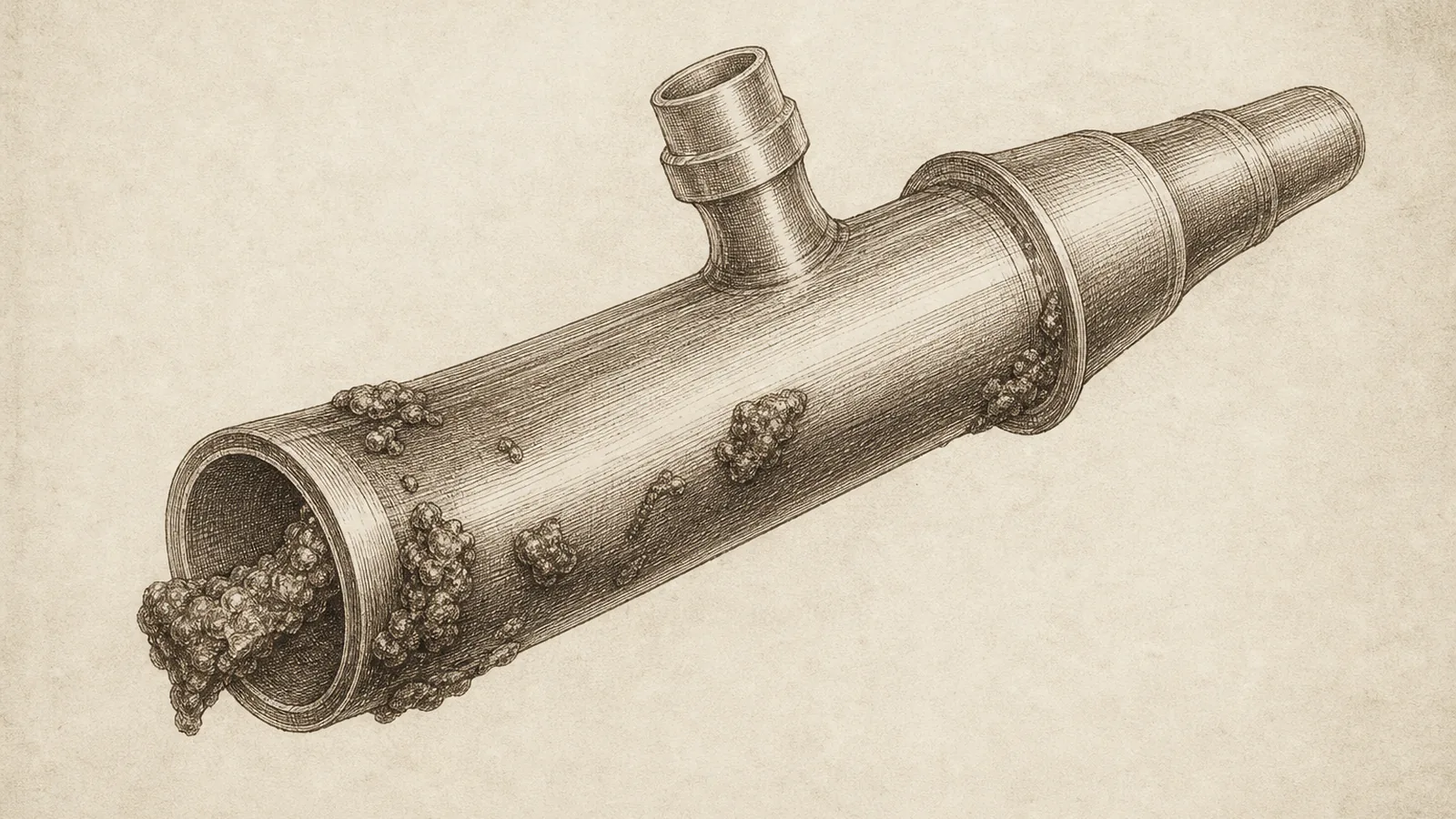
Picture a thin plastic sleeve in someone’s femoral artery, threaded up to keep a failing heart pumping. Blood flows around it. And blood, when it meets a foreign surface, does what blood is built to do: it starts to clot.
That biology is the reason the FDA issued an Early Alert on June 2 for Abiomed’s 14Fr Low Profile Introducer Kit, the wide-bore conduit that sits in the leg artery and provides the runway for the company’s Impella CP heart pump to go in and come out. Abiomed’s own complaint: thrombus forming on the introducer during prolonged use, at a rate higher than the company expected. Three serious injuries as of May 15. No deaths reported yet.
The piece I want to land first is the accountability one, because this Early Alert lands inside a pattern. Abiomed has now been through at least seven significant FDA safety actions since mid-2023, and almost all of them happened after Johnson & Johnson bought the company. J&J closed the Abiomed deal in December 2022 for roughly $16.6 billion, its biggest medtech acquisition in nearly six years, and folded the franchise into J&J MedTech. The upside case was the Big Three conglomerate’s post-market discipline applied to a high-margin device line. The ledger does not read that way.
Here is the device, because the design is what matters here. A 14 French sheath is about 4.7 millimeters across, roughly the width of a coffee stirrer. It lives inside a major artery for as long as the patient needs mechanical heart support, which in cardiogenic shock can mean days. The Impella CP threads through it: a tiny axial pump that spins at thousands of RPM up inside the left ventricle, doing the work a damaged heart cannot. The introducer is the only way in and the only way out. If a clot forms on it during all those hours in the bloodstream and dislodges when the clinician manipulates or removes the device, that clot has to go somewhere. The FDA spelled out where: peripheral vessel obstruction with ischemia, requiring prompt clinical assessment and intervention to restore perfusion. The agency added that in less common cases the obstruction could progress to irreversible vascular occlusion with the potential for permanent impairment. That is the polite regulatory phrasing for a leg that loses its blood supply.
The action itself is narrow. The introducer kit, product codes 1000434 and 1000435, is only compatible with the Impella CP tenth-generation pump, product code 1000413, so Abiomed is pulling the pump set along with the sheath. Hospitals using the system on patients in cardiogenic shock or undergoing high-risk percutaneous coronary intervention are the affected population. An Early Alert is the FDA’s mechanism for getting word out before a recall is formally classified, which itself tells you the agency considers the signal serious enough to move on.
What the announcement does not tell you is how often the clot was forming, on how many devices, over what timeframe. Abiomed’s framing is a complaint rate higher than expected. The expected rate, the observed rate, and the denominator are not in the announcement. Three serious injuries in a population of acutely sick cardiogenic-shock patients needs context the company has not provided. Give us the denominator.
Now the rest of the ledger, in order. In June 2023, Abiomed recalled labeling for the Impella RP Flex with SmartAssist over a risk of blood clots, after 12 reported injuries and no deaths. In March 2024, the FDA issued a Class I recall, its most serious type, of the instructions for use of the entire Impella left-sided blood pump family, after the agency tallied 129 reported serious injuries and 49 reported deaths in adverse-event filings citing left-ventricular perforation. In May 2024, the company recalled nine Impella CP with SmartAssist pumps that had failed internal quality inspection but were shipped anyway; all of them were returned before any patient use, and no injuries were reported. In December 2024, Abiomed updated instructions for the Impella RP family after finding that guidewires could contact the pump and damage its optical sensor, with a risk of temporary or permanent pump stop. In August 2025, automated Impella controllers were recalled over a pump driver circuit defect. In October 2025, automated Impella controllers received a Class I correction over cybersecurity vulnerabilities that could let an attacker take control of the pump. And in June 2026, the introducer in front of the pump becomes the latest clot-related problem on the Impella safety ledger.
That is seven significant safety actions in three years on a single device franchise.
My read, plainly. The Early Alert is the system catching a signal, which is the system doing its job. The biology of a foreign body sitting in a high-flow vessel is unforgiving, and no version of this device was ever going to be clot-free. The question worth pressing is not whether thrombus happens, because it does. The question is why a franchise on its seventh significant FDA safety action since mid-2023, owned for most of that run by a parent whose name is supposed to mean post-market discipline, keeps reaching the regulator after the fact, whether through field complaints, an internal inspection miss, labeling gaps, or a cyber hole. If I were a hospital cardiology director with an Impella CP program right now, I would want the denominator. And I would want it before I had to use the next sheath that came in the box.
Sources
- FDA – Early Alert: Catheter Introducer Kit Issue from Abiomed (2026)
- FDA – Abiomed Recalls Instructions for Use for Impella Left Sided Blood Pumps due to Perforation Risks, Class I (2024)
- FDA – Abiomed Recalls Labeling for Impella RP Flex with SmartAssist for Risk of Blood Clots (2023)
- FDA – Heart Pump Recall: Abiomed Removes Certain Impella CP with SmartAssist Systems due to Failed Quality Inspections (2024)
- FDA – Catheter Controller Recall: Abiomed Removes Automated Impella Controllers due to Pump Driver Circuit Assembly Issues (2025)
- FDA – Alert: Automated Impella Controller Correction due to Cybersecurity Issue from Abiomed (2025)