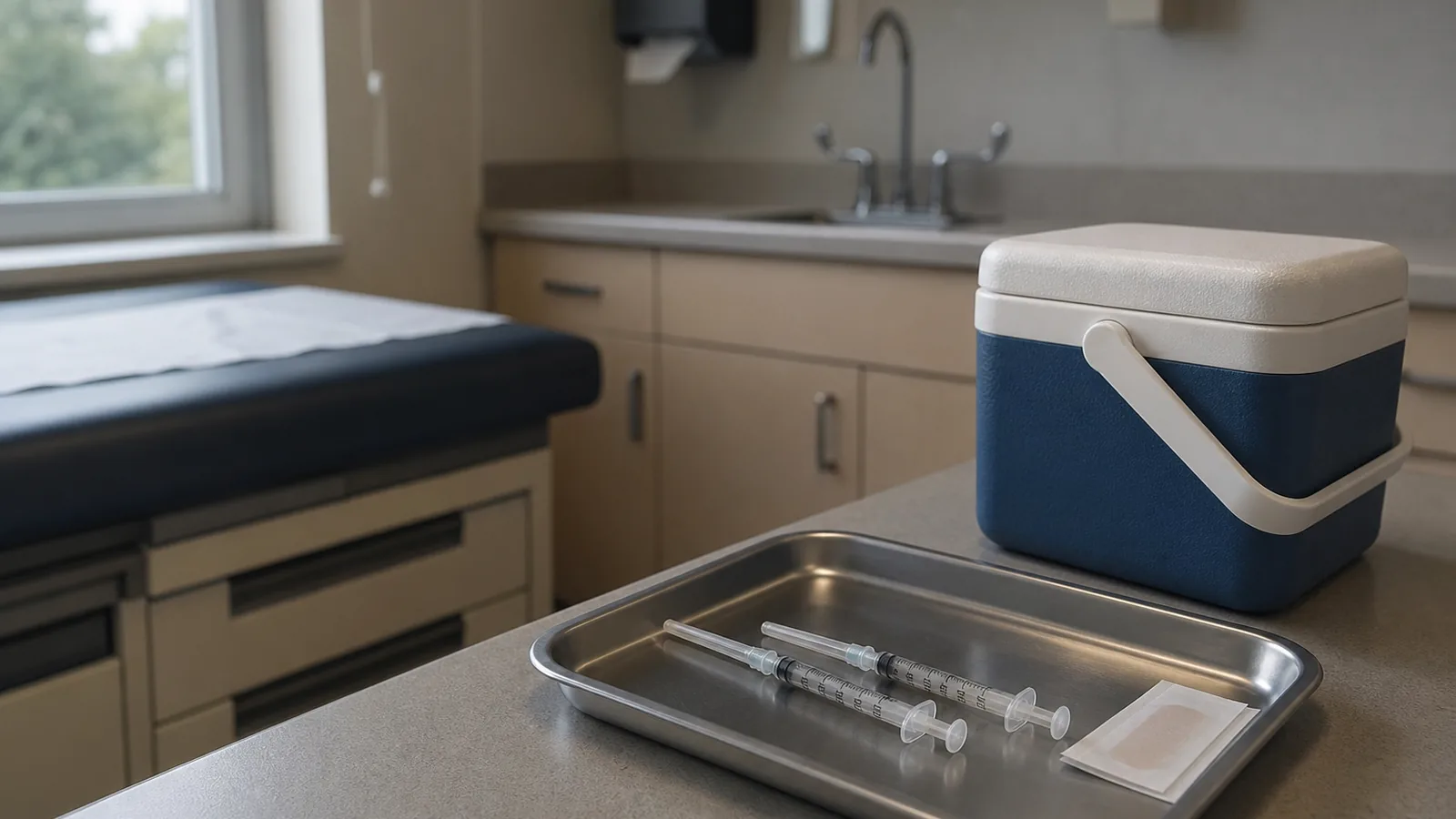
Immunologists settled the core question in the spring of 2021. Give an mRNA dose to a child who has already recovered from COVID-19, and the shot behaves less like a first dose than like a booster: the memory B cells filed in the bone marrow, the T cells that recognize pieces of the virus a vaccine never shows them, and the resting antibodies that come roaring back within days do most of the work before the needle goes in. So when a European trial reopened the question this week, as TrialSite News reported, whether a previously infected child needs a second dose, the odd part was not the finding. It was that the recommendation machinery had spent four years running on a naive-immune-system assumption long after most children had stopped being immunologically naive.
The biology was legible before most children had been vaccinated at all. In February 2021 the BMJ was already reporting that people who had been infected might need only a single dose. That July, a group at an infectious-disease unit measured it directly: a single mRNA dose in previously infected people drove neutralizing activity and immunological memory to levels that took two full doses to reach in the never-infected. A cohort of healthcare workers in Padua then filled in the durable half of the story, showing that neutralizing antibodies decayed faster in the never-infected than in the previously infected three months out from the second dose. Prior infection gave more than a head start. It gave a sturdier response that held longer.
Then the registries arrived and told the same story at the scale of hundreds of thousands. The cleanest pediatric look is a target trial emulation built on Israeli health records, a design that mimics a randomized trial by carefully matching who did and did not get a shot. It followed 163,812 young people who had already been infected, roughly 120,000 children aged 5 to 11 and 43,000 adolescents 12 to 16, and it compared a single dose against no vaccination at all as the variants swept through. Against Delta, the shot earned its place: 78 percent added protection in adolescents, 64 percent in children. Against the first omicron wave it still counted, 54 percent in adolescents and 71 percent in children. Against BA.4 and BA.5, the sublineages children were actually meeting by then, the benefit fell to 8 percent in adolescents and 12 percent in children, and neither could be told apart from zero. The confidence intervals ran straight through nothing.
Read what that study did and did not measure. It tested the first dose against no dose in a recovered child, and found its extra protection against the current variant had shrunk to a rounding error. It could not test the second dose at all: fewer than 7 percent of these children got more than one shot after recovering, too few to analyze. So the direct evidence for a second dose in a previously infected child does not exist. What exists is the first-dose result, and a second shot stacked on a first that barely moved the needle has that much less room to help.
For direct dose-counting you have to look at adults, and there the numbers are starker. Austria linked its national records for 494,646 previously infected adults and asked what each dose bought against reinfection. The first dose delivered 88 percent effectiveness. The second delivered 83 percent. The second shot added no protection, and by these numbers it tracked with slightly less, inside a benefit that waned from about 90 percent within 45 days to somewhere between 59 and 72 percent past six months, regardless of how many doses you had. The authors, working from Austria’s own science fund rather than a vaccine maker’s budget, flagged that all of this played out against “very low absolute COVID-19 mortality risks” in the previously infected. And in children, where severe COVID was rare from the start, a small relative gain layered on an already-tiny absolute risk barely registers.
The vaccine was not useless, and that was never the argument. Europe’s own VERDI-funded analysis of 626,537 Norwegian and 38,938 Italian children found that hybrid immunity, prior infection plus vaccination, generally beat vaccination alone, with a single dose in a previously infected Norwegian child tied to roughly a 90 percent drop in reinfection risk. Infection plus one shot is a strong pairing. What the registries keep declining to justify is the dose after that, and a 2024 analysis of one versus two doses in the previously infected was still litigating it three years after the immunology had closed the case.
Set that against how the recommending bodies actually behaved. In January 2025 the CDC was formalizing a second annual dose for older adults, and its pediatric guidance kept every child on the same escalating schedule without ever writing the exception its own researchers kept asking for. That has not changed. The CDC’s 2025-2026 guidance still recommends the shot for everyone six months and up regardless of prior infection, and the effectiveness studies behind it folded previously infected children in with the naive because prior infection is “incompletely documented” in the records. The machinery ran, and still runs, on a blank-slate assumption about a population that stopped being a blank slate around the time omicron arrived. That is not a data gap. It is an institutional habit: a system built to push one uniform series finds it easier to keep pushing than to carve out the exception.
So the thing to watch is narrow, and it is not another antibody curve; the Israeli and Austrian teams already wrote those findings down. The open question is whether any recommending body, ACIP included, will draw the line in the schedule itself between a child who has already met the virus and one who has not, instead of burying it in a discussion section no one in the policy chain reads. Until it does, a recovered 8-year-old’s second dose stays on the calendar for a variant that stopped answering to it years ago.
Sources
- The Lancet Microbe / PMC – Hybrid immunity against reinfection following prior infection and a single BNT162b2 dose in children and adolescents: a target trial emulation (163,812 young people, Israel)
- Open Forum Infectious Diseases / PMC – Austrian nationwide cohort on first- vs second-dose effectiveness, hybrid vs natural immunity (494,646 previously infected adults; Austrian Science Fund KLI 1188)
- PMC – Impact of prior SARS-CoV-2 infection on vaccine effectiveness in children in Norway and Italy (665,000+ children; EU VERDI project)
- TrialSite News – “One Shot or Two? European Trial Questions Whether Previously Infected Children Need a Second COVID-19 Vaccine Dose” (2026)
- International Journal of Infectious Diseases – Immunological memory and neutralizing activity to a single dose in previously infected individuals (AIDS Healthcare Foundation)
- International Journal of Infectious Diseases – Faster decay of neutralizing antibodies in never-infected than previously-infected healthcare workers after the second dose (Padua)
- BMJ – “Covid-19: People who have had infection might only need one dose of mRNA vaccine” (2021)
- Journal of Medical Virology – One dose versus two doses for prevention of breakthrough infections among the previously infected (2024)
- CDC – 2025–2026 COVID-19 Vaccination Guidance (recommends vaccination for ages 6 months and up regardless of prior infection)
- JAMA – “CDC Recommends Second COVID-19 Vaccine Dose for Older Adults” (2025)