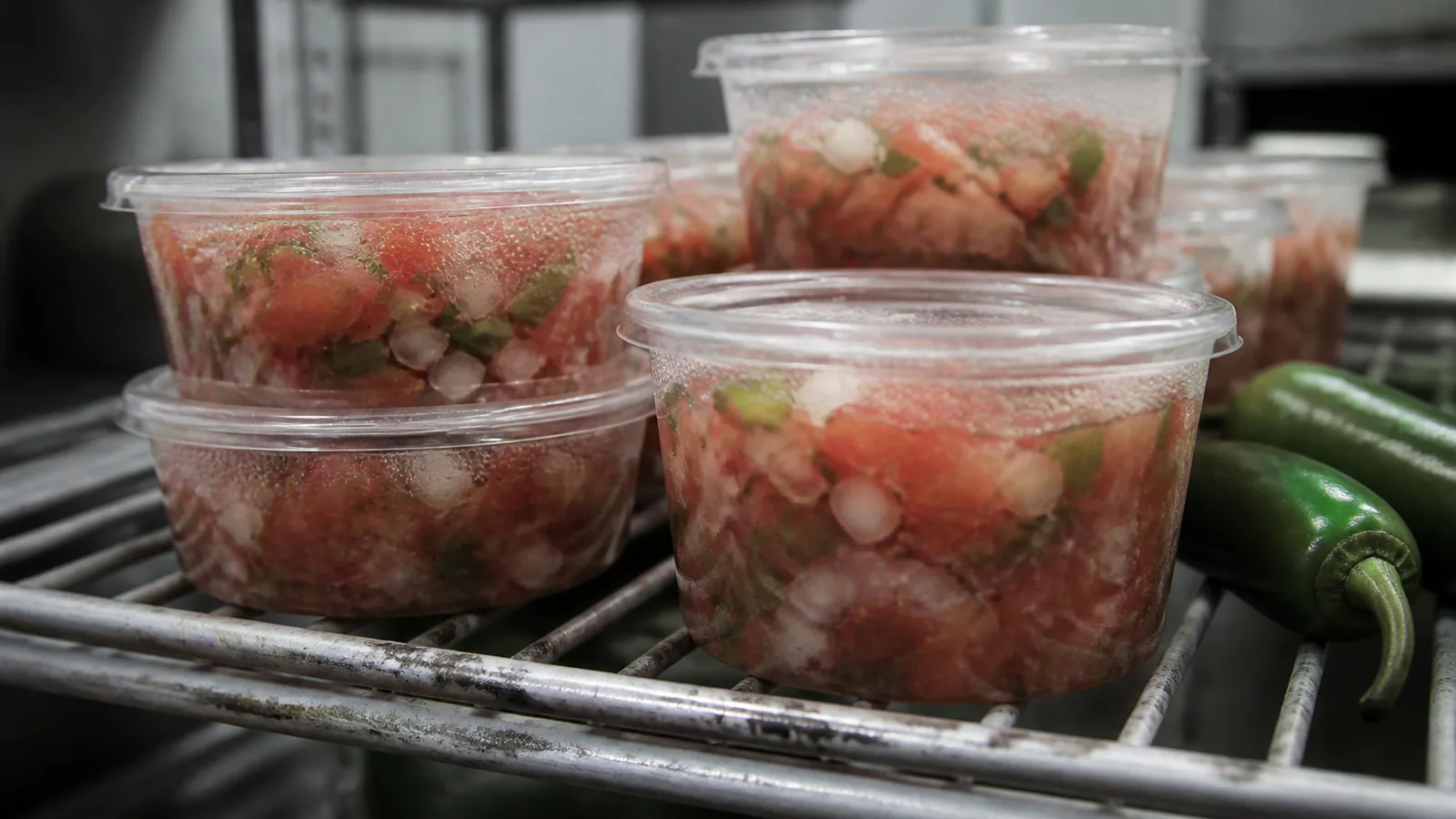
We have watched this exact movie before, and it ran all summer in 2008. That year a Salmonella strain called Saintpaul moved quietly through the produce supply and sickened 1,407 people across 43 states. Investigators first blamed tomatoes, and growers dumped fields and went under while the real culprit sat untouched, until the traceback finally landed on jalapeño and serrano peppers grown in Mexico, funneled through a handful of distributors and chopped into salsa and pico across the country. The lesson was supposed to be permanent: peppers move fast, they get diced into dozens of products, and if you cannot trace them backward in hours you will be counting the sick for weeks.
- 2008Saintpaul outbreak; peppers named too late
- 2011Congress passes FSMA
- 2026traceability rule compliance date: January 20
- 2028FDA delays enforcement to July 20
Eighteen years later, we are counting the sick for weeks. The current outbreak has infected at least 345 people and put 36 in the hospital, and seven weeks after the first person fell ill, two federal agencies are looking at the same peppers and telling the public two incompatible things, while not a single recall notice carries a lot code a shopper could actually check.
Start with the part that worked. The outbreak is Salmonella Javiana, and by the government’s own tally it has reached 27 states, with illnesses beginning June 19 and the last confirmed onset on August 5, according to the CDC’s investigation update. Of the 191 patients investigators managed to interview, 177, or 93 percent, said they had eaten at a Mexican-style restaurant before they got sick. That is the kind of clean exposure signal epidemiologists rarely get, and it pointed almost immediately at a shared ingredient moving through commercial kitchens. The FDA’s traceback ran it to a single grower in Sinaloa, Mexico, whose peppers reached the United States through one importer, Coast Citrus Distributors of San Diego. The line from a Mexican farm to a hospital bed in Ohio was drawn correctly and drawn early.
| Measure | Value |
|---|---|
| interviewed patients ate at a Mexican-style restaurant first | 93% |
The failure came after that, in the part of the system that is supposed to tell you which box on which shelf to throw away.
Here is where the two agencies split. On August 6 the FDA told the public that Coast Citrus “does not appear to supply jalapeños directly to grocery stores,” that the peppers had gone to distributors, wholesalers, restaurants, and food-service companies. Reassuring, if you shop at a supermarket. Two days later the USDA’s Food Safety and Inspection Service issued Public Health Alert 08082026-01 and named eighteen refrigerated grocery products built with those same peppers, sold at Kroger, Walmart, H-E-B, Albertsons, Hannaford, RaceTrac, and Wawa across 23 states. Fourteen of the eighteen, as food-safety attorney Bill Marler documented, came out of four Taylor Farms plants: Dallas, Orlando, one in Rhode Island, and one in Kentucky operating as Taylor Fresh Foods.
Marler sues food companies for a living, so read his interest plainly. But the documents he is reading are the government’s own, and they say two incompatible things at once. One agency told grocery shoppers they were fine while another was listing the wraps, bowls, burritos, and salads on their shelves.
And almost none of those products carry the maker’s name. Only four of the eighteen were branded Taylor Farms; the rest wore store labels, from Marketside at Walmart to ready-meal lines at Albertsons. Somebody standing in a Walmart holding a 12.5-ounce Marketside Southwest Style Salad with Chicken, Marler noted, has no way of knowing who made it. That is not an accident of branding. It is the commissary model working exactly as designed, and it is the mechanism that makes pepper outbreaks so hard to stop. One farm sells to one importer, the importer feeds a central kitchen, the kitchen dices the peppers into products under seven brand names and ships them to ten retail chains, so tracing it forward fans out into a hundred SKUs and the contamination multiplies its hiding places at every step.
Which brings us to the number that should make a policymaker wince. Seven weeks after the first person got sick, there is still not a single public recall notice in this outbreak with a lot code on it. The FSIS alert identifies products by brand name and a use-by date of August 16, not by the batch code that would let you match the container in your fridge against a list, and Taylor Farms’ voluntary recall, issued August 9, adds that the company is not aware of any illnesses tied to its own products, which is the corporate way of saying we shipped it but we are conceding nothing. Without a lot code, the recall becomes a vibe rather than an instruction.
The rule built for this exact day, switched off
There is a tool built precisely for this moment, and Washington shelved it before the moment arrived. Section 204 of the Food Safety Modernization Act, the Food Traceability Rule, would force companies handling foods like fresh peppers to keep the records that let investigators reconstruct a supply chain in hours instead of weeks, and fresh chile peppers sit squarely on its covered-foods list. Its compliance date was January 20, 2026, which means this outbreak would have been the first real test of the system. Instead the FDA extended the deadline by 30 months to July 20, 2028, and last November Congress wrote the delay into an appropriations act directing the agency not to enforce before that date. The stated reason was to spare smaller grocers the cost of compliance. The result is that the one rule designed to generate a product list on day one was turned off for the outbreak it was made for.
This is not incompetence, exactly. It is a choice about who the system is built to protect, and you can read the choice in the calendar. The 2008 Saintpaul postmortem told the government that produce traceability was the weak link; Congress passed FSMA in 2011 partly in response; the rule was written, finalized, then delayed by industry request and a friendly appropriations rider until 2028. Marler points out that the Dallas Taylor Farms plant carrying establishment code M34733 in this outbreak is the same facility that turned up in the 2020 Salmonella onion outbreak. Same plant, same gap, six years apart, and the fix keeps sliding to the right.
The peppers themselves are nearly spent, since a product with a use-by date of August 16 ages off the shelves within days of it, and the immediate danger passes on its own. What does not pass is the question the next outbreak will ask, because there is always a next outbreak. The test that matters now is July 20, 2028, the date the traceability rule is finally supposed to bind. Watch whether it survives that long without another extension, because the industry that just won a delay to 2028 will be back asking for 2030, and the ledger of who got sick while everyone waited is already 345 names long.
Sources
- FDA – Outbreak Investigation of Salmonella: Jalapeño (August 2026)
- CDC – Salmonella Javiana outbreak investigation update
- USDA FSIS – Public Health Alert for meat and poultry products containing recalled jalapeños
- FDA – Taylor Fresh Foods recalls products made with jalapeño peppers
- Food Poison Journal (Bill Marler) – USDA names eighteen grocery products, fourteen from Taylor Farms plants
- The New York Times – Taylor Farms voluntarily recalls jalapeño products over salmonella
- Federal Register – FSMA 204 Food Traceability Rule compliance date extension to July 20, 2028
- New England Journal of Medicine – 2008 Salmonella Saintpaul outbreak associated with raw produce