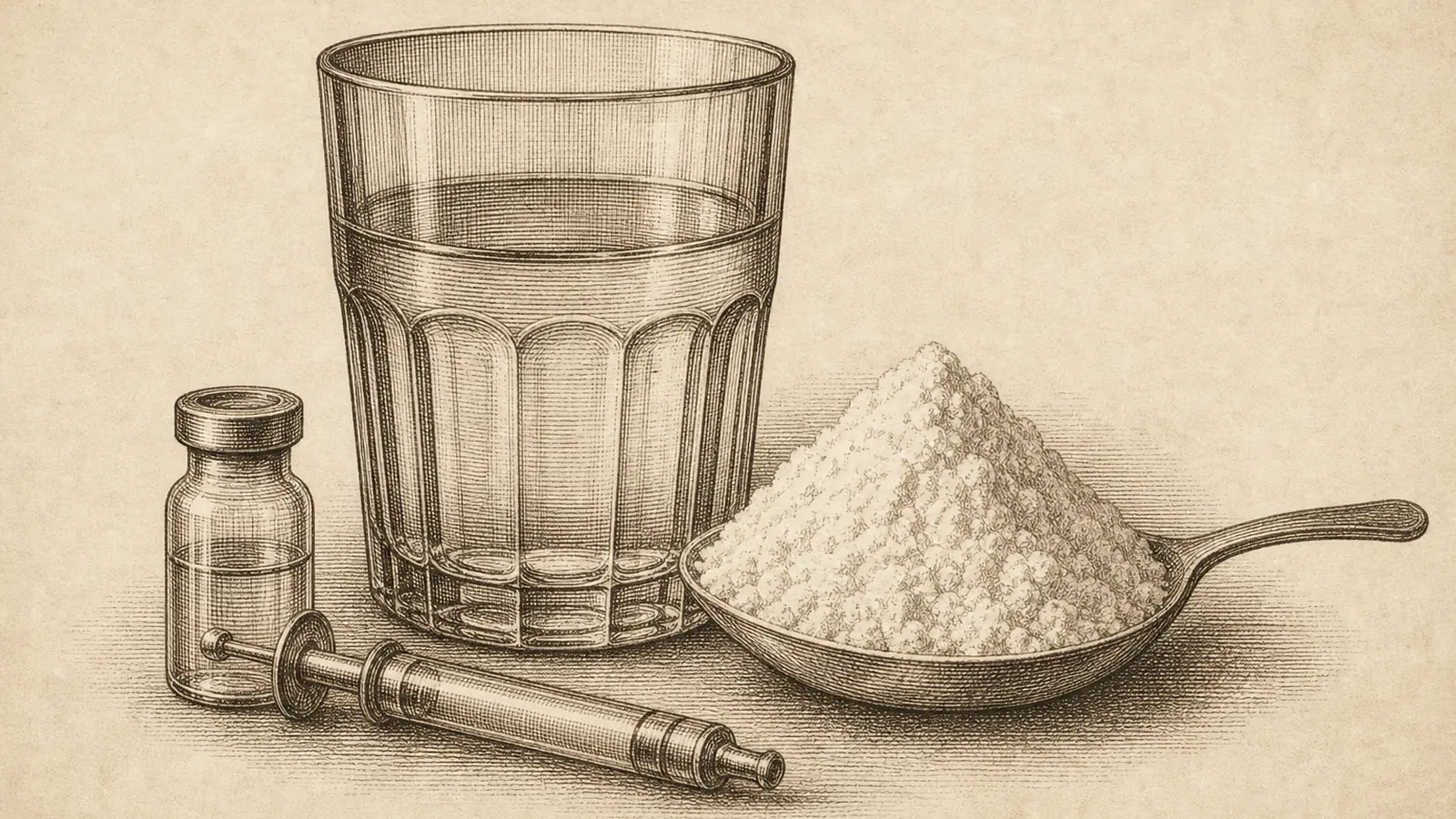
Somewhere tonight a parent will set an alarm for 2 a.m., walk to a dark kitchen, and stir a measured dose of uncooked cornstarch into a glass of water for a sleeping child. Four hours later the alarm goes again. This is not folk medicine. It is the standard of care for glycogen storage disease type Ia, an inherited disorder in which the liver cannot release its stored sugar, so blood glucose slides toward a dangerous low the moment a meal wears off. The cornstarch is a slow-burning fuel that buys a few hours. Miss enough doses and a child can seize. A few hundred Americans keep this schedule, some of them for decades.
On August 19 the FDA offered them what sounds like the end of the alarm clock. Genglycos is the first therapy ever cleared to treat the underlying cause of the disease instead of feeding around it, a single infusion of an AAV8 virus carrying a working copy of the G6PC gene into liver cells to restore the enzyme the patient was born without. Ultragenyx makes it. The list price is $2.7 million a patient.
Then you read what the approval actually rests on.
The GlucoGene study, the trial the approval hangs on, ran 48 weeks, randomized and double-blind against placebo, and enrolled 46 patients aged 8 and up, 44 of them analyzed. The primary endpoint was not whether patients lived longer, or stopped crashing, or got off the overnight feeds. It was how much cornstarch they still needed. On that measure it worked: the treated group cut daily cornstarch by a mean 31 percent versus placebo, about one fewer dose a day. The FDA cleared the drug under its accelerated pathway, calling that reduction a surrogate “reasonably likely to predict clinical benefit.” The phrase is the agency’s standing permission to license a product before anyone has shown the benefit itself.
One number the company reported cuts the other way. In the treated arm, the share of glucose readings below 70 mg/dL rose by about 3 percentage points relative to placebo. Low blood sugar isn’t a complication of this disease; it is the disease. So the trial that earned the approval had patients eating less of the one thing that reliably holds their glucose up and, by the company’s own numbers, spending a little more time in exactly the range the cornstarch exists to keep them out of. The cornstarch went down. The blood sugar control did not.
The safety file is not gentle. Liver enzymes climbed in 71 percent of treated patients during the primary analysis window, the predictable immune reaction to a liver flooded with viral vector. The label instructs physicians to put every patient on corticosteroids after the infusion, not just the ones who react, and roughly a quarter developed adrenal insufficiency as they tapered back off. Hypertriglyceridemia hit 29 percent of the treated group against 8 percent on placebo. A therapy sold as an exit from nightly management comes with its own steroid taper, its own labs, its own new ways to end up in a hospital.
| Measure | Value |
|---|---|
| of treated patients | 71% |
It helps to ask who this approval serves. Genglycos is Ultragenyx’s first gene therapy to reach the market, arriving after a stretch of regulatory setbacks. Analysts do not expect a blockbuster; one pegged peak sales near $362 million. But the economics do not need a blockbuster. A fixed population of a few hundred patients at $2.7 million a head is not blockbuster money, but it is steady, and under accelerated approval it starts arriving now, while the study that would prove a real clinical benefit is still years from reading out. The clinical argument rides on a surrogate; the commercial one doesn’t need proof at all.
As a condition of the accelerated nod, Ultragenyx agreed to keep collecting data: two more years of safety and efficacy from 50 treated and 20 control patients, plus a ten-year program to watch what a rewritten liver does over time. It is the standard bargain of accelerated approval: the work that would show whether patients actually do better, fast longer, crash less, stay out of the hospital, runs after the drug is already on the market, not before.
The FDA has a phrase for the space between a proxy and a proof, and it used it on August 19: reasonably likely. It told a few hundred families that a $2.7 million infusion is reasonably likely to help. Reasonably likely is not the same as does, and the agency that just approved this drug is the one institution in the story that already knows the difference.
Sources
- FDA – Approves First Therapy for Patients Aged 8 and Older With Glycogen Storage Disease Type Ia (Aug 19, 2026)
- CGTLive – Pariglasgene Brecaparvovec-opnr Approved for Glycogen Storage Disease 1a (trial and safety detail)
- BioSpace – Ultragenyx Announces U.S. FDA Approval of GENGLYCOS Gene Therapy (enrollment, safety, confirmatory commitment)
- BioPharma Dive – Ultragenyx, after setbacks, nabs first gene therapy approval (price, commercial outlook)