José-Alain Sahel, a University of Pittsburgh ophthalmologist, has spent years trying to make dead retinas answer to light. On October 8 the New England Journal of Medicine published the results of his latest attempt, a single gene injection given to ten people blinded by retinitis pigmentosa. GenSight Biologics, the Paris company that paid for the trial, announced the paper jointly with the 15-20 National Hospital, one of the trial’s sites. That same day, GenSight filed a second document, which reported that its cash and equivalents had fallen to €0.7 million on September 30 and that its resources were not sufficient to cover its operating requirements over the next twelve months.
Neither number led the announcement. Stockholm did. Three days earlier the Nobel Assembly had given the prize in physiology or medicine to Karl Deisseroth, Peter Hegemann and Georg Nagel, whose work turned light-sensitive proteins from algae into on-off switches for nerve cells. GenSight and the hospital presented the paper as an illustration of what that discovery could do for patients, which is the kind of framing a company short on cash has every reason to want.
Retinitis pigmentosa slowly kills the retina’s rods and cones until some patients can no longer tell a lit room from a dark one. It can arise from a mutation in more than 100 distinct genes and affects more than 1.5 million people worldwide. That sprawl is why gene replacement, one broken gene and one corrective vector, has helped so few of them, and why Sahel calls the gene-by-gene route “proving tremendously difficult and costly.” His approach sidesteps the mutation. Even after the photoreceptors are gone, the retinal ganglion cells that carry signals down the optic nerve often survive, and if those cells can be made to respond to light themselves, it no longer matters which gene failed, provided enough of them and the pathway to the brain are still intact.
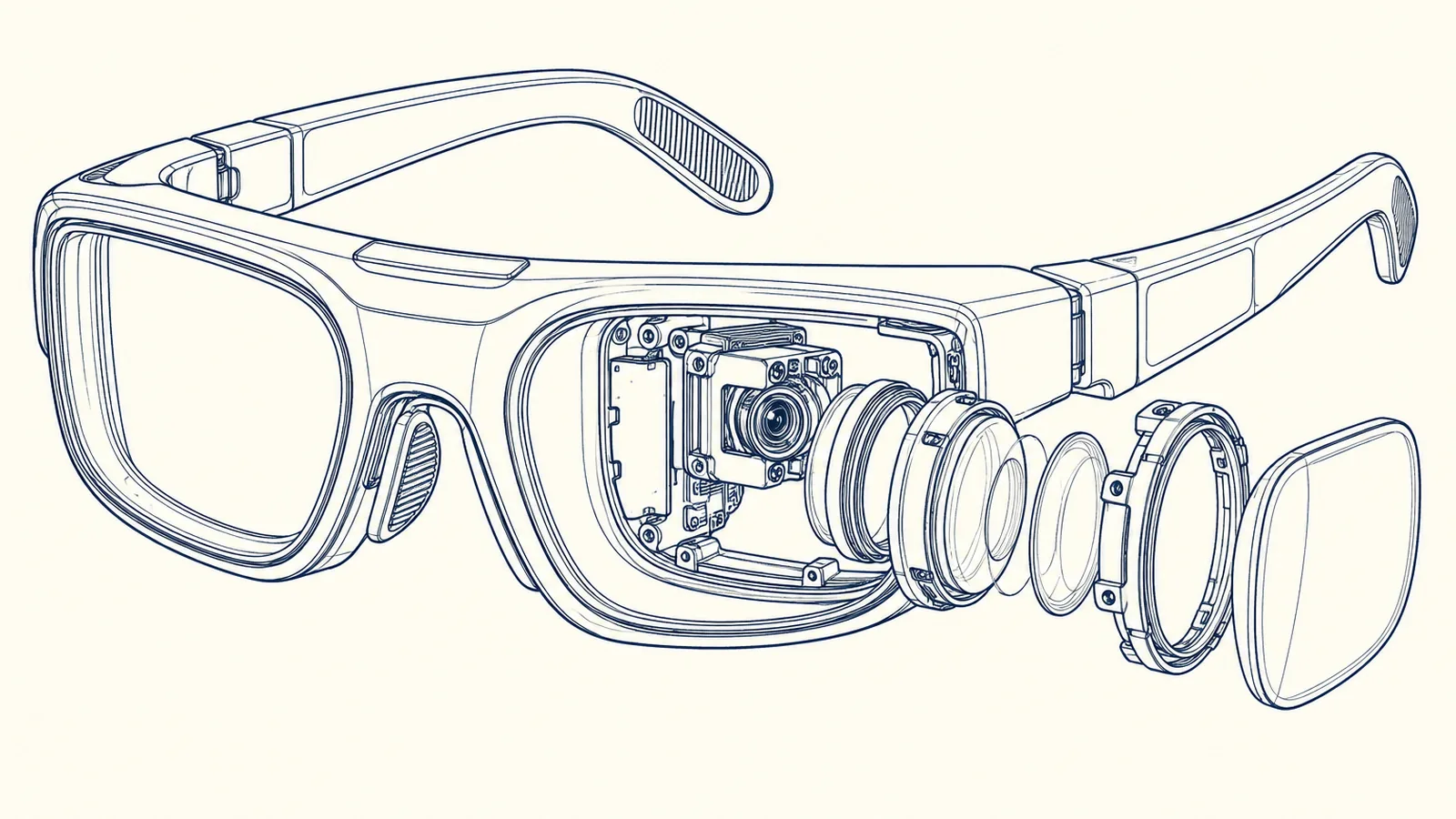
In the PIONEER trial, each patient received one injection into the worse-seeing eye of a virus carrying the gene for ChrimsonR, a light-sensitive protein, at doses GenSight put between 5×10¹⁰ and 5×10¹¹ vector genomes. The protein cannot do its job in ordinary room light, so the therapy arrives with hardware: light-stimulating goggles that turn the scene in front of the wearer into light pitched to the wavelength ChrimsonR responds to. Patients first tried them eight weeks after the injection.
A threshold the protocol did not name
Safety was the trial’s primary outcome, and the record is busier than the announcement’s “mostly mild or moderate” suggests. Nine of the ten participants had 34 ocular adverse events, 23 mild and 10 moderate. The severe one was a central retinal artery occlusion immediately after injection, meaning the artery feeding the retina was blocked, which cleared within minutes after apraclonidine drops. The paper also counted 70 systemic adverse events, six of them severe. None was judged related to the drug or the injection, though three mild ones were tied to the goggles.
The efficacy results are exploratory, and the study was not designed to establish efficacy. Light sensitivity was measured by full-field stimulus threshold testing with the goggles on and the untreated eye patched. Light sensitivity improved in 7 of 10 participants, by factors ranging from 2.0 to 62.3, while the other three showed no improvement or got worse. Six of the seven cleared what the authors call a clinically meaningful improvement, a drop of at least 0.6 log units, or roughly fourfold. The authors set that threshold themselves, and the abstract says it was not prespecified in the protocol.
| Measure | Part | Whole |
|---|---|---|
| participants, tested through the goggles | 7 | 10 |
among the seven who improved
- Lower bound
- 2.0
- Upper bound
- 62.3
Eight participants completed behavioral testing, and four of them showed modest gains with the goggles on tasks like detecting an object, locating or touching it, or judging the orientation of a bar. The definition of who counted as a responder was worked out during exploratory analysis. EEG was recorded in five selected participants, four of them behavioral responders, and decoding of visual signals was more accurate with the goggles on than off. Sahel said the result shows that “the visual system retains a remarkable capacity to process new information.” The university’s own release says the treatment did not restore normal vision or the ability to read. Seven eyes became more sensitive to light through a pair of goggles. None of them could read.
The trial had no control arm and was open-label, so everyone knew who had been treated, and a responder definition written after the data arrived is the sort of thing a control arm exists to discipline. A week later, Nature Medicine ran a research highlight under the headline “Optogenetic therapy shows early promise for treating retinitis pigmentosa,” reporting that the therapy “appears safe” and pointing to “early efficacy signals.” The study had ten patients.
A month before the NEJM paper, a quieter one in Ophthalmology Science showed how this approach can end. AGN-151597 delivered an older, blue-light channelrhodopsin gene into the eyes of 14 patients with advanced retinitis pigmentosa in a study sponsored by Allergan, with a core study of 24 months and follow-up stretching to about five years. The investigators found no clinically significant efficacy through month 24, and light-sensitivity changes in treated eyes looked much like those in the untreated fellow eyes. Three high-dose patients had inflammation-related events, one of whom developed optic neuritis that resolved with lasting effects after eight months. Five of the 14 developed neutralizing antibodies to the viral capsid. The authors suspect the vector never reached enough ganglion cells, because the membrane at the retina’s inner surface is a known barrier to this kind of virus and nobody removed it surgically.
The paper also records the program’s fate. After Allergan became an AbbVie subsidiary, “the development of AGN-151597 was discontinued for business reasons.” Enrollment stopped. The patients who had already received the gene were followed out to protocol, and the drug went into a drawer.
The program that bought itself a comparison is the one now at the FDA. Nanoscope’s MCO-010, now branded Mogenry, was tested in RESTORE, a randomized, double-masked, sham-controlled trial of 27 adults, 18 on the therapy and 9 on a sham injection. The company reports that at week 52 the high-dose arm improved 0.337 logMAR in best-corrected visual acuity versus sham, roughly three lines on an eye chart. Those are company-reported figures from 27 people, and the low dose did slightly better than the high one, which is its own question. But a sham arm is the minimum price of saying a therapy works, and Nanoscope paid it.
€0.7 million on September 30
GenSight’s lead product is LUMEVOQ, a gene therapy for a different inherited blindness, and it has not received marketing authorization in any country. The company’s cash went from €1.7 million on June 30 to €0.7 million on September 30. It estimates its net funding requirement at approximately €16 million, mostly to prepare a phase III trial of LUMEVOQ called RECOVER and the manufacturing behind it, and says that without structural financing by March 2027 it would postpone that trial. It flags “a material uncertainty that may cast significant doubt on its ability to continue as a going concern.”
In 2023, GenSight’s chief executive said the company expected to move GS030 to efficacy trials once the high-dose extension cohort had reported. The filing GenSight released on the morning its paper appeared describes GS030 in one line, as being in Phase 1/2 clinical development, and names no next trial, no date, and no money set aside for either.
Sources
- New England Journal of Medicine: Sahel et al., PIONEER trial (2026)
- Ophthalmology Science: Phase I/IIa study of AGN-151597 in advanced retinitis pigmentosa (2026)
- Optometry Times: FDA accepts Nanoscope’s BLA for MCO-010 in retinitis pigmentosa (2026)
- GenSight Biologics: cash position as of September 30, 2026 (via BioSpace)
- University of Pittsburgh via EurekAlert: release on the PIONEER results (2026)
- Retinal Physician: GS030 shows potential to restore visual function in retinitis pigmentosa (2026)
- News-Medical: Gene therapy and special goggles help some blind adults detect objects again (2026)
- Nature Medicine: research highlight, “Optogenetic therapy shows early promise for treating retinitis pigmentosa” (2026)
- GenSight Biologics: PIONEER one-year safety data and efficacy signals (2023)
- Al Jazeera: Nobel medicine prize honours US and German scientists for optogenetics work (2026)