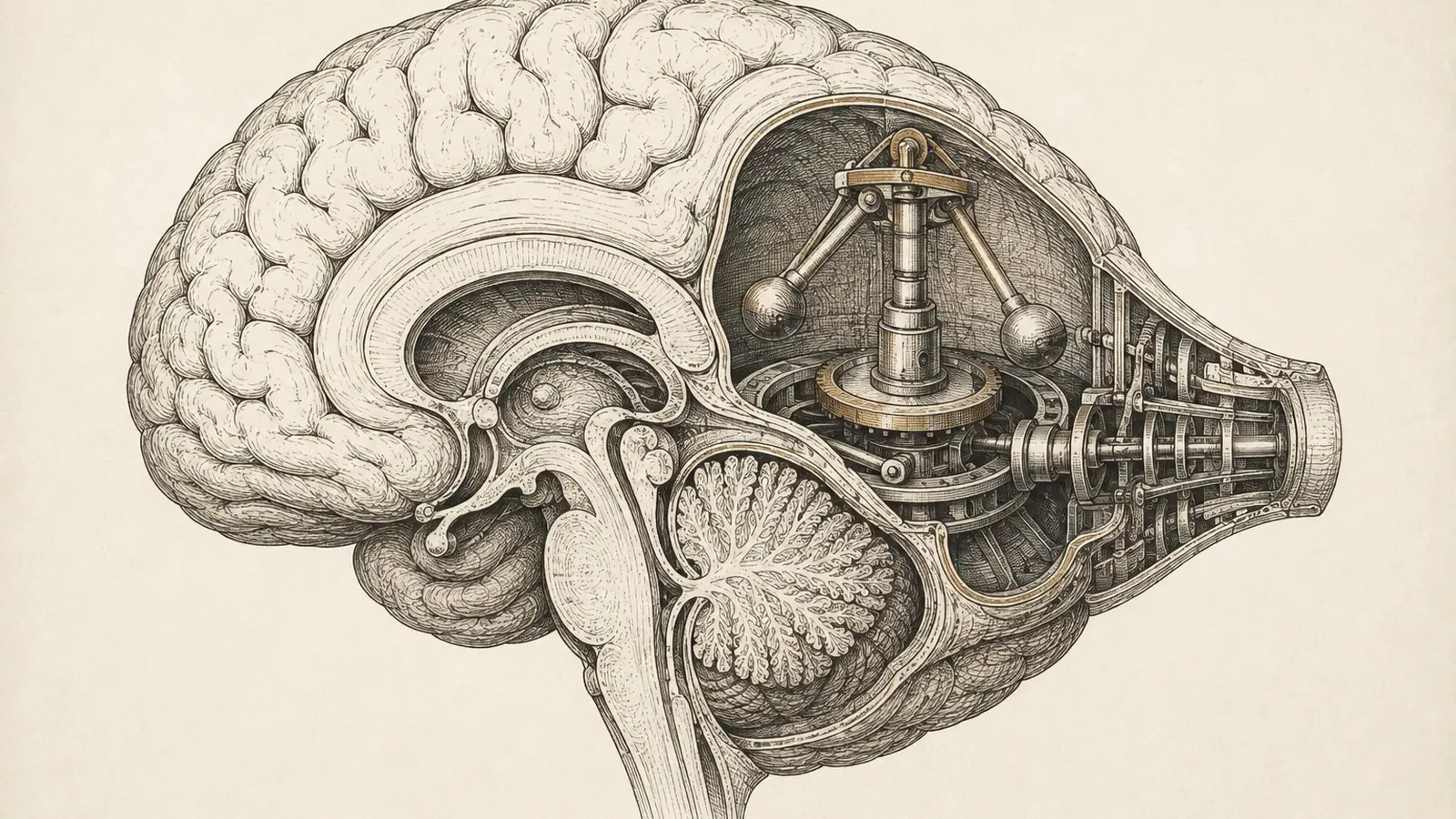
I have spent a lot of my life treating a wandering mind as a defect. The tab left open, the thought that slides off mid-sentence, the meeting where half of me is somewhere more interesting. The instinct is always the same: fix it, drill it into focus, medicate it if that fails. So when a wave of headlines this summer told me the exact attention pattern we pathologize in ADHD is secretly where good ideas come from, my first reaction was suspicion, not delight.
The headlines trace back to a review by Constructor University neuroscientist Radwa Khalil, published this spring in iScience under the title “Attention unleashed: Creative therapy for thoughtful transformation.” Its argument is that attention and creativity lean on overlapping brain systems, so the “defocused attention” that makes ADHD hard on a spreadsheet may be the same machinery that lets a mind roam and connect things that do not obviously belong together. ScienceDaily called it a “surprising creative advantage.” Khalil’s own university said creative therapy could “rewire the ADHD brain.” Here is what the data underneath those verbs actually shows: the creative edge is small, and it fades right as ADHD symptoms cross into the clinical range. The readers the headline is written for sit on the wrong side of that fade.
The paper is a synthesis, not an experiment. It runs no new trial, enrolls no participants, and reports no effect size of its own. That is not a knock; reviews are how a field steps back and asks what the scattered results add up to. But “rewire the brain” promises a clinical result nobody in this paper produced. The readers who see that verb are parents deciding whether to medicate. About 5 percent of American children are prescribed ADHD medication, out of the 7 million, 11.4 percent of kids ages 3 to 17, who have been diagnosed.
So what is the mechanism? Khalil uses a spotlight: most brains aim a tight beam, an ADHD brain runs a wider aperture that pulls in more at once. Great for roaming, miserable for holding still. And here is the question I kept circling back to: why would the same loose, wandering attention that makes a math worksheet impossible be the thing that throws off a genuinely new idea? The proposed answer is that creativity is not one act but two that pull against each other. One network ranges wide and generates unlikely combinations; a second reins them in and picks the good ones. A brain tuned to range wide has a head start on the first half, and often a harder time with the second.
The cleanest test of that wide-ranging half is a 2022 study from Utrecht and Radboud researchers that measured divergent thinking in 470 adults from the general population. More ADHD symptoms did track with more of it: fluency (r = 0.19), flexibility (r = 0.22), and originality (r = 0.17). Those are modest correlations, the kind that describe a real nudge, not a gift. And when the same team looked at adults who actually met clinical criteria for ADHD, the association fell apart. The effect of symptoms on divergent thinking dropped close to zero and stopped being statistically significant. The dividend climbs with symptoms, plateaus, and by the time you reach clinical territory it has mostly spent itself.
That inverts the comfortable version of the story. The subclinical daydreamer with a busy, restless mind may collect a small creative bonus. The person whose symptoms cross into a diagnosis, the one a clinician actually reaches for the prescription pad for, sits past the plateau, where the same traits stop paying and start costing. And divergent thinking is not the same thing as creativity, a caveat the researchers themselves keep pressing: scoring high on an idea-generation task is not the same as writing the novel. The edge is small, sharpest below the clinical line and mostly gone above it.
This lands in a loaded moment. The MAHA Commission, chaired by RFK Jr. as HHS Secretary, was directed to assess the threat posed by ADHD stimulants in children, part of a broader push against psychiatric prescribing for kids. Underneath the noise sits a fair question: whether we have built a system that quietly medicates a wide-aperture mind into a narrow one by default, and whether the thing we are smoothing out has value nobody is measuring. This review does not answer that. Nobody has run the study that would: take children with ADHD, follow their creative output on and off medication for years, and watch what the drug does to the roaming half of their attention. Until someone does, the strongest honest claim available is a hypothesis, and the honest move is to name it as one rather than dress it as a cure.
Stripped of the rewire language, what the paper actually offers is a push to study creative activity, art, music, movement, as a structured way to work with defocused attention instead of only against it. That is worth doing. It is also cheap, unpatentable, and pays no one, which is my best guess at why it has been studied so much less than the pills have.
I came in ready to roll my eyes at another “your disorder is secretly a superpower” pitch, and I left somewhere more useful: convinced the underlying biology holds up, unconvinced the headline earns its verbs, and irritated that the cheap, side-effect-free half of the question is the half nobody funds. So here is my conclusion. If the wandering mind were mine or my kid’s, I would not treat medication as the only lever, and I would not wait for a guideline to give creative work a serious, daily place in the day. But I would not tell anyone their ADHD is a gift and leave it there, because the evidence does not carry the slogan. It carries something quieter: pay attention, the wide-aperture kind, to the question the drug companies have no reason to ask.
Sources
- iScience – Khalil et al., “Attention unleashed: Creative therapy for thoughtful transformation” (2026)
- Frontiers in Psychiatry – Stolte, Hoogman et al., ADHD symptoms and creative thinking in 470 adults (2022)
- National Center for Health Research – ADHD drugs, diagnosis and medication rates, and MAHA Commission scrutiny
- ScienceDaily – “ADHD may have a surprising creative advantage” (2026)
- Constructor University – “Attention unleashed: how creative therapy may help rewire the ADHD brain”
- ADDitude – divergent thinking, mind-wandering, and creativity in ADHD
- The Hill – RFK Jr. targets psychiatric medications for children