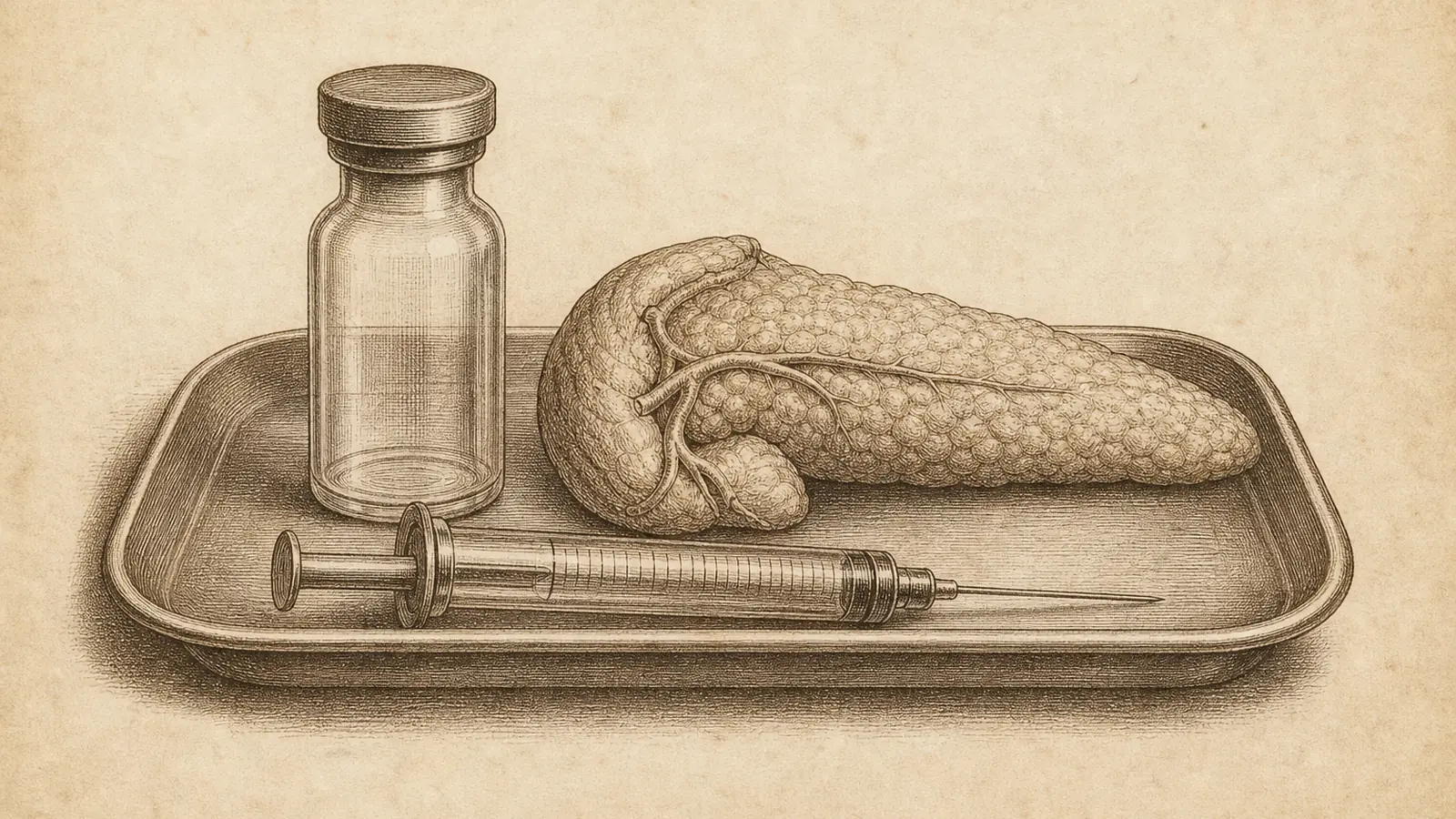
Twenty people walked into a Johns Hopkins clinic without pancreatic cancer, rolled up their sleeves for a course of shots, and a median of 16.5 months later still did not have pancreatic cancer. That is the entire clinical event. Depending on which release you read on July 16, it was either a small first-in-human safety study or the interception of one of the deadliest cancers in medicine before it can start.
The people who ran the study are careful about which of those two things happened. Michael Goggins, a Hopkins pathologist and a senior author on the paper, told reporters that “larger studies are needed to demonstrate that this effect was in fact due to the vaccine.” The press releases were less restrained. The one from the American Association for Cancer Research called it, in its own headline, a vaccine “to prevent pancreatic cancer.” Two of the investigators, meanwhile, co-founded the company that has licensed the shot and would be paid if it ever reaches a market. Hold those three facts next to each other and the shape of the coverage comes clear: a hedged sentence from the scientists, a prevention headline stacked on top of it, and a startup underneath.
Here is what the trial did. mKRAS-VAX is an off-the-shelf peptide vaccine that targets the six most common mutations in KRAS, the faulty switch behind more than 90 percent of pancreatic ductal adenocarcinomas. Twenty asymptomatic volunteers, all carrying inherited risk (germline mutations in ATM, BRCA1, BRCA2, CDKN2A, or APC) plus a pancreatic lesion already visible on imaging, got four shots over 13 weeks. The results, published in Cancer Discovery: 18 of the 20 volunteers, 90 percent, mounted a mutant-KRAS-specific T-cell response, with a median 18.2-fold jump in interferon-gamma-secreting cells, and those cells were still detectable up to two years later. Side effects topped out at grade 1 and 2. On the terms the study set for itself, safety and immune response, it did what it set out to do.
What it did not do is test prevention, and its designers say so. The trial “was not designed to assess the clinical efficacy of the vaccine,” the Hopkins team acknowledged. It was a single-arm study, not randomized, in twenty people you could seat at two dinner tables. A T-cell response is a surrogate, a sign the immune system noticed the target, not proof it will stop a tumor that usually takes years to surface. The vaccine trained the immune system. It prevented nothing anyone can measure, because over a median of 16.5 months in twenty predisposed but asymptomatic people, there was almost no cancer to prevent either way.
That leaves the number the prevention coverage leaned on hardest: cysts. Among the vaccinated, 37.5 percent showed reduction or resolution of pancreatic cysts, against 6.8 percent in an unvaccinated comparison group. It reads like a five-fold effect until you ask where the comparison group came from, and the answer is a separate surveillance cohort of people with “similar characteristics,” not controls matched at enrollment. The account in GEN is blunt about how much is missing: the paper “provided no details on how this control group was constructed, selected, or matched,” and drew no causal link between the immune response and the cyst changes. Pancreatic cysts can shrink or resolve on their own under surveillance. When the comparator is assembled after the fact from a different registry, a striking ratio is not yet a result.
None of this makes the work pointless. Just the opposite. Pancreatic cancer earns its grim reputation honestly, caught too late in most patients to do much about, and a vaccine that provokes durable T-cell memory against the mutation that starts the disease is a serious swing at catching it early. That is exactly why the prevention language has to be policed. The more lethal the disease, the more a hopeful headline is worth to the people carrying it, and the more it costs the families who believe it.
The money behind the trial is not the obvious problem. It came from the National Cancer Institute, the Lustgarten Foundation, and Stand Up To Cancer, public and philanthropic funders rather than a pharmaceutical sponsor. The conflict sits one layer in, with the people who invented the shot. Zaidi and Jaffee co-founded Adventris Pharmaceuticals and hold equity in it, and Johns Hopkins, which licensed the vaccine to the company, is entitled to royalty distributions if the shot ever reaches a market. A third investigator, Mark Yarchoan, is Adventris’s chief medical officer. Hopkins reviewed the arrangement under its conflict-of-interest policy and cleared it, which is how the process is supposed to work and how most of these arrangements look right up to the moment they go wrong.
So set the two things side by side. One is a twenty-person, single-arm, non-randomized safety study that hit a surrogate endpoint and, by its authors’ own admission, was never built to prove the thing the coverage claimed. The other is the machinery around it, turning “the immune system responded” into “prevents pancreatic cancer.” The foreseeable result is families with inherited pancreatic-cancer risk asking their doctors for a shot that exists only inside a trial, on the strength of a word the data has not earned. The people with equity in Adventris are under no commercial pressure to correct them.
Goggins said the honest sentence into the same microphones that carried the inflated one. The next trial, larger and, if it is done right, controlled, will settle whether his caution or the headline was the better guide. Until it reports, the most that can be said about mKRAS-VAX is that it made T cells in eighteen healthy people who were still healthy when the follow-up ended, and that some of the scientists telling you what that means are the same ones who stand to be paid if you believe them.
Sources
- Cancer Discovery – Zaidi et al., first-in-human testing of a mutant KRAS vaccine for pancreatic cancer interception in high-risk cohorts (2026)
- Johns Hopkins Medicine – experimental KRAS vaccine generates immune response against pancreatic cancer in people at high risk (2026)
- AACR News Release – a vaccine to prevent pancreatic cancer in high-risk individuals was safe and elicited durable immune responses (2026)
- GEN – KRAS-targeted vaccine crosses first clinical milestone in pancreatic cancer prevention (2026)
- EMJ – new pancreatic cancer vaccine shows promise in prevention (2026)
- Nature Medicine – intercepting pancreatic cancer with a vaccine (2026)