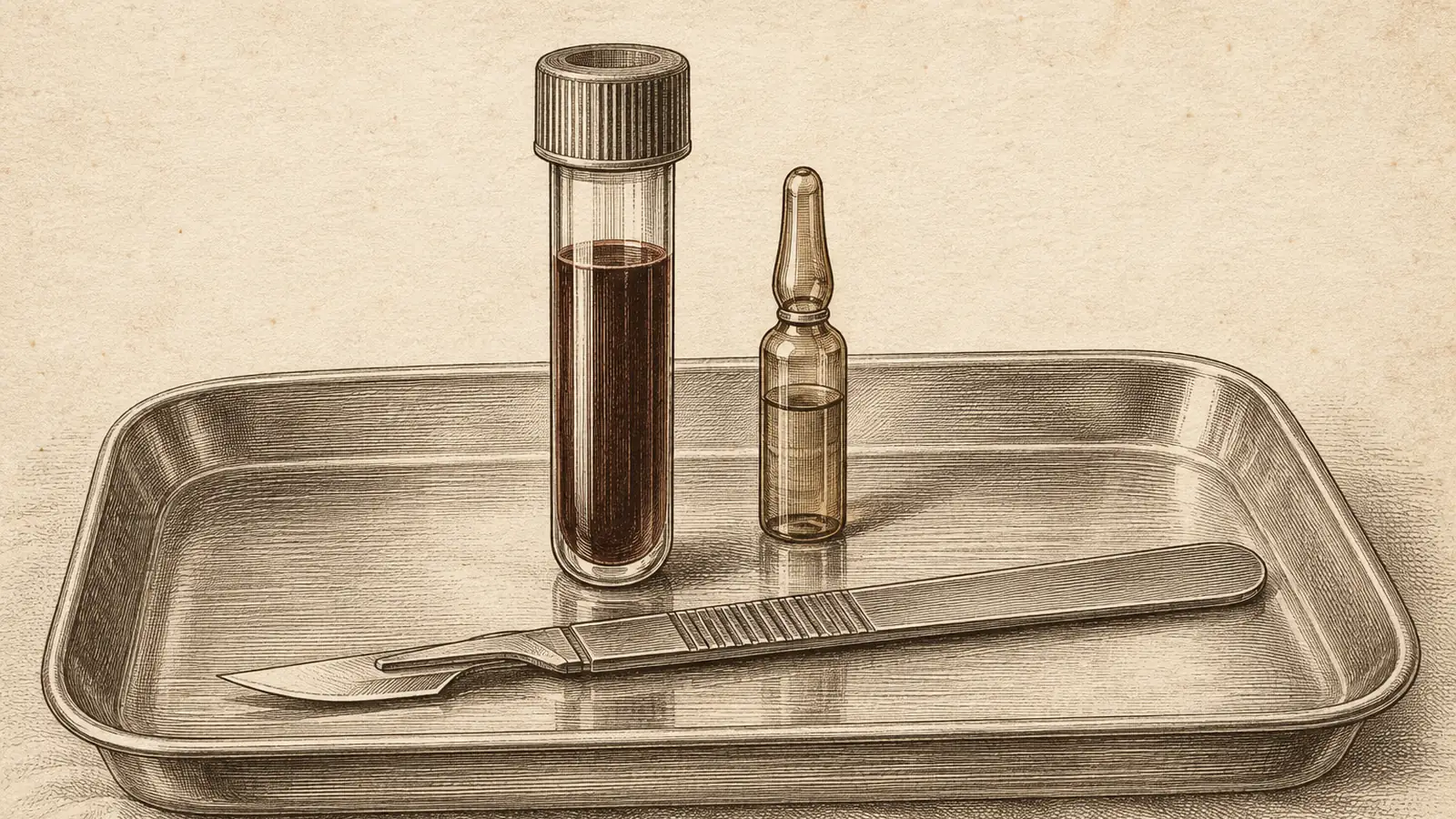
At Fayoum University Hospital, southwest of Cairo, 184 women came in over eight months to have a breast removed, and someone had the good sense to draw their blood for vitamin D before anyone touched them with a scalpel. Half of them, 92, turned out to be deficient. The other 92 were not. They went under the same operation, a unilateral modified radical mastectomy, on the same protocol. In the recovery ward, over the first 24 hours, the two groups did not come through it the same way.
The deficient women were three times as likely to report moderate to severe pain in that first day. And they drew harder on the pump: on patient-controlled analgesia, the deficient group used 112 milligrams more tramadol than the women whose vitamin D was adequate.
The result was published in the BMJ journal Regional Anesthesia & Pain Medicine, from a prospective observational study run between September 2024 and April 2025. The two arms were closely matched, average age 44 in the deficient group and 42 in the sufficient one, all undergoing the same procedure. What separated an easier recovery from a harder one was a single number on a lab slip drawn before surgery.
The threshold was low. Deficiency here meant a blood level below 30 nmol/L, roughly 12 ng/mL, a modest bar even by the elastic standards of vitamin D research. These were not women sitting a little under the recommended range. They were substantially depleted, and heading into major cancer surgery that way. The study measured the price of the low end.
The limits sit inside the finding rather than beside it. One hospital, one surgical team, one population, and an observational design, which can show that low vitamin D traveled with worse pain but cannot prove it drove it. The authors say so plainly: no firm conclusion can be drawn about cause and effect. The intraoperative fentanyl gap between the groups was small, an average of 8 micrograms, which the researchers themselves called modest. And they never measured the confounders that could sit under both a low reading and a rough recovery: inflammatory markers, anxiety, depression, cancer stage, sleep. A depleted body is often a body that is unwell in other ways.
Still, the finding points somewhere the establishment reflex rarely looks first. The default answer to pain after surgery, the one built into the pump beside the bed, is more opioid. That is the tool the system reaches for. This study says a share of that need may be sitting in a $10 blood test and a supplement that costs pennies, orderable weeks before the operation, with a safety record opioids will never match. The researchers land there too, noting that preoperative vitamin D in patients below 30 nmol/L may have a role in modulating postoperative pain. It is the rare intervention with no sales force behind it, which may be why it took this long to get looked at.
No funding source was disclosed, and neither were competing interests. There is no drugmaker whose quarter turns on this result, no patent, no commercial jackpot waiting on the other side of it, just a cheap test and a cheaper vitamin.
The timing says something too. The study went out in the spring, written up in May, then recirculated in mid-September largely unchanged, four months later. A patentable molecule showing a threefold difference in serious pain would have owned the news cycle in May and been in a sales deck by June. A vitamin showed a comparable effect and needed a second push to get a second look.
None of this means every woman facing a mastectomy should be handed a bottle and promised she will hurt less. That trial has not been run, and this one cannot stand in for it. What it means is narrower and harder to argue with. Before you cut, you can check. A screening test that costs almost nothing flagged, in advance, the women who would go on to hurt most and lean hardest on the pump. The cheapest instrument in the room was the one nobody had thought to pick up.
Sources
- Regional Anesthesia & Pain Medicine – vitamin D deficiency and postoperative pain after mastectomy (BMJ, 2026)
- BMJ Group – “Low vitamin D levels linked to more pain after breast cancer surgery” (press release, May 2026)
- ScienceDaily – original write-up (19 May 2026)
- ScienceDaily – recirculated write-up (14 September 2026)
- CURE – “Low Vitamin D Linked to More Pain and Opioid Use After Breast Cancer Surgery”