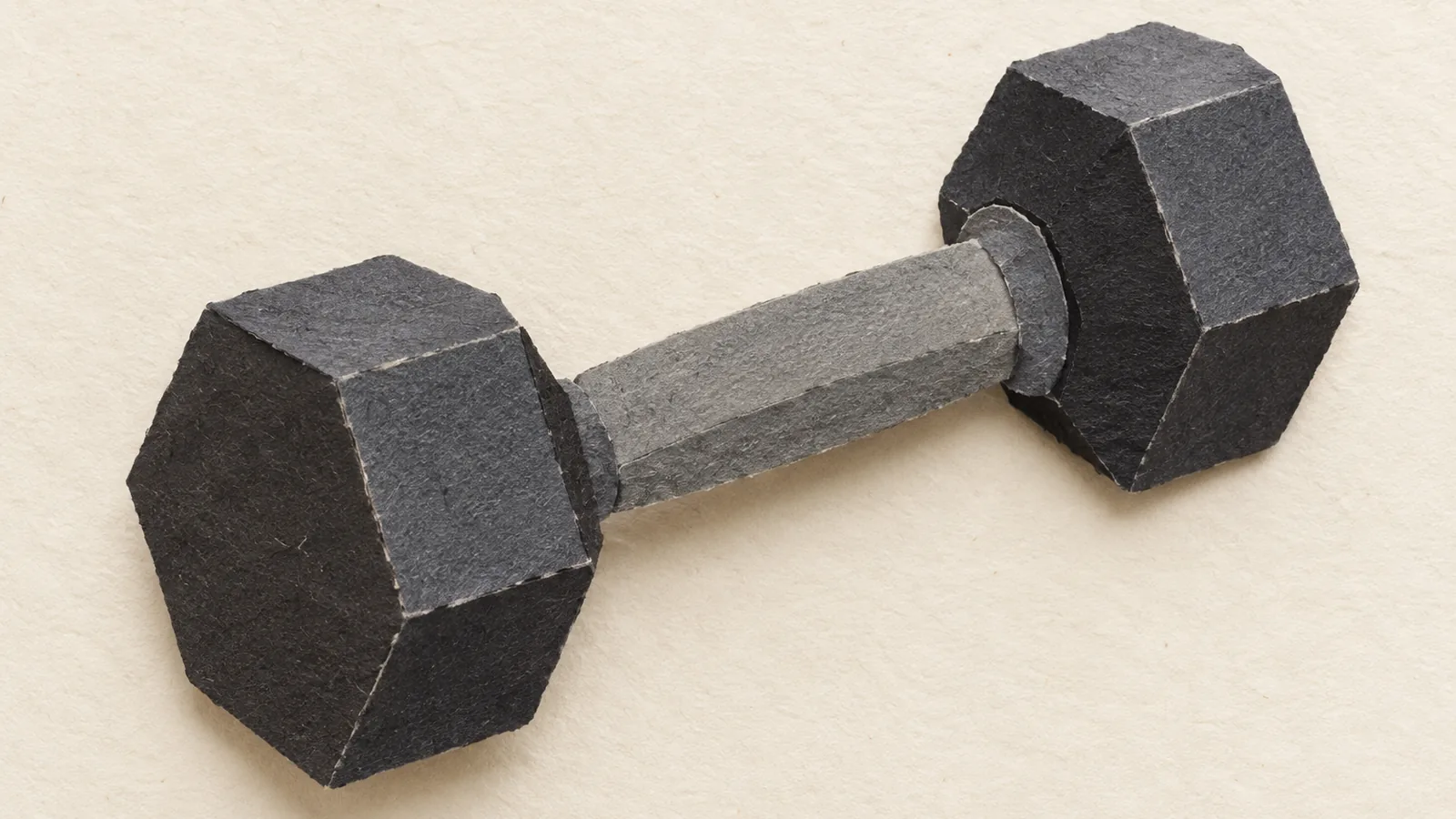
For years I filed the gym into two drawers. Treadmill and bike went in the drawer marked “heart.” Dumbbells went in the drawer marked “arms, shoulders, vanity.” Ask me which half of the room was keeping people out of the cardiology ward and I would not have hesitated, and I would have been wrong.
That split feels obvious because it is baked into the advice we have all absorbed. Cardio is for your heart. Strength is for your muscles and your bones. Even the official physical activity guidelines read that way in spirit: aerobic exercise gets the detailed prescription, and resistance training gets a polite note to do some muscle work on two days a week, tacked on at the end. The heart, in that story, is a pump, and you train a pump by making it race. Weights just make you look like you lift.
Then I read what happens when researchers actually follow people who lift and count who lands in the cardiology ward. The dumbbell drawer turned out to be doing serious cardiovascular work, at doses so small they sound like a typo. Twenty minutes, twice a week. Sometimes less.
In a cohort of 12,591 adults tracked at the Cooper Clinic in Dallas, the people who did any resistance exercise had far fewer cardiovascular events than those who did none. Lifting as little as once a week was linked to a 72 percent lower rate of heart attacks, strokes and cardiovascular death. People logging under an hour of lifting across the whole week came in around 65 percent lower. All-cause mortality dropped too, by about 35 percent. And the benefit held even for people who never met the aerobic exercise guidelines, so this was not cardio smuggled in through a side door.
Then came the number that made me stop and reread. The protection did not keep climbing with effort. Past about an hour a week, or four or more sessions, it flattened out, and the curve even drifted back toward where it started, though not far enough to call extra lifting harmful. The lowest risk landed at about one to two sessions a week. More was not better.
So I kept circling the obvious question. Why would picking up heavy things a couple of times a week protect a pump, especially when you are not making that pump race?
The answer lives mostly outside the workout, and this is where the biology got its hooks in me. Skeletal muscle is the largest sink for blood sugar you own. When you eat, glucose pours into your bloodstream, and most of it gets pulled back out by muscle, which burns it or banks it as fuel. Build more muscle and keep it working and you enlarge that sink: the tissue pulls glucose out more hungrily and needs less insulin to do it, so your pancreas is not firing off surge after surge, and your vessels are not marinating in high blood sugar and high insulin all day. Chronic glucose and chronic insulin are among the things that stiffen and inflame the arteries feeding the heart, which is the thread the Times laid out when it called strength work surprisingly good cardio.
So the heart benefit is not really about the twenty straining minutes. It is about what the muscle does the other twenty-three hours, sitting on your frame and quietly rewriting how your whole body handles sugar. I find that quietly thrilling. The workout is the deposit, and the interest pays out while you sleep.
Muscle is busier than meat that moves bones. Contracting muscle behaves like an endocrine organ, releasing signaling molecules that nudge fat and blood vessels toward a calmer, less inflamed state. Resistance work also shaves visceral fat, the metabolically nasty kind packed around your organs, and it lowers resting blood pressure. The pressure piece surprised me most. A 2025 meta-analysis of isometric training, the hold-it-steady end of strength work like wall sits and handgrip squeezes, found resting systolic pressure falling by around 7 points. Holding still, under tension, moves the number cardiologists chase with medication. Why would bracing against a load teach a vessel to relax? Because the vessel answers the brief squeeze by getting better at opening up afterward, the same way a muscle answers a weight by getting stronger.
None of this rides on one lucky dataset. A meta-analysis of 16 long-term cohort studies in the British Journal of Sports Medicine tied muscle-strengthening activity to a 10 to 17 percent lower risk of dying from any cause, from cardiovascular disease, from total cancer and from diabetes. It found the same bent curve: the biggest payoff landed somewhere around 30 to 60 minutes a week, then the line turned back. The person grinding two hours a day was not buying extra heart protection with hours five through fourteen.
all causes, CVD, cancer, diabetes
- Lower bound
- 10
- Upper bound
- 17
I want to be straight about what this is, because I am leaning hard here and would rather earn it than oversell it. These are observational studies. People reported their own workouts, so some rounded up, and the kind of person who lifts twice a week may be doing a dozen other things right. No one has run the clean randomized trial that would prove lifting itself drives the lower heart-attack rate. What tilts me toward believing it anyway is that the signal is large, it repeats across separate populations, it survives adjusting for aerobic exercise, and the mechanism makes unforced sense. That is a lot of arrows pointing one way.
It is worth asking why this stayed a footnote so long. Part of it is that “do cardio for your heart” is simple and sticky. Part of it is that the whole research and prescription apparatus grew up around aerobic fitness and VO2 max, so strength got measured against the wrong yardstick. And part of it, I suspect, is that twenty minutes of squats twice a week is free, unpatentable and unglamorous. Nobody runs ad campaigns for what you can do with a pair of secondhand dumbbells in your bedroom. A statin has a sales force. Your own muscle does not.
The reframe I would hand my past self is simple. Strength training is not the vanity drawer. It is cardiovascular medicine your body also spends on blood sugar, on blood pressure, on the lean mass that keeps you walking on your own at eighty. And the dose is almost insultingly achievable. You are not required to live in the gym, and the data suggests living there buys your heart nothing extra.
So here is what I do now, and what I am not waiting on a guideline to bless. Twice a week I lift something heavy enough that the last few reps are ugly, for about twenty minutes, and I quit feeling guilty that it is not an hour. I treat those two short sessions as heart appointments, not arm day. And the next time a chart tells me cardio is the heart half of the room, I am going to remember which drawer the receipts came out of.
Sources
- Medicine & Science in Sports & Exercise, resistance exercise and cardiovascular events in 12,591 adults (2019)
- British Journal of Sports Medicine, muscle-strengthening and mortality meta-analysis of 16 cohorts (2022)
- Isometric resistance training and resting blood pressure, meta-analysis (2025)
- The New York Times, why weight lifting is good for your heart (2026)