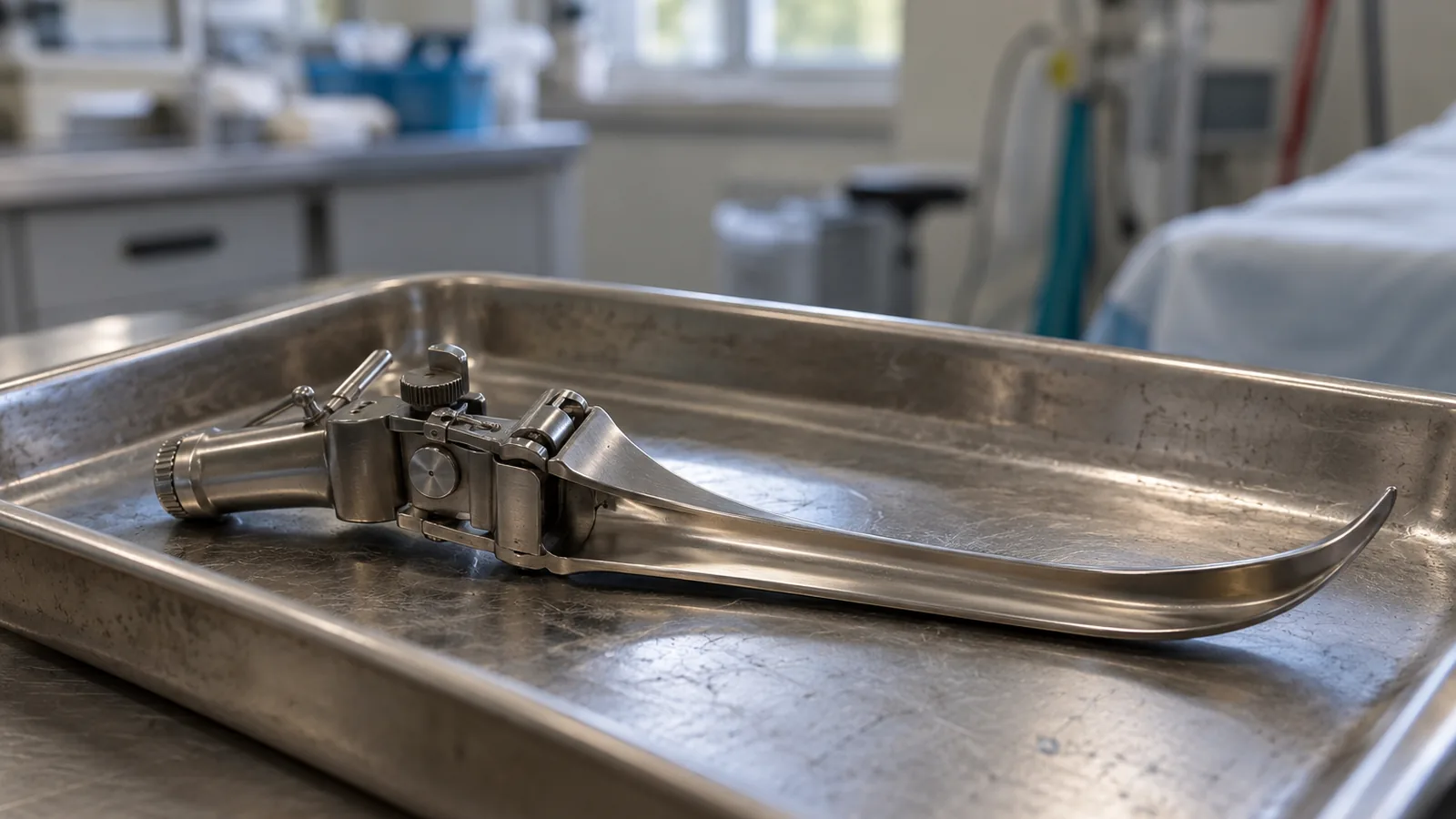
On Friday afternoon, Karim Mikhail, director of the FDA’s Center for Biologics Evaluation and Research, announced the accelerated approval of Voceryq, Inovio Pharmaceuticals’ DNA immunotherapy for adults with recurrent respiratory papillomatosis, and called it “a meaningful scientific breakthrough.” The trial behind it had no control arm. In the group the agency used to judge efficacy, seven patients went the following year without needing surgery.
had not provided adequate information to justify eligibility for the accelerated approval pathway
Ten months earlier the same agency had sounded less sure. When it accepted Inovio’s application in December, its reviewers wrote into the file acceptance letter a preliminary conclusion that the company had not provided adequate information to justify eligibility for the accelerated approval pathway, a sentence Inovio then had to pass along to its shareholders. The company had also asked for a six-month priority review and was given the standard ten months instead, which put the decision on October 30, 2026. Inovio said it continued “to strongly believe” the product qualified, and that the FDA had agreed to a meeting, not yet scheduled, to discuss eligibility.
What became of that meeting is harder to pin down. In its second-quarter report, Inovio said an informal clinical meeting had taken place, that it had presented its data and its case for the pathway, and that the agency “did not discuss its preliminary comment in the file acceptance letter regarding accelerated approval eligibility.” Neither that filing nor Friday’s announcement says how the question was settled. Somewhere between December and October the doubt was resolved, and nothing Inovio or the FDA has published shows how.
Every surgery carries a cost
Recurrent respiratory papillomatosis is a stubborn, unglamorous disease. Human papillomavirus types 6 and 11 seed wart-like growths in the airway, usually around the voice box; surgeons cut them out, the virus stays behind, and the growths come back, which is how the patients in Inovio’s efficacy group arrived with a median of 4.5 operations in the year before they enrolled. PharmExec puts the adult rate at about two in 100,000. Simon Best, the Johns Hopkins otolaryngologist who led the trial, told HCPLive that “every surgery carries the risk of laryngeal injury,” a sentence that lands differently on a teacher or a singer than on a regulator. Mikhail himself described the disease as “an exhausting and relentless cycle of repeated surgeries.”
Voceryq is two plasmids, one carrying genes for HPV-6 and HPV-11 proteins and the other for the immune signal interleukin-12, injected into muscle and driven into cells by a brief electrical pulse from a device called CELLECTRA 5PSP. The pulse brings its own side effects, which the FDA lists as brief muscle contractions or tetany, vasovagal reactions and transient changes in creatine phosphokinase, and Inovio advises watching patients for at least 30 minutes after each dose.
Seven of 26
The trial, RRP-001, enrolled 32 adults who had each needed at least two surgeries in the prior year, including one scheduled at entry. For efficacy, the FDA looked at the 26 who had needed three or more. Of those, 7 of 26, or 27 percent, needed no surgery through 12 months of follow-up, with a 95 percent confidence interval running from 12 to 48 percent. An interval that wide is about all 26 patients can tell you.
| Measure | Part | Whole |
|---|---|---|
| patients in the FDA's efficacy group | 7 | 26 |
Inovio told it differently in February 2025, when it announced the trial’s publication in Nature Communications. Its headline number was an “overall clinical response rate” of 81.3 percent, 26 of 32 patients, which counted anyone with at least one fewer surgery in the year after treatment than in the year before; a patient who went from four operations to three was a responder. That is a different measure in a different population, and one fewer trip to the operating room is not nothing to the person making it. But the company’s own complete-response figure across all 32 was 28.1 percent, 9 patients with no surgery at all, so the share who stayed out of the operating room sat in the high twenties from the beginning.
- 2025Precigen's Papzimeos gets full approval
- 2026Inovio's Voceryq gets accelerated approval
- 2027expected agreement on Voceryq's confirmatory protocol
Inovio’s case for the drug is simple enough. It says complete responses of this kind “are not expected in the untreated natural history of the disease,” so seven of them mean something without a comparison group. The immunology points the same way: the company reported new T-cell clones that appeared after treatment and turned up in airway and papilloma tissue, with treatment-related side effects in 41 percent of patients and none above grade 2. What a single uncontrolled arm cannot answer is how many of those seven would have had a quiet year without the drug, which is the question a breakthrough is supposed to have answered.
The approval that came first
By the time the agency raised its doubts in December, Voceryq was no longer competing with the scalpel alone. On August 14, 2025, the FDA had given full approval to Precigen’s Papzimeos, an adenoviral-vector immunotherapy for the same adult disease, on a single-arm trial that enrolled 38 patients. Precigen reported that 51 percent achieved a complete response, meaning no surgery in the year after treatment, and that 15 patients still met that bar at two years. Vinay Prasad, then the biologics center’s director, presented the decision as a statement of principle: “Randomized trials are not always needed to approve medical products and this approval is proof of that philosophy.”
The two trials enrolled different patients and defined their counts differently, so the numbers don’t rank the products. They do sharpen the regulatory question. Accelerated approval is reserved for serious conditions and lets the agency rely on an intermediate endpoint, here a reduced frequency of surgical procedures, that it considers reasonably likely to predict clinical benefit, on the condition that later trials verify it. Precigen got full approval on its single-arm study. Inovio did not.
The trial that is supposed to settle the matter has no agreed design. In its second-quarter report, Inovio said the FDA had told it that feedback on the confirmatory design “would be forthcoming.” The company now says it plans to submit a draft protocol by the end of 2026 and expects to align with the agency on a final version around mid-2027, which puts the approval well ahead of the study meant to justify it.
A runway into the first quarter
The market needed no protocol. Inovio’s shares soared more than 300 percent after hours and Precigen’s fell 27 percent, a fair reaction for a company that had booked $74.7 million in Papzimeos net product sales in the first half of 2026 and now has a rival. For Inovio, the approval arrived close to the edge. At the end of June it held $36.7 million in cash, cash equivalents and short-term investments, plus about $18.3 million in net proceeds from a July offering, which it said would fund operations “into late first quarter 2027.” That is the same quarter in which it now expects full commercial deployment of Voceryq, its first approved product.
Mikhail’s statement said the therapy “could mean fewer surgeries, fewer disruptions, and more time living their lives on their own terms,” and the conditional was well chosen. In the group the FDA counted, 19 of the 26 patients still needed at least one operation in the year after treatment, though Inovio’s broader tally suggests many of them needed fewer than before. Whether Voceryq changes the course of the disease is now a question for a trial whose draft protocol is due by year’s end. In December, the agency’s own reviewers were not yet convinced the drug belonged on this pathway at all.
Sources
- FDA – FDA Approves First Plasmid DNA-based Immunotherapy for Adults with Recurrent Respiratory Papillomatosis (October 30, 2026)
- Inovio Pharmaceuticals – Form 8-K, fourth-quarter and full-year 2025 results (BLA acceptance and FDA eligibility comment)
- Inovio Pharmaceuticals – Form 8-K, second-quarter 2026 results (review status, cash runway)
- HCPLive – Voceryq Gains FDA Accelerated Approval for Recurrent Respiratory Papillomatosis
- Nature Communications – DNA immunotherapy for recurrent respiratory papillomatosis (RRP): phase 1/2 study assessing efficacy, safety, and immunogenicity of INO-3107 (2025)
- Inovio – Phase 1/2 INO-3107 results published in Nature Communications (February 2025)
- PharmExec – FDA grants full approval to Precigen’s Papzimeos for recurrent respiratory papillomatosis (August 2025)
- Yahoo Finance / Stocktwits – PGEN stock craters 27% after-hours after rival Inovio’s approval