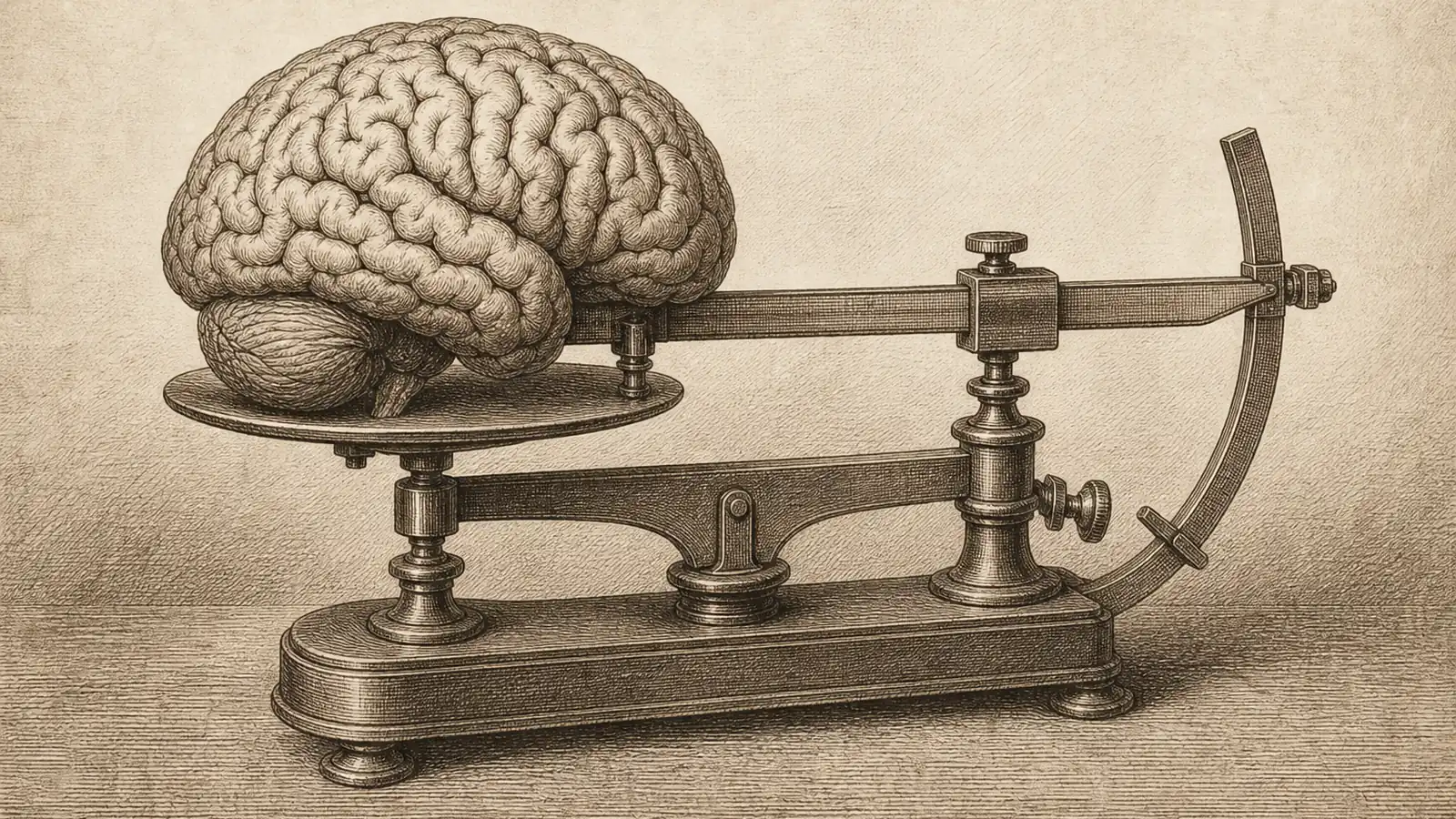
The result that actually surprised me in the new UT Dallas brain-aging study was not the marquee one. It was the one underneath. The participants who scored worst on the brain-health measure at the start of the three-year run gained the most by the end, which is the opposite of how the typical training study reads. The other end of the curve was almost stranger: the top performers kept improving past 1,000 days of practice with no ceiling in sight. That is not what cognitive-aging textbooks from the 1990s prepared most of us to expect.
So I went looking for the catch, because there is always a catch with brain training, and I think I found it. The catch is structural, and it is not the one the press release wants you to expect.
The study, published in Scientific Reports and announced on May 7, tracked 3,966 participants ages 19 to 94 enrolled in the Center for BrainHealth’s BrainHealth Project at UT Dallas. The research team, led by Lori Cook and the center’s founder Sandra Bond Chapman, asked a sharp question. Can a single, multidimensional measure of brain function pick up improvement, not just decline, across the whole adult lifespan? Their answer was yes, and the EurekAlert release put it in lights: cognitive decline is not inevitable, and brain gain is possible at any age.
That sentence is doing a lot of work, and we are going to come back to it.
First the appealing part. Participants who logged five to fifteen minutes a day on what the team calls micro-training (a mix of strategy lessons, lifestyle nudges, and short coaching delivered through an app) kept improving on the BrainHealth Index over the three-year window. The Index bundles roughly twenty metrics into three pillars: clarity (thinking skills), emotional balance, and connectedness. Engagement, not age or gender or education, was the strongest predictor of how much someone gained. The team also describes a “rebound effect,” where participants used learned cognitive strategies to recover, maintain, or even increase brain health during personal illness, job loss, or caregiving for loved ones. That is the finding that actually moved me. People in their 70s clawing back function during a stretch of life that should have flattened them is the kind of result you do not get if the underlying neuroplasticity story is empty.
Now the catch. The Center for BrainHealth built the BrainHealth Index, which UT Dallas describes as patent-pending. The same center runs the project enrolling participants in it, delivers the micro-training that is supposed to move the score, and is also the entity measuring whether the tool detects improvement on itself. There is no independent control group in this analysis, no blinded comparator, no second instrument validating the gain. People who self-selected into a program built to make them better got better on the program’s own scoring system. As a signal that neuroplasticity exists into the ninth decade, fine. As proof that this specific app produces cognitive gain that another lab using another instrument would replicate, the headline overruns what the design can carry.
The funding picture sharpens that read. The study credits private philanthropy from Sammons Enterprises Inc., the Dallas holding company whose multiyear gift (the largest in the center’s 22-year history) put its name on the imaging facility now called the Sammons BrainHealth Imaging Center. The other listed funder is the Texas Research Incentive Program, a state matching scheme administered through UT Dallas. The funders are disclosed, which is the floor a journal asks for. The deeper layer (the institute that built the index, holds the pending patent on it, recruits the participants, and runs the training is also the institute measuring the result) is not flagged in the press materials.
The sample tells on the design too. The participants, the team writes, were largely white, majority female, and generally college educated. Lori Cook acknowledges the demographic narrowness in the UT Dallas writeup and frames it as a representation gap the team is working on. Fair, and worth crediting. But that demographic is also a population that was probably going to do better than average at almost anything you measured them on, especially anything they had signed up to do for three straight years. Self-selection on that scale is not a footnote on a study designed to detect gain; it is part of why the gain is detectable.
So where does that leave the bigger story? The broader picture from decades of cognitive-aging research is that the brain stays a use-it organ much further into life than the worst-case framing assumes. The Center for BrainHealth’s specific instrument being right is a separate question from that one. I came in expecting to be the cynic on a brand-built index. I left thinking the underlying claim that an 84-year-old who logs ten minutes a day for three years measurably improves on her own baseline is probably true, even if the specific number on the specific index is partly an artifact of the system that produced it.
Here is what I would tell a friend forwarding me the “your brain can improve into your 90s” headline. Do not let the design wobble talk you out of the underlying behavior. Daily strategy practice, social engagement, and the small habits of cognitive effort almost certainly help, and the floor for trying is fifteen minutes. What the study does not show is that this particular product is uniquely doing the work, or that the BrainHealth Index measures something nobody else can measure. What it shows, if you read it the way the authors wrote it instead of the way the press release sells it, is that motivated adults across the lifespan who practice and re-practice show measurable change on a tool built to detect it. Interesting, yes. “PROVES brain gain is possible at any age” is a sentence built for a marketing email, not a result.
I would watch this team. I would also watch for the same finding, on the same age range, from an independent lab using a yardstick the Center for BrainHealth did not patent. Until that lands, the news is the neuroplasticity, not the index.
Sources
- Cook et al., Measuring and increasing the brain health span across adulthood: a public health imperative, Scientific Reports (2026)
- EurekAlert/PR Newswire – New Nature Scientific Reports study challenges the inevitability of cognitive decline (2026-05-07)
- UT Dallas News – It’s Never Too Late to Strengthen Cognitive Capacity
- Center for BrainHealth – institutional summary of the brain health span study
- Dallas Innovates – UT Dallas Center for BrainHealth Receives Record-Breaking Donation from Sammons Enterprises
- ScienceDaily – Your brain can keep improving into your 90s, study finds