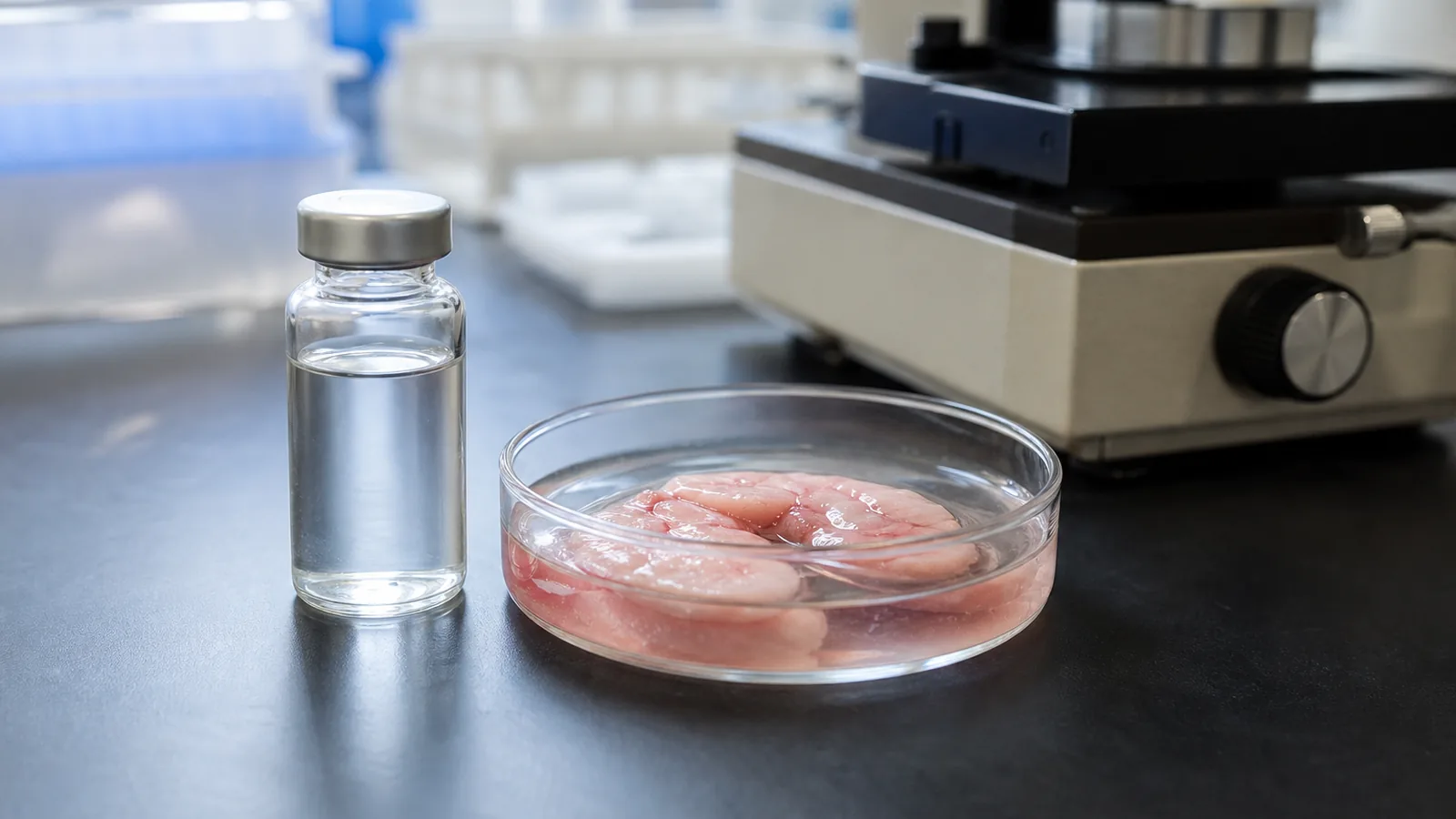
The same monoclonal antibody UCLA cleared with the FDA last fall to start a Phase 1 heart trial just did something nobody expected it to do: it repaired injured kidneys in mice. The drug is AD-NP1, a humanized antibody developed in Arjun Deb’s lab, and it was built without a dollar of pharma money.
I have not taken a cent from any private donor or company to develop this drug
That is a strange combination of facts. Hearts and kidneys do not share a job description. One is a pump made of cardiomyocytes that beat, the other is a filter built of nephrons that don’t. So why does the same drug help both organs heal?
The answer, when you chase it down, is that injured tissue puts itself in a metabolic chokehold and AD-NP1 breaks it. The chokehold has a name. ENPP1 is an enzyme that injured tissue cranks up at the worst possible moment, when its cells most need to be regenerating. UCLA describes what happens next as a metabolic chain of events that disrupts energy production in the very cells trying to fix the wound. Deb’s group reported the heart half of this years ago: knock ENPP1 down, or block it with an antibody, and post-infarct mouse hearts scar less and pump better. What I came in skeptical of was the leap from “the heart does this” to “every solid organ does this.” The new paper in Cell Stem Cell makes that leap a lot less of a leap.
In the new work, the team injured mouse kidneys with toxic diets and nephrotoxic drugs, then either gave the animals a seven-day course of AD-NP1 or used mice genetically engineered to lack ENPP1 entirely. Both groups improved. The serum creatinine, BUN, and cystatin C that any nephrology consult would check were greatly reduced in the ENPP1 knockouts at four weeks compared to controls, and the antibody-treated mice showed less scarring, more proliferating kidney cells, and better function on the same markers. “These animals had a far better outcome,” Deb said in the UCLA release. “Their kidneys were not as damaged, and kidney cells proliferated more.” Translated: in a mouse model, the metabolic brake the antibody releases in cardiomyocytes is the same brake it releases in injured kidney tissue.
Now the part that should make this story land differently than it would in a press kit from a Series C biotech. AD-NP1 was developed entirely at UCLA on public money, specifically the National Institutes of Health, the US Department of Defense, and the California Institute for Regenerative Medicine. Deb has been blunt about the sourcing: “I have not taken a cent from any private donor or company to develop this drug,” he said when the FDA cleared the heart trial. “This work has been entirely funded by taxpayer dollars, and done entirely within the University of California research ecosystem.” UCLA describes the program as a rare case of bench-to-clinic drug development inside a single university laboratory, with no outside company anywhere in the chain of custody.
That matters more than usual here because nephrology has had almost nothing for this problem. Acute kidney injury is grim work, and the current standard of care has not really moved in my lifetime: hold the nephrotoxins, support the pressure, run dialysis if the patient needs it, then wait to see whether the kidney recovers on its own. There are no approved drugs that actively push injured renal tissue into repair mode. AD-NP1, if it survives the long fall from mouse to human, would be the first.
The story we are usually told about why drug development costs what it does is that nothing makes it from a bench discovery to a humanized antibody with an FDA-cleared IND without a portfolio of corporate partners, exclusive licensing deals, and a startup spun out to absorb the risk. AD-NP1 contradicts that script. A taxpayer-funded line of research at a public university produced a first-in-class biologic, cleared FDA review, and is preparing to dose human patients without disclosed pharma or venture money anywhere in the development chain. If it works, the pricing conversation a few years from now is going to look very different from the one we are used to.
None of that erases what the mouse data are and are not. Mice are not people, the kidney injury models the team used are not the messy real-world acute tubular necrosis of a septic ICU patient, and a seven-day antibody course in a controlled lab is a long way from a critically ill patient with sepsis, contrast nephropathy, or rhabdomyolysis. The Phase 1 heart readout has not been published, the kidney trial has not been filed, and the watchful question for anyone reviewing an eventual kidney protocol is what the safe duration of dosing looks like in patients whose other organs are already metabolically stressed. The same brake AD-NP1 takes off the repair program in injured tissue is doing work somewhere else in the body that this paper does not chart.
My honest take: the mechanism is plausible enough, and consistent enough across two very different organs, that I would stop dismissing “regenerative” as a marketing word and start treating ENPP1 as a serious therapeutic target. I would also watch this specific drug for reasons that go past the antibody itself. If a publicly-funded program at a state university can take a first-in-class biologic from a hypothesis to the clinic without renting the road from industry, that is information that should matter to anyone who cares about how American medicine is built and who it serves. The mouse kidneys are interesting. The model that produced the molecule is more interesting than that.
Sources
- UCLA Newsroom – “Damaged kidneys could be repaired with new drug, UCLA-led study shows” (16 June 2026)
- Cell Stem Cell – Su et al., “ENPP1 blockade with a humanized monoclonal antibody enhances renal repair after acute kidney injury” (2026)
- UCLA Newsroom – “FDA approves clinical trials for heart tissue regeneration drug AD-NP1” (October 2025)
- News-Medical – “Heart tissue repair drug may also help repair and regenerate damaged kidney tissues” (16 June 2026)