Two randomized trials in frail older surgical patients landed within months of each other and pointed in opposite directions, and you can already tell which one the health system is going to quote. The supervised, in-clinic version of pre-surgery rehab cut complications by a fifth in 78-year-olds about to have their spines fused. The scalable, home-based version that a hospital can mail you in an envelope did, statistically, nothing. The story is the gap between those two results, and what the system is about to do with it.
Start with the win. In a randomized trial published in Annals of Internal Medicine, 159 adults averaging 78.7 years old (59 percent women) headed for elective spinal fusion were assigned to either standard pre-op care or four weeks of Vivifrail multicomponent exercise, structured protein and nutritional support, and a formal psychological intervention. The share of patients hitting at least one post-op complication fell from 91.2 percent in standard care to 74.7 percent with prehab. Risk ratio 0.80, 95 percent confidence interval 0.67 to 0.95. A nine-in-ten complication rate is what spinal fusion in your late seventies currently looks like as delivered, and four weeks of a non-drug protocol moved it by sixteen percentage points.
That is not a wellness footnote. That is one in five complications gone in a population that, by every conventional surgical logic, should not be that responsive that fast.
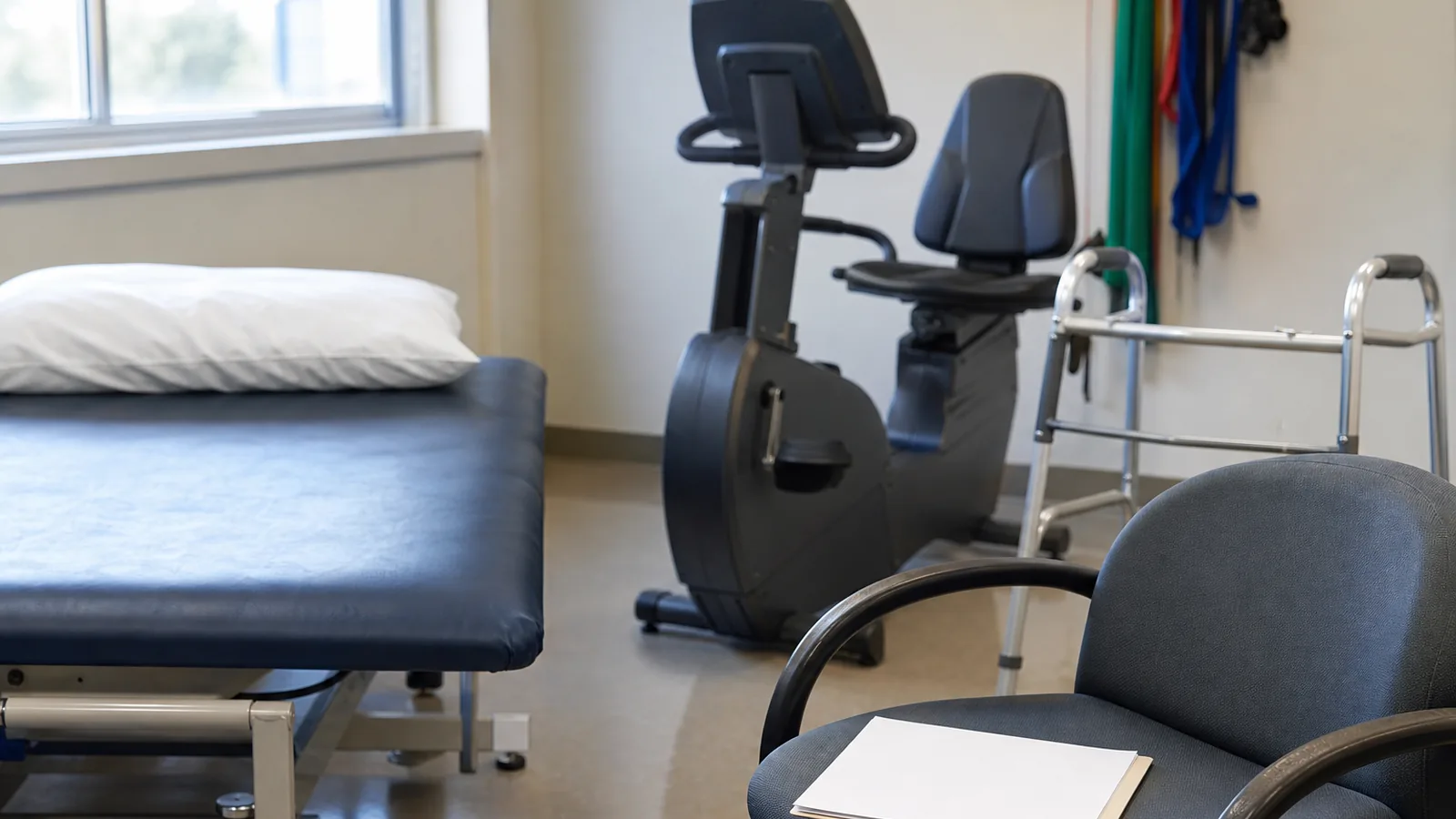
Now the catch, which matters here. The intervention in that trial was not the version of prehab the average patient hears about. Sessions met in a clinic. Vivifrail has been validated in frailty research for years and comes with a prescribed dose. The protein support was structured, not advisory. A psychologist was actually in the room. The program had a body. Someone watched.
In December, the PREPARE trial published in JAMA Surgery tested the version of prehab the system would prefer to scale: 847 frail older adults across 13 Canadian centers, randomized to either a home-based program of three weekly hour-long exercise sessions plus personalized nutrition plus weekly remote coaching, or to a paper handout of public physical-activity guidelines. The primary outcomes were the WHODAS disability score 30 days after surgery and any postoperative complication. The intervention did nothing it was supposed to do. Disability difference of -1.4 points (97.5 percent CI -4.9 to 2.0, p = 0.36). Complications: 50.1 percent in the intervention arm against 47.7 percent in controls, adjusted odds ratio 1.05 (0.73 to 1.49). Both p-values comfortably north of 0.35.
Read those two trials side by side and the temptation is to conclude prehab does not work. The press release on the positive trial certainly does not mention PREPARE, and the generic lifestyle-medicine enthusiasm that surrounds these results is going to make the obvious cheap pivot: take the supervised trial’s headline, attach it to whatever at-home program a hospital can already bill, and move on. I want to flag that move before it lands, because it misreads both trials in the same direction.
The piece of PREPARE almost no one is quoting is the per-protocol subgroup, the 152 of 423 intervention participants who completed more than 75 percent of prescribed exercises. Those patients did show a disability benefit: a mean difference of -4.9 points (97.5 percent CI -9.8 to -0.01), confidence interval hugging zero, and the complication rate stayed flat even there. Median adherence in the intervention arm was 78 percent, which sounds great until you notice only about a third of participants actually crossed the threshold that delivered any signal. The intention-to-treat result was null. The subgroup who hit the dose got a modest disability gain and no complication benefit.
So this is a dose-response problem dressed up as a feasibility problem, and once you see it that way the two trials line up cleanly. In the spinal-fusion population, supervised, in-person, multimodal prehab moved complication rates. Home-based prehab, in a broader frail older population, did not move complications at all and produced a disability signal only in the third of patients who actually completed the prescribed exercise. You cannot reliably get a frail elderly cohort to that completion rate by mailing them a coaching schedule.
There is something surgery culture has been weirdly slow to internalize, which is that the body before an operation is not a static thing waiting for a knife. It is metabolic, neuromuscular tissue that can be trained, fed, and emotionally regulated in ways that change what happens in the operating room and on the recovery ward. The Annals paper is the first I have seen where the effect size is obvious enough you could hand the trial to a skeptical surgeon and watch them squint. PREPARE is the counterweight, and it is not telling you the intervention is fake. It is telling you the intervention has a dose, and a pamphlet is not a dose.
If a parent of mine were headed for spine surgery at 78, I know which version I would want, with no apology. Group exercise sessions in a clinic, not a YouTube playlist. Protein and nutritional counseling from someone who measures something. A few sessions with a psychologist who is trained for surgical anxiety. A program someone has to show up for. Not a binder.
The pharmaceutical industry has spent decades winning the boring arguments on dose, schedule, delivery, and monitoring, and the non-drug interventions that beat them in trials look exactly the same way once you read the methods. Vivifrail has a dose. The Annals protocol had a dose. The PREPARE program had a recommended dose, and the per-protocol benefit went only to the patients who hit it. “Prehab works, get your patient an at-home exercise program” is going to misread these two trials in exactly the direction the health system finds most comfortable, which is the cheap direction. The expensive answer is the one the evidence is pointing at: supervised intensity, structured nutrition, real psychological support, billed and reimbursed like the medical intervention it is. That is what the body of a frail 78-year-old before surgery actually wants. Most patients are still being offered a handout.
Sources
- Annals of Internal Medicine – Multimodal Prehabilitation for Older Adults Undergoing Spinal Fusion: A Randomized Clinical Trial (2026)
- JAMA Surgery (PMC) – PREPARE Trial: Home-Based Prehabilitation for Older Surgical Patients With Frailty (December 2025)
- Newswise – Pre-Surgery Rehab Program Linked to Fewer Complications After Spinal Fusion in Older Adults (press release on the Annals trial)