By the mid-1980s Linus Pauling was furious, and he was losing. Pauling held two unshared Nobel Prizes and was not in the habit of being wrong in public, but the New England Journal of Medicine had just run the second Mayo Clinic trial to conclude that high-dose vitamin C did nothing for advanced cancer, and the scientific world had moved on without him. He kept insisting the Mayo doctors had tested the wrong thing. Forty years later a randomized trial gave vitamin C the way Pauling meant it, straight into a vein, and watched median survival in metastatic pancreatic cancer roughly double. On the narrow technical point he had been shouting about, the record now says he was right.
The version most people know is cleaner than that. A great chemist wandered out of his field, decided a cheap vitamin could treat cancer, and got his comeuppance when real oncologists ran the numbers. Charles Moertel’s group at the Mayo Clinic ran two double-blind, placebo-controlled trials, in 1979 and again in 1985, each giving patients 10 grams of vitamin C a day against a lactose placebo, and each finding no benefit to survival or symptoms. Ascorbate went back to being the thing you took for a cold, and Pauling spent his last years filed under laureates who overreached.
What the clean version leaves out is a question of plumbing. The Mayo patients swallowed their vitamin C. Ewan Cameron, the Scottish surgeon whose results Mayo set out to reproduce, had started his patients on intravenous ascorbate before moving them to pills. No vitamin C went into a vein in either Mayo trial.
That difference is close to everything. Mark Levine’s group at the NIH later worked out that vitamin C is, in effect, two different drugs depending on how it arrives. Swallowed, it is held in check: the gut, the kidneys, and the tissues cap what reaches the blood, so even nauseating oral doses top out under 300 micromoles per liter. Sent straight into a vein, that regulatory machinery is bypassed. At a 1.25-gram dose, Levine’s volunteers reached a mean peak near 135 micromoles per liter by mouth. The same dose by IV reached 885, and full therapeutic infusions climb into the millimolar range, tens of times higher than any pill can manage.
Below a certain concentration, vitamin C does what the supplement aisle advertises and acts as an antioxidant. Above it, the pharmacology flips. In the millimolar range ascorbate turns pro-oxidant in the lab, generating hydrogen peroxide in the fluid around cells, and tumor cells, which run metabolically hot and already carry a heavy load of reactive molecules, are worse than healthy tissue at clearing it. At those levels it behaves less like a vitamin than like an experimental cytotoxic drug, one that happens to be generic and cost pennies. Whether that last detail has anything to do with how long it took anyone to fund a proper trial is a fair question to ask.
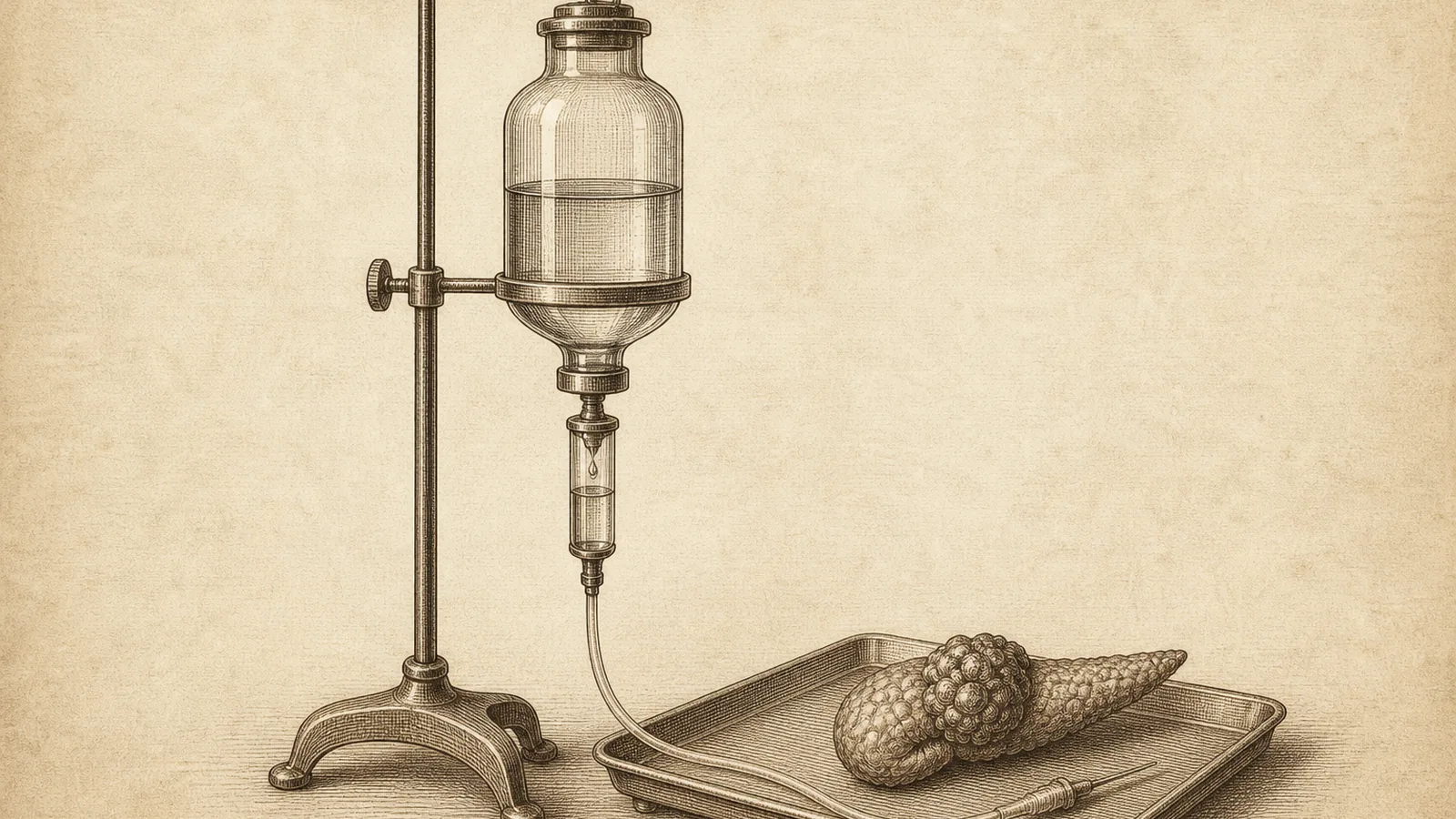
Someone finally funded one. In November 2024 a team at the University of Iowa led by the surgeon Joseph Cullen published a randomized trial in Redox Biology that did the one thing the Mayo trials never did and gave the vitamin C by vein. Thirty-six patients with stage IV pancreatic cancer, one of the fastest-killing diagnoses in oncology, were randomized to standard chemotherapy, gemcitabine and nab-paclitaxel, or to that same chemotherapy plus 75 grams of intravenous ascorbate three times a week. Thirty-four of them started treatment, 17 in each arm.
The chemotherapy-only patients lived a median of 8.3 months. The patients who also got the infusions lived a median of 16 months. The hazard ratio for death was 0.46 (90% CI 0.23 to 0.92), clearing significance at p = 0.030, and progression-free survival stretched from 3.9 months to 6.2. One arm got the current standard of care. The other lived about twice as long.
| Measure | Value |
|---|---|
| Chemo alone | 8.3 |
| Plus IV vitamin C | 16 |
| Measure | Value |
|---|---|
| Ascorbate vs chemo alone | 0.46 (0.23–0.92) |
The reflex is to wave this off, so name the reasons and move past them. It is small: 34 patients treated, a single phase 2 study, one center, one tumor type, confidence intervals you could drive a truck through. All true, and Cullen says as much himself. But the other reflex, that this is one more supplement hustle riding a whiff of data, does not survive the paper. The Iowa trial was paid for by the National Institutes of Health through a P01 program grant, not by anyone selling infusions, and the authors declared no competing financial interests.
The safety numbers cut against the easy dismissal too. If the drip were simply adding poison, the ascorbate arm should have looked worse. It looked better: grade 3-4 neutropenia in 33.3 percent of the ascorbate patients against 62.5 percent on chemotherapy alone, no febrile neutropenia at all against 12.5 percent, and less thrombocytopenia. Fewer of the toxicities chemotherapy is infamous for, not more.
| Measure | Value |
|---|---|
| Chemo alone | 62.5 |
| Plus IV vitamin C | 33.3 |
None of this makes intravenous vitamin C a cancer cure, and the honest version of the story does not need it to be. Other small trials, in ovarian and brain tumors and in pancreatic cancer, have come back mixed, some showing a quality-of-life signal, fewer showing a clear survival edge, and no large definitive trial has yet been run. The Iowa result is a strong hint that still has to hold up at scale, and Cullen calls it experimental, which is the right word for it. It is also a very different word from the one the field used for forty years, which was closed.
The uncomfortable part was never that vitamin C might work. It is how completely the door got shut, and on what. Two of the most-cited trials in the whole argument set out to demolish a claim about intravenous dosing by feeding people pills, a mismatch that was legible in the pharmacology by the mid-2000s and took another twenty years and a pancreatic-surgery lab in Iowa to correct. Pauling did not live to see it. He died in 1994, still writing letters, wrong about a great many things he was sure of. On this one, the record now shows, the Mayo Clinic tested the wrong drug and told everyone the question had been answered.
Sources
- Redox Biology – Bodeker, Cullen et al., randomized trial of pharmacological ascorbate, gemcitabine, and nab-paclitaxel for metastatic pancreatic cancer (2024)
- University of Iowa Health Care – High-dose IV vitamin C plus chemotherapy doubles survival in advanced pancreatic cancer (Nov 2024)
- Annals of Internal Medicine – Padayatty, Levine et al., vitamin C pharmacokinetics: implications for oral and intravenous use (2004)
- New England Journal of Medicine – Creagan, Moertel et al., failure of high-dose vitamin C therapy to benefit patients with advanced cancer (1979)
- National Cancer Institute – Intravenous Vitamin C (PDQ), history of Cameron, Pauling, and the Mayo trials
- ScienceDaily / The Conversation – Vitamin C may fight cancer, but not the way scientists once thought (Aug 2026)