I have always filed warm seawater under pleasant. A tepid August ocean is where you want to be, not a thing you check the temperature of before wading in with a scraped shin. A Perspective out this month in Nature Sustainability made me reconsider that reflex, though not for the reason its authors intended.
Marine ecologists Laura Falkenberg at Adelaide and Bayden Russell at the University of Hong Kong argue that marine heatwaves should be recognized as a human health issue, not just an environmental one. Hot oceans ripple outward: fiercer storms, thinner seafood supplies, unsafe catches, and, in their words, “anxiety, grief, and depression” in the coastal communities watching it happen. That last item, the eco-anxiety, is the softest and least measurable thing in the essay, and it is where the framing puts its weight. The harder hazard they name mostly in passing is happening in the water right now, and it is getting worse in a way I did not expect.
That hazard is Vibrio vulnificus, a bacterium that lives in warm, brackish coastal water and gets into you through a cut, a scrape, or a raw Gulf oyster. Once it is in, it can move fast enough to take a limb, or a life, in a day or two. The CDC counts only about 150 to 200 U.S. cases a year, but roughly one in five people it infects die, sometimes within 48 hours. A surveillance study of confirmed U.S. cases from 2000 through 2022 logged 2,989 culture-confirmed infections and 692 deaths, a 23 percent case-fatality rate. Across that window the five-year case count climbed 70 percent, and wound infections, the kind you get from swimming with an open cut rather than eating a bad oyster, jumped 138 percent.
| Measure | Value |
|---|---|
| of confirmed infections | 23% |
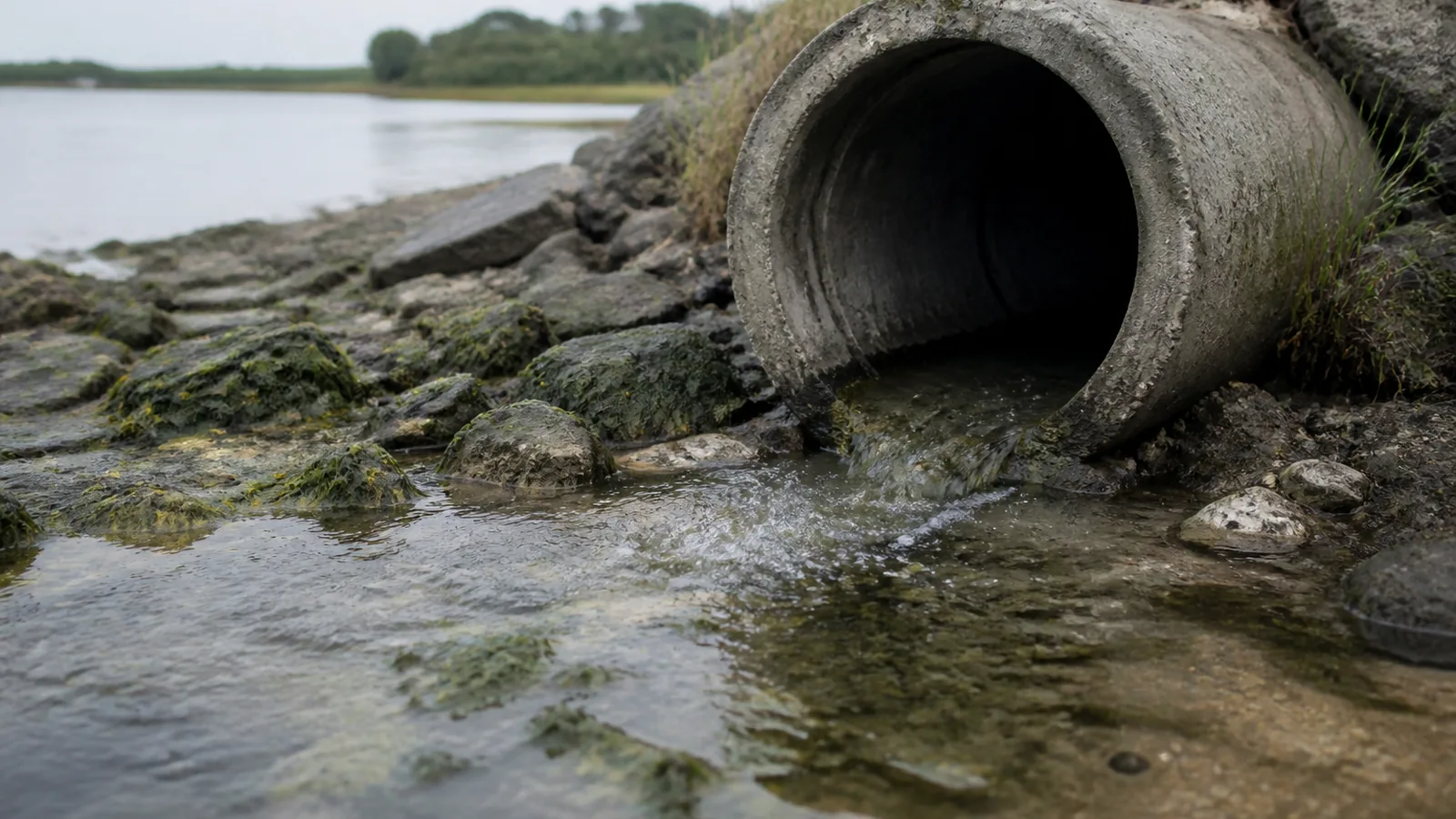
I assumed warmer water just meant more bacteria, the same cells doing the same thing in bigger numbers. That is not what the lab work shows. When microbiologists at the University of South Carolina exposed V. vulnificus to municipal wastewater effluent and sequenced what its genes did next, the bug did not only grow faster. It switched on pathways tied to biofilm formation and to surviving the early stages of infection inside a host, the machinery that makes it dangerous rather than merely abundant. So why would a bacterium that swims through our waste come out meaner instead of just more numerous? The working picture is that warmth plus the nitrogen and phosphorus pouring off our sewer outfalls and fertilized fields acts as fuel and signal at once: the rich, warm broth lets it grow, and something in that nutrient-loaded water nudges its virulence genes up. In the places we have loaded with our own runoff, the ocean is not just hotter, it is a better incubator for the thing that eats us.
And it is on the move. Warmer coastal water is opening habitat that used to be too cold, so the bacterium’s northern edge has crept up the Atlantic at about 30 miles a year since 1998, with wound infections in the eastern U.S. rising eightfold between 1988 and 2018. It now turns up as far north as New York and Connecticut. When Hurricane Ian pushed warm, sewage-laced floodwater across Florida in 2022, the state recorded 38 cases and 11 deaths, its worst year on record for the infection.
The seafood and shoreline side is just as concrete. Off South Australia, a 2025 marine heatwave helped touch off a Karenia algal bloom that smothered roughly 20,000 square kilometers and killed more than 600 marine species. Researchers later identified one of its organisms as Karenia cristata, a newly described alga that produces brevetoxin and runs an order of magnitude more toxic than any harmful bloom species studied before. Onshore, it left beachgoers and surfers with eye irritation and respiratory symptoms that lingered for months. That is how a hot ocean reaches your lungs from the far side of a beach: not as scenery, but as something you breathe.
So here is where I part ways with the paper’s framing. The dangerous stuff is trackable and, mostly, fixable. The surveillance already tells you who dies: liver disease and heavy drinking carry 6.5 times the odds of dying from a Vibrio infection, and prompt antibiotics cut those odds by about two-thirds. You can warn those people directly. You can repair the sewage outfalls and combined-sewer overflows that make the bacterium meaner. You can test the shellfish and post the beach. None of that needs a new emotional category. Yet the marquee move of a paper like this is to reach past the oysterman with a bad liver and toward eco-anxiety and a global public-health emergency, the kind of diffuse framing that hands the post-pandemic public-health apparatus another mandate while the concrete problem still needs a plumbing budget and a warning sign. Grief in these towns is not imaginary. It is also the least actionable item on the list, and leading with it tells you who the framing is for.
Take the bacterium seriously and the algae seriously, and the response writes itself, and it is unglamorous: cover your cuts, respect the oyster warnings if your liver is compromised, and fund the sewers. I would not wait for anyone to declare an emergency to do the obvious. If I had a fresh scrape or a compromised liver, I would stay out of warm brackish water in late summer and skip the raw Gulf oysters this year, full stop, and I would want that warning reaching the people at risk long before the next hurricane pushes the water over the seawall.
Sources
- Nature Sustainability – Falkenberg & Russell, “Recognizing the human health impacts of marine heatwaves” (2026)
- Vibrio vulnificus epidemiology and risk factors for mortality, US 2000–2022 (PMC)
- Municipal wastewater effluent enhances V. vulnificus growth and virulence potential (PMC)
- Nature Ecology & Evolution – the South Australia bloom and the brevetoxin producer Karenia cristata (2026)
- CDC Health Alert Network – severe V. vulnificus infections and warming coastal waters (2023)
- The Invading Sea – marine heat, sewage, and Vibrio in Florida
- The Conversation – flesh-eating bacteria in warming waters, and the northward spread
- SA EPA – Karenia algal bloom update (2025)