In late May, in a convention hall in Chicago, a room full of oncologists stood up and applauded a slide about pancreatic cancer. They almost never do that.
The occasion was the plenary session of the American Society of Clinical Oncology’s annual meeting, the field’s biggest stage. For forty years oncologists have watched pancreatic cancer beat almost everything put in front of it: better chemo, smarter combinations, the entire immunotherapy revolution that reshaped melanoma and lung cancer. Pancreatic adenocarcinoma shrugged all of it off and went on killing patients faster than almost any cancer they treat. A standing ovation in that room is not enthusiasm. It is disbelief.
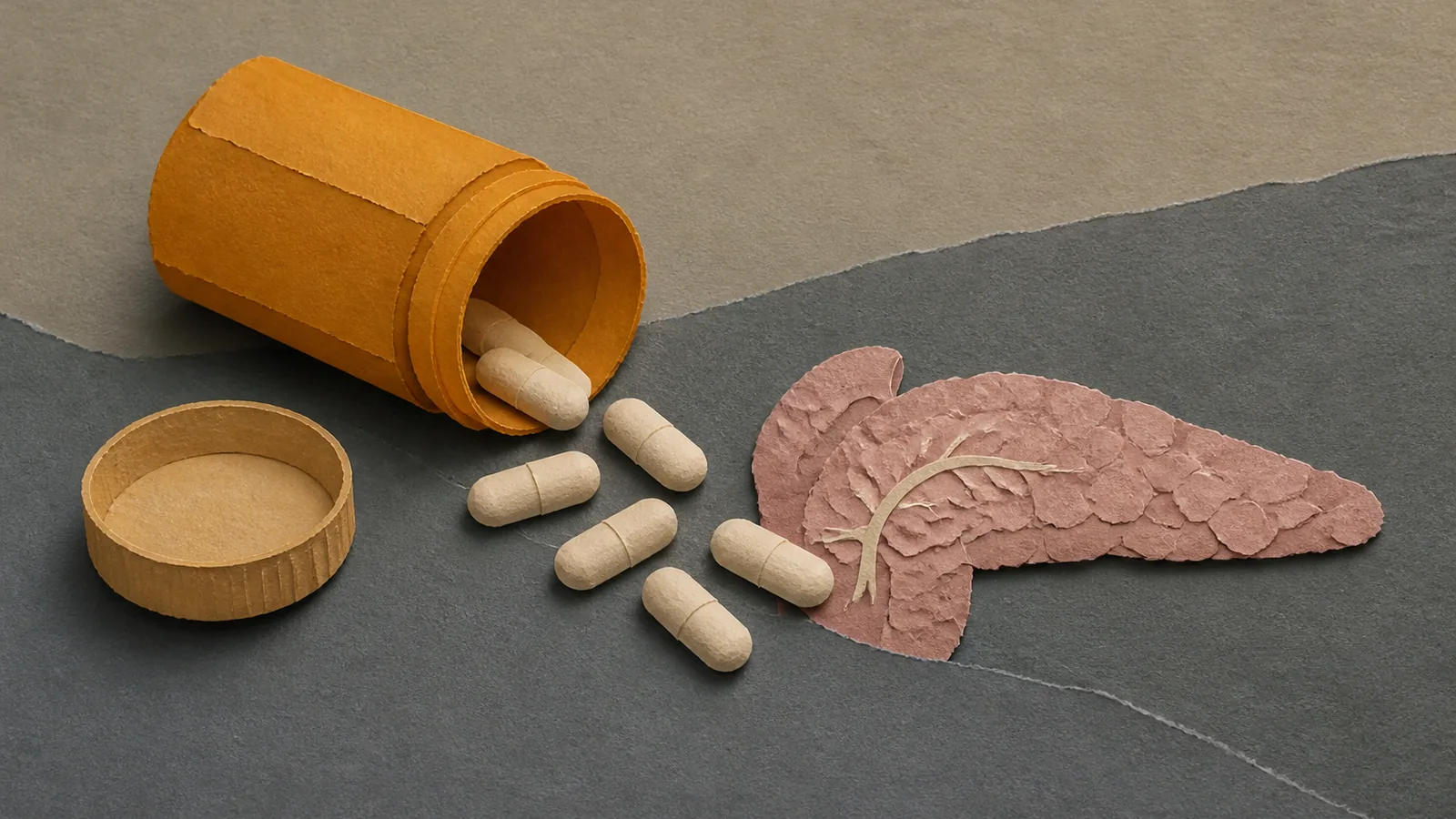
The drug is daraxonrasib, now sold as Rasonque, and on August 26 the FDA approved it for advanced pancreatic cancer, the first targeted therapy to go after the genetic engine of the disease. The results were published in the New England Journal of Medicine. Every account reaches for the same vocabulary: transform, landmark, new era. Before joining the ovation, one quiet question is worth asking. What does it actually buy the patient in the chair, and at what price?
Here is the arithmetic. In the RASolute 302 trial, 500 patients whose metastatic pancreatic cancer had already progressed on one round of chemotherapy were randomly assigned to daraxonrasib or another course of standard chemo. The patients on the pill lived a median of 13.2 months. The patients on chemotherapy lived 6.7 months. The hazard ratio was 0.40 (95% CI 0.30 to 0.53), meaning the drug cut the risk of death by about sixty percent. Revolution called the result unprecedented, and the Phase 3 record for this cancer gives little reason to argue. Progression-free survival roughly doubled too, 7.2 months against 3.6.
| Measure | Value |
|---|---|
| Daraxonrasib vs chemo | 0.40 (0.30–0.53) |
The trial doubled overall survival. It did not cure anyone.
Both of those are true, and you have to hold them at once. In most cancers, doubling median survival from six to thirteen months would be a solid incremental win, the kind of result that earns a poster and a modest bump in the guidelines. In pancreatic cancer it is the best randomized result anyone has produced in a generation, which says less about this drug than about how brutal the baseline has always been. “Twice as long” sounds like rescue. What it describes is a patient moving from roughly half a year to roughly a year, and then, for the overwhelming majority, the same ending arriving on a slightly later date. That is not a knock on the drug. It is what the word “transform” is being asked to carry.
What makes daraxonrasib an advance and not just a better number is the mechanism. Something like nine in ten pancreatic cancers are driven by mutations in RAS, long considered the white whale of cancer biology, “undruggable” for four decades. The RAS inhibitors that reached the market a few years ago could grab only one narrow variant, G12C, which accounts for a sliver of pancreatic tumors. Daraxonrasib is built to hit the active, switched-on state of RAS across the common variants at once. For a cancer that is, at its root, a RAS disease, that is the difference between a key that fits one lock and a key that fits most of them.
Then there is the receipt. Revolution Medicines set the list price of Rasonque at $39,800 for a 30-day supply. Run that monthly number across a year on the drug and the bill clears half a million dollars. The company will tell you, accurately, that commercially insured patients may pay as little as $0 through copay assistance, which is the standard move: the sympathetic patient pays nothing while the list price, the number that actually moves money, gets absorbed by insurers and Medicare and passed back to everyone in premiums and taxes. Revolution has never sold a drug before. It is sitting on $3.9 billion in cash, and Rasonque is its first product. A company does not price a first-in-class drug for a desperate population at the low end of what the market will bear, and this one didn’t.
The approval itself moved fast, and for once the speed looks earned. Revolution submitted the drug on July 22 and had a clearance about five weeks later, through the FDA’s new Commissioner’s National Priority Voucher program under Commissioner Marty Makary. By the start of August, before any approval existed, more than 2,000 patients had already gotten the drug through compassionate use, which tells you how little the standard of care was leaving them. Fast review is the kind of red-tape cut that earns applause when the thing underneath it is a randomized Phase 3 trial and not a press release, and here it was: 500 patients, an overall-survival endpoint, no single-arm study riding a surrogate to a conditional approval that never gets confirmed. The standard that made this defensible, randomized survival data before the fanfare, is the one worth holding the agency to on the next drug that moves this fast. Most of them will not clear it.
One more number cuts against the reflex to hedge on side effects. Serious toxicity was less common on the pill than on chemotherapy: grade 3 or higher treatment-related events hit 43.6 percent of the daraxonrasib patients against 57.5 percent of the chemo patients. The cost is a near-universal rash, in about 85 percent of patients, plus mouth sores and diarrhea. For a disease whose standard of care has always meant an infusion chair and a wrecked few months, an oral drug that works better and hits the body less hard is a quality-of-life gain the trial actually went and measured.
| Measure | Value |
|---|---|
| Daraxonrasib | 43.6 |
| Chemotherapy | 57.5 |
For Revolution Medicines, sitting on $3.9 billion and, as of August, a pancreatic cancer drug that works, Rasonque is a milestone and a business at the same time. For the patient who fills the next prescription, it is 13.2 months on the trial’s own math, and a bill near half a million dollars. Both are the best deal pancreatic cancer has offered in a very long time. The room in Chicago stood up for that, and it was right to. It is also worth being precise about what it stood up for. Thirteen months.
Sources
- FDA – FDA approves daraxonrasib for metastatic pancreatic adenocarcinoma (2026)
- New England Journal of Medicine – Daraxonrasib or Chemotherapy in Previously Treated Metastatic Pancreatic Cancer (2026)
- CancerNetwork – FDA approves daraxonrasib; RASolute 302 survival and safety data (2026)
- Revolution Medicines – Daraxonrasib RASolute 302 Phase 3 overall-survival results (2026)
- MedCity News – Revolution Medicines’ landmark FDA approval and Rasonque pricing (2026)
- Newsweek – Rasonque FDA approval: cost and availability (2026)
- BioPharma Dive – Revolution’s daraxonrasib cleared by FDA via priority review voucher (2026)
- STAT – FDA approves Rasonque (daraxonrasib) for advanced pancreatic cancer (2026)
- New York Times – F.D.A. approves daraxonrasib for pancreatic cancer (2026)