For years I’d filed “mindfulness lowers your blood pressure” next to detox tea and copper bracelets, the drawer I open only to roll my eyes. So when a headline promised breathing exercises could move blood pressure in weeks, I almost kept scrolling. Then I read the review sitting under it, and two things pulled me back: the drop was real, and the part actually doing the work wasn’t the breathing.
Here is what Rosalba Hernandez, a professor at the University of Illinois, and colleagues at South Florida, Northwestern, and Stanford did. They read through 18 randomized controlled trials that tested positive-psychology and mindfulness programs against hard cardiovascular numbers, not self-reported calm. Blood pressure. C-reactive protein. Fibrinogen. The review ran in the journal Cardiology Clinics on federal money, and the programs enrolled 50 to 200 adults apiece, mostly in their late 50s to mid-60s, the exact patients a doctor is already reaching for the prescription pad to help.
The standout number is why I kept reading. One 12-week program, a spirituality-based digital course, cut cuff-measured systolic pressure by 7.6 points and, in the aorta as blood leaves the heart, dropped central pressure by 4.1. That is not a rounding error. It sits in the range a first blood-pressure pill buys you, and it came out of a phone and a daily habit. Across the eight-week mindfulness programs, systolic pressure fell too, and so did high-sensitivity CRP and fibrinogen, the inflammation markers that climb as a cardiovascular system stiffens.
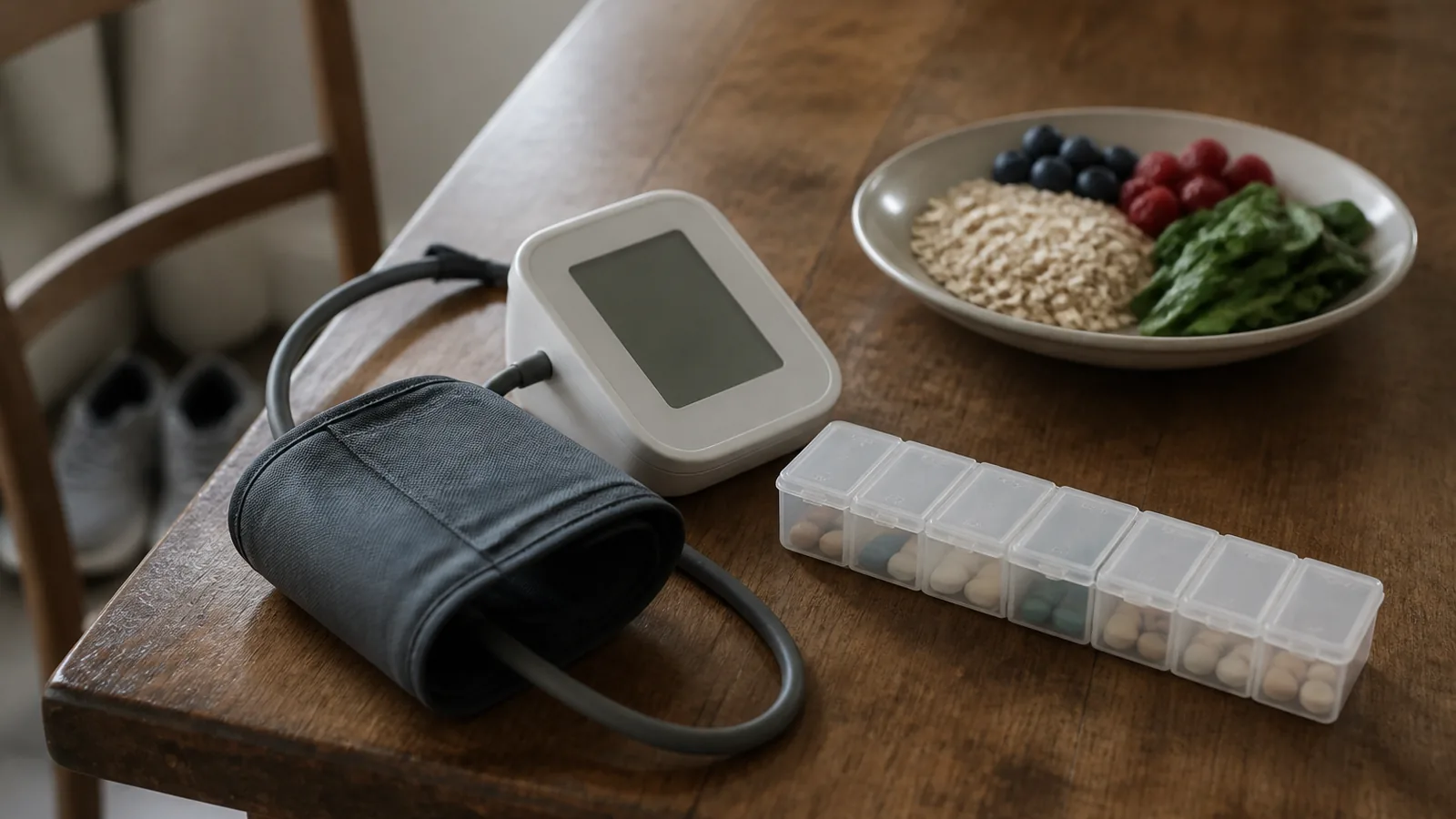
So of course I wanted to know why. Blood pressure is arteries and kidneys and sodium and a nervous system leaning on your vessels, so why would noticing your breath reach any of that? I went digging in the review for the mechanism, and it turned out to be almost embarrassingly ordinary. For the programs that worked, the authors don’t describe some mind-over-artery magic. They describe behavior. The clearest case is an eight-week WhatsApp program that paired weekly sessions with daily microtasks, and what those microtasks did, in the researchers’ own accounting, was push people to move more, eat better, and actually take their medication. The mindfulness was the wrapper. Inside the box were movement, food, and pills, the three levers that were always going to lower blood pressure.
There is a second reason to keep the champagne corked, and it comes down to what you compare against. Pool the mindfulness trials against a do-nothing waitlist and the systolic benefit looks solid. Line them up instead against an active control, another program that also gives people attention and structure and someone checking in, and a 2022 meta-analysis found the blood-pressure advantage shrank to something you cannot tell apart from chance, on evidence the authors themselves graded as low quality. Some of what gets called a blood-pressure cure may be the sound of a stressed person finally being paid attention to and relaxing on the exam table.
To her credit, Hernandez doesn’t oversell it. She says the benefits ride on the lifestyle change and fade without ongoing reinforcement: intensive daily practice buys a short-term physiologic payoff, then lighter continued contact is what keeps the behavior alive. That is not the language of a miracle. It is the language of scaffolding. In this reading, mindfulness isn’t the drug, it’s the scaffold that gets you to show up for the boring, effective stuff long enough for it to work.
And still, I can’t make myself sneer, because look at what this is. There is nothing to prescribe, nothing to get prior-authorized, no copay, no side-effect insert, no patented molecule with a sales team pushing it in every waiting room. It is a tool the patient owns outright. A drug-first system is structurally incapable of getting excited about that, because there is nothing to bill, so a cheap, patient-owned lever with a genuine signal gets one press release and then vanishes under the next branded pill. The story isn’t that gratitude journaling is magic. It’s that a free, evidence-backed intervention has to scrap for a fraction of the attention a mediocre me-too drug gets handed for nothing.
So this is where I land, cuff-in-drawer skepticism and all. I won’t buy the app, and I won’t pay a dollar for the word “mindfulness” printed on a subscription. I’ll take the two things the winning program quietly smuggled in, a walk I don’t skip and food I don’t lie to myself about, plus taking whatever my doctor actually prescribed on schedule, and I’ll keep the middleman’s markup for myself. The evidence says those are what moved the number anyway.
Sources
- ScienceDaily – “Mindfulness may lower blood pressure in just 8 weeks” (Sept 1, 2026)
- University of Illinois News Bureau – Hernandez et al., positive-psychology and cardiovascular review, with the 7.6-point and 4.1-point figures and researcher quotes (2026)
- Journal of Human Hypertension – systematic review and meta-analysis of mindfulness-based stress reduction for arterial hypertension: benefit versus waitlist, not versus active control, on low-quality evidence (2022)