I always assumed the tiniest patients in an American hospital, the babies born so early they weigh less than a bag of sugar, were the ones the system guarded most fiercely. Redundant suppliers, backups on backups, nothing left to chance. Then I read what the FDA put into the Federal Register this week, and that assumption did not survive the first paragraph.
Here is the plain version. The predominant US source of starter IV nutrition for premature newborns is two outsourcing facilities, and both are permanently shutting down. So on September 4, 2026 the agency announced temporary policies for compounding “certain starter parenteral nutrition drug products for neonates,” formalized in a guidance published September 9. Translated: for the next 180 days, hospital and state-licensed pharmacies can mix these products themselves. Which sounds like a sensible patch until you learn which tier of the compounding world that hands the job to, and what that tier’s record looks like.
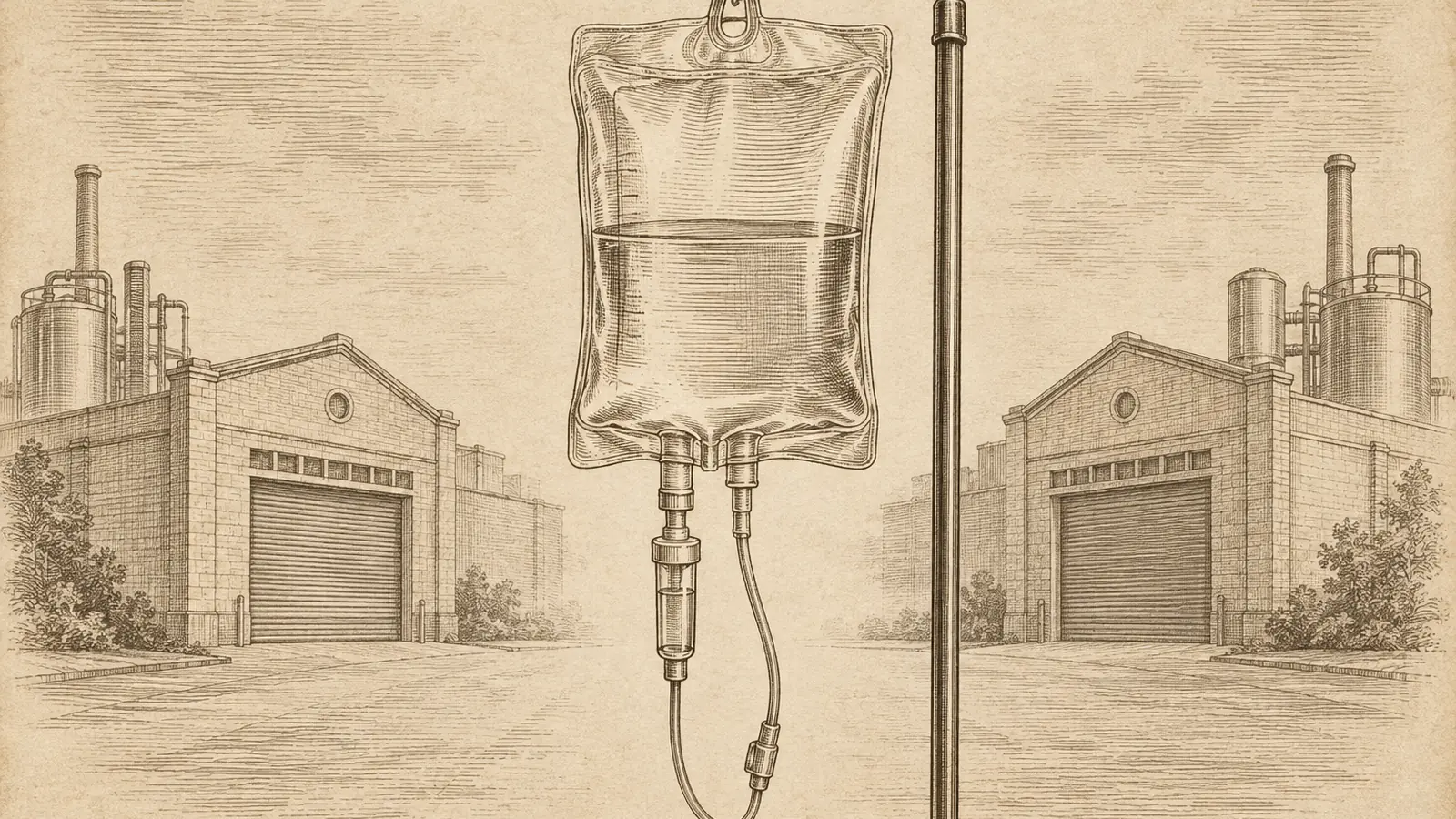
So let me tell you what these bags actually do, because it reframes the stakes. A baby born at 26 or 28 weeks often arrives before the gut is ready to handle milk. It cannot eat. And unlike a grown adult who can coast for a day on stored fat, a premature newborn has almost nothing in reserve, so the clinical clock on getting nutrition into the vein runs in hours, not days. Starter parenteral nutrition is what goes up on the IV pole in those first hours, a ready-to-hang mix of dextrose, amino acids, and electrolytes that buys time until the NICU pharmacy can build a baby-specific formula. What got me is how short that runway is. There is no “we’ll sort it out Monday” for a 900-gram infant.
The FDA is opening a valve it normally keeps shut. Through March 8, 2027, it says it “does not intend to take action” against state-licensed and hospital pharmacies that mix these products, even without a patient-specific prescription. To see why that matters, you need the two-tier map of who is allowed to compound sterile drugs in this country. 503B outsourcing facilities register with the FDA, run under current good manufacturing practice rules, and get inspected on a risk-based schedule. 503A compounders, the state-licensed and hospital pharmacies, do not register as outsourcing facilities, are not held to those manufacturing standards, and are overseen mainly by state boards of pharmacy rather than inspected routinely by the agency. The two facilities that are closing are 503Bs. The fix moves their work, temporarily, into the 503A world.
The agency did not do this blind. The guidance sets real conditions: the products have to appear on an FDA-approved list, use only default beyond-use dating, be single-use, and contain “no antimicrobial preservatives, due to safety concerns with the use of antimicrobial preservatives in drug products for neonates.” That last one is not bureaucratic caution. The preservatives that keep an adult’s multi-dose vial sterile have a documented history of harming newborns, whose livers and kidneys are too immature to clear them safely, which is why the FDA wrote them out entirely. The conditions exist because the danger does.
IV nutrition already has a graveyard
Here is where I stop nodding along. The reason the inspected 503B category exists at all is a body count. In 2012, contaminated injections from the New England Compounding Center caused a fungal meningitis outbreak that killed 64 people and sickened more than 750. Congress responded with the Drug Quality and Security Act of 2013, which invented the FDA-inspected outsourcing facility so that large-scale sterile compounding would stop being unwatched. And IV nutrition specifically has its own history. In 2011, an Alabama compounding pharmacy, Meds IV, shipped total parenteral nutrition contaminated with Serratia marcescens; 9 of 19 infected patients died across 6 hospitals, and investigators later traced the outbreak strain to a tap-water faucet and an open container of amino acid powder. Two of its pharmacists pleaded guilty to federal charges. In Britain in 2014, contaminated parenteral nutrition from a compounder called ITH Pharma killed 3 babies after Bacillus cereus got into the mix.
A premature baby is the least equipped human alive to survive a contaminated IV bag. The immune system is barely switched on, and the same line that was supposed to deliver nutrition can just as easily deliver sepsis. One stray bloom of bacteria, and the bag that was meant to save the baby is the thing that ends it. That is the exact scenario the inspected tier was built to prevent, and it is the scenario the 180-day window carefully reopens.
Acting Commissioner Kyle Diamantas said the agency is “committed to deploying every regulatory tool available to prevent critical supply chain gaps from threatening patient care.” I believe the intent. But the phrasing skips the question that actually matters, which is not “how do we patch the gap” but “how did the supply of a life-saving newborn product collapse to two factories that could both simply leave?” This is what a hollowed-out, consolidated supply chain looks like when it fails: not a dramatic explosion, just two quiet closures and a scramble to loosen the rules underneath the most vulnerable patients in the country. The emergency is genuine. The framing that this is a triumph of nimble regulation, rather than the symptom of a fragile system nobody was minding, is spin.
For the next six months, NICUs will be hustling to line up other 503B suppliers or to stand up their own compounding under the temporary window. The FDA’s conditions, the approved-product list, single-use bags, no preservatives, default dating, are there to hold the risk down, and a well-resourced hospital pharmacy with real sterile infrastructure can meet them. The worry sits at the margins, where a smaller pharmacy has to mix the most unforgiving product in medicine against a countdown clock. The 180 days is a stay of execution, not a solution.
If I had a baby in a NICU this winter, I would ask one question and refuse to be soothed out of it: who is mixing my child’s IV nutrition, and are they FDA-inspected or not. I would not assume the bag hanging on that pole came from a facility the government has ever once walked through.
Sources
- FDA – “FDA Takes Steps to Maintain Newborn Access to Life-Saving Starter Nutrition Products” (Sept 4, 2026)
- Federal Register – “Temporary Policies for Compounding Certain Starter Parenteral Nutrition Drug Products for Neonates” (Sept 9, 2026)
- Lachman Consultants – analysis of the guidance conditions and the 503A/503B distinction
- Health Affairs – “Regulating Compounding Pharmacies,” on the 2012 NECC outbreak and the Drug Quality and Security Act
- U.S. Department of Justice – Meds IV pharmacists sentenced for adulterated compounded drugs (Alabama TPN outbreak)
- Cleanroom Technology – third infant death confirmed in ITH Pharma parenteral nutrition contamination (2014)