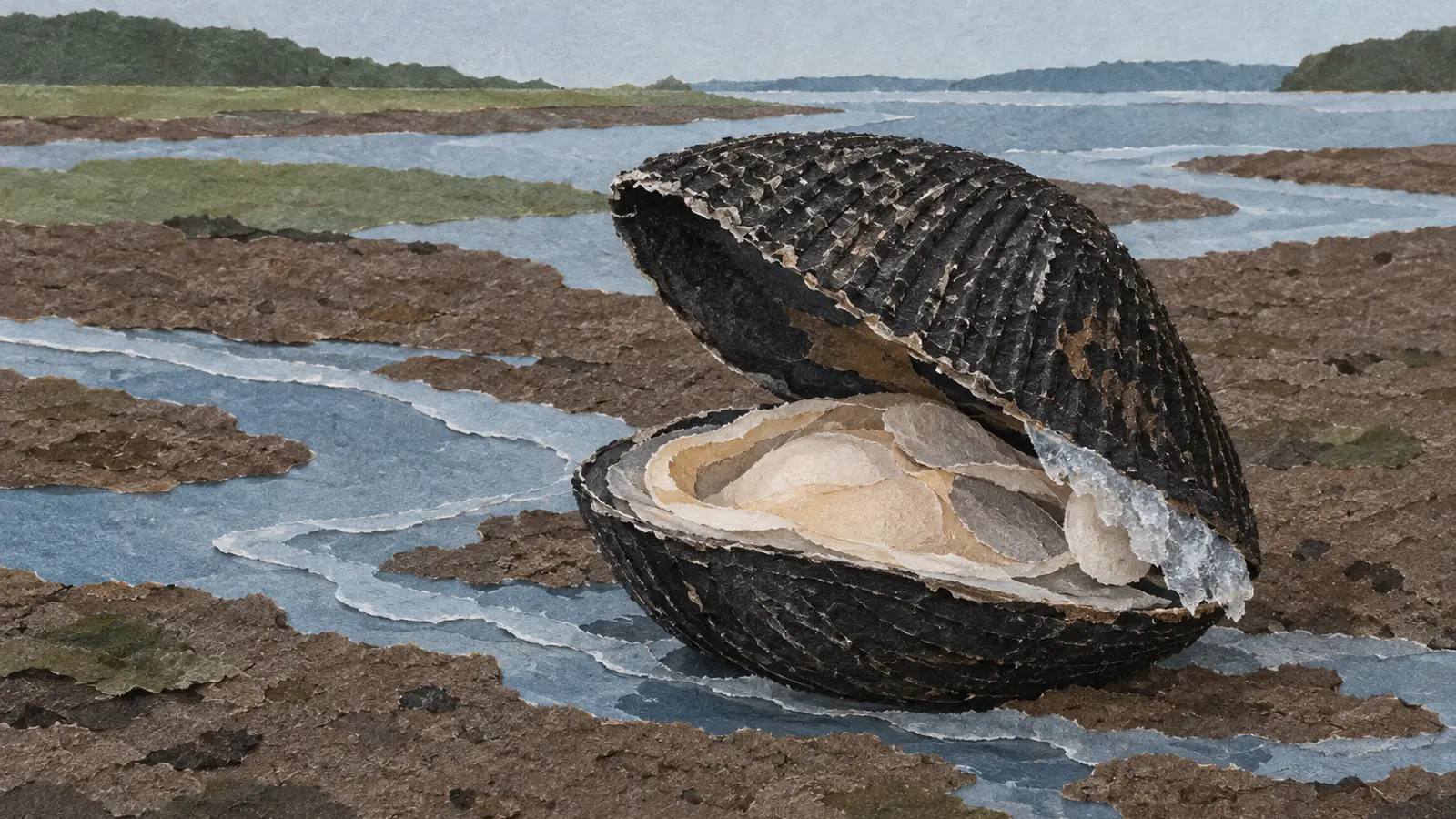
A concha negra earns its living as a filter. It sits in the sediment of a warm estuary and pumps seawater across its gills all day, straining out the plankton it eats, and if that water carries human sewage, it strains out the sewage too and concentrates whatever the sewage was carrying. For the fecal-oral viruses, hepatitis A chief among them, a filter-feeding clam from a polluted bed is close to a perfect delivery vehicle. This is the oldest lesson in shellfish epidemiology, and public health keeps having to relearn it.
The latest classroom is a four-state outbreak the CDC has now tallied at 37 people, of whom 30, roughly four in five, have been hospitalized. New York accounts for 27 of the cases, Pennsylvania for 4, and Massachusetts and Minnesota for 3 apiece; patients range in age from 6 to 40, and no one has died. The vehicle, per the agency’s traceback, is La Serranita-brand concha negra, black-shell clams imported frozen from Ecuador. Among patients investigators interviewed, 77 percent had eaten ceviche, the citrus-marinated raw dish that lets a live virus reach the gut intact, 76 percent had eaten raw or undercooked shellfish of some kind, and 47 percent had specifically eaten raw or undercooked conchas negras.
| Measure | Value |
|---|---|
| Count | 30 of 37 of those infected |
| Measure | Value |
|---|---|
| Ceviche | 77 |
| Raw/undercooked shellfish | 76 |
| Conchas negras | 47 |
We have seen this at industrial scale. In the first months of 1988, nearly 300,000 people in Shanghai came down with hepatitis A within weeks of eating raw Anadara clams from a newly opened, sewage-polluted bed, still the largest virus-associated food-poisoning outbreak ever documented. The blood work from that epidemic drew the dose-response curve cleanly: the more contaminated clams a person ate, and the less they cooked them, the likelier they were to fall ill. The mechanism has not changed in the 38 years since. Only the shipping routes have.
- 1988Shanghai, roughly 300,000 sickened by raw clams
- 2025first US clam illness, July
- 2026FDA recall in April, traceback still open
The frozen part is where intuition fails people. Freezing does nothing to hepatitis A. It is a hardy, non-enveloped virus that shrugs off cold storage, persists in frozen product for months, and survives the acid of a citrus marinade without trouble, which is why the CDC warns it can be transmitted through ice and frozen foods and is not inactivated by freezing. What does kill it is heat: an internal temperature above 185 degrees Fahrenheit, held for a minute. A freezer is a preservation chamber for this pathogen, not a kill step, and the long shelf life of a frozen import is exactly what lets one contaminated harvest keep seeding illness long after it left the water.
That is why the timeline reads the way it does. Illness onsets in this outbreak run from July 30, 2025 all the way to June 23, 2026, an eleven-month band that would be baffling for most foodborne bugs but makes sense for a frozen product carrying a virus with a two-to-seven-week incubation. Cases surface slowly and scatter across the calendar as boxes move through distribution and sit in restaurant freezers. The FDA had already flagged the product and issued its recall through New York and New Jersey dealers on April 30, 2026, with distribution traced to restaurants and retailers in Connecticut, Massachusetts, New Jersey, New York, Ohio, and Pennsylvania.
Line up the dates. The first person fell ill in July 2025. The recall came at the end of April 2026, roughly nine months later. And as of mid-September, months past that recall, the CDC’s own outbreak notice still says the traceback is ongoing to identify the source, or sources, of the clams. A recall happened, the shelves were cleared, the press release went out, and the system still cannot say with confidence which stretch of Ecuadorian water these animals filtered, or whether it is still being harvested. That is the recurring weakness of a food chain that pulls raw shellfish across an ocean and inspects only a fraction of what arrives: the response is reactive, the paperwork trails the illness by the better part of a year, and the fix is a recall of product most of which has already been eaten. The system did not prevent this outbreak. It documented it.
None of this is exotic. The same story keeps arriving in different packaging. Dutch investigators traced a hepatitis A outbreak to frozen blueberries in 2024 and 2025. Korean epidemiologists pinned one on salted clams in Busan. Australia tied another to imported Medjool dates. Every time the through-line holds: a raw or minimally processed food, often frozen or imported, ferrying a virus from contaminated water or unwashed hands into a population with no immunity and no idea the risk is on the plate.
The prevention that has worked since Shanghai is unglamorous and cheap. Heat destroys this virus, and raw shellfish from unknown waters is a bet no marinade can hedge. For the recalled clams specifically, though, the FDA’s guidance is not to cook them but to throw them out, because contaminated product looks, smells, and tastes normal, and no home kitchen can vouch for the dose. Anyone unvaccinated who ate the recalled clams within the past two weeks can still ask a health department about postexposure prophylaxis. Everyone else is left with the plain rule.
The count will keep drifting up for weeks as slow incubations resolve, and the CDC already cautions the true number is higher than 37 because mild cases never get tested. The number to watch is not the case count. It is whatever the traceback finally names. If investigators can identify the specific Ecuadorian harvest area and confirm it is closed to export, this ends as a contained import failure. If they cannot, the next box of frozen conchas negras is already in a freezer somewhere, waiting.
Sources
- CDC – Multistate Hepatitis A Outbreak Potentially Linked to Frozen Clams (2026)
- FDA – Safety Alert for Hepatitis A Virus: Concha Negra (Black Shell) Shell Meat (April 2026)
- Food Safety News – Hepatitis A outbreak traced to clams continues (Sept 2026)
- Newsweek – Map shows hepatitis A cases as outbreak linked to frozen clams
- CIDRAP – CDC confirms 37-case multistate hepatitis A outbreak linked to frozen clams
- CDC Yellow Book – Hepatitis A: heat inactivation and freezing resistance
- PubMed – Halliday et al., ecology and prevention of the shellfish-associated hepatitis A epidemic in Shanghai, China (1988, ~300,000 cases)
- Emerging Infectious Diseases (CDC) – Outbreak of Hepatitis A Linked to Frozen Blueberries, the Netherlands, 2024–2025
- Epidemiology and Health – An outbreak of hepatitis A associated with salted clams in Busan, Korea
- Communicable Diseases Intelligence – Hepatitis A outbreak in Australia linked to imported Medjool dates, 2021