In 1896, the psychologists G.T.W. Patrick and J.A. Gilbert kept three young men awake for about 90 hours and wrote down what failed. Their paper in the Psychological Review, “On the Effects of Loss of Sleep,” is generally credited as the first experimental study of sleep loss in humans, and among the casualties they logged were reaction time, sensory sharpness and the ability to memorize. More than a century later, in 2007, Seung-Schik Yoo, Matthew Walker and colleagues put that last casualty in a brain scanner. Their Nature Neuroscience paper found that a single night without sleep weakened activity in the hippocampus at the very moment volunteers were trying to learn, and that they retained less afterward. So a lost night does more than blur what you already know. It makes new experiences harder to write down in the first place.
similar to a fuel-efficient engine that accomplishes the same task while using fewer resources
- 1896first experiment keeping humans awake
- 2007brain scans tie lost sleep to weaker hippocampal encoding
- 2023cycling lifts cognition in sleep-deprived volunteers
- 2026a short ride and a long nap protect memory about equally
That encoding problem is what a McGill University team set out to work around, and the answer they published in PNAS in August 2026 has spread fast, for good reason. Volunteers kept awake for 30 hours who then pedaled hard for 20 minutes recognized nearly as many photographs three days later as volunteers given a 90-minute nap, and they did it while their brains still carried the electrical signature of a sleepless night.
Thirty hours, then a bike or a bed
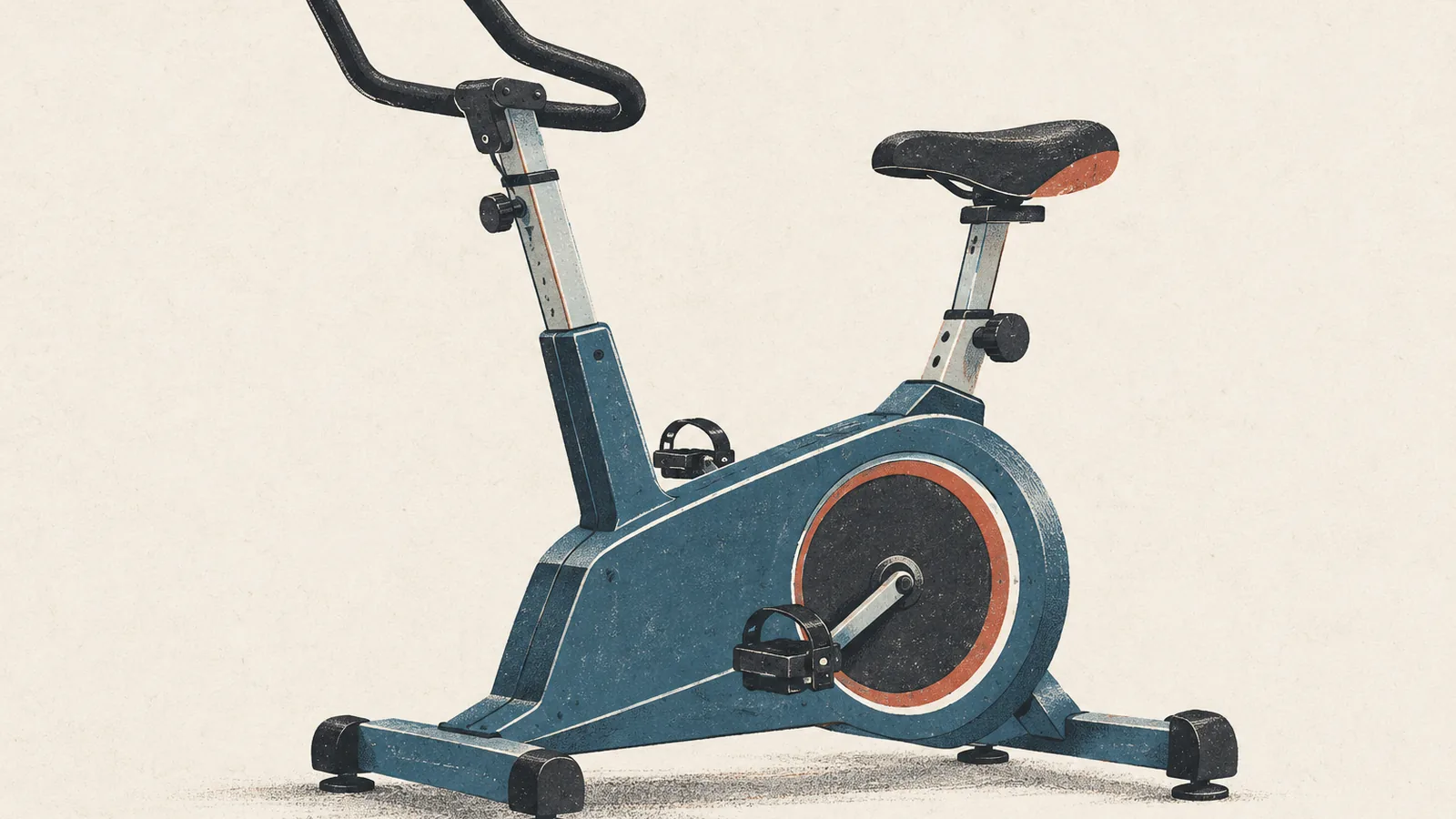
According to McGill’s announcement, 54 healthy young adults stayed awake for 30 consecutive hours under lab supervision. They were then split three ways. One group got a 90-minute chance to nap in a dark, quiet room. A second cycled for 20 minutes at about 80 percent of maximum heart rate, PsyPost reported. The controls sat on the same stationary bike for 20 minutes without pedaling, which is a smarter choice than it looks, because it means the riders’ advantage can’t be credited to a change of scenery or simply getting out of a chair.
About half an hour later, once the nappers had shaken off their grogginess, everyone looked at 150 images while wearing EEG caps and rated how emotionally intense each one felt. Nobody was told to memorize anything. Three days later, after recovery sleep, came a surprise test: the 150 originals shuffled in with 75 new images, and the job was to say which ones they had seen before.
The nappers correctly picked out 57 percent of the originals and the cyclists 56 percent, against 46 percent for the controls. Either intervention left people roughly 22 percent better at recognition than doing nothing, and the gap between nap and ride was not statistically significant. The researchers also checked that the gains reflected memory for specific images rather than a tired brain’s tendency to answer “yes” to everything.
| Group | Value (percent) |
|---|---|
| 90-minute nap | 57 |
| 20-minute ride | 56 |
| Seated control | 46 |
Same score, different brains
The EEG recordings are where the two groups part ways. The nap did what sleep does: it lowered the markers of sleep pressure and neural fatigue, including the slow-wave activity that accumulates the longer a brain stays awake, and the nappers’ brain state going into the task was the strongest predictor of how much they later remembered. Sleep, as the study’s senior author told the Epoch Times, “acts like a reset button that prepares the brain to learn again.”
The cyclists got no such reset. Their pre-task fatigue and sleep-pressure markers looked like the controls’, and they did not report feeling any less tired. What differed was how their brains handled the images while they were on screen, engaging rhythms tied to attention and active learning without the extra compensatory effort the controls were burning, which in the controls bought them nothing. Marc Roig, a professor in McGill’s School of Physical and Occupational Therapy and director of its Memory Lab, said the controls were “working harder rather than working better,” and described the exercisers’ brains as “similar to a fuel-efficient engine that accomplishes the same task while using fewer resources.”
That distinction is what most of the coverage has blurred. “Twenty minutes of exercise is as good as a nap” holds for one outcome, recognizing pictures three days later. On the measures the study took, the ride left fatigue where it was and changed how the brain spent what it had left during encoding. Els van der Helm, a sleep neuroscientist and author of Sleep Intelligence, put the limit plainly: neither a nap nor a workout, she said, “pays back the sleep you missed.”
What the ride does not buy
The people most likely to want this result are the ones who can’t simply go to sleep: the resident on hour 28, the long-haul driver, the nurse finishing a double. The authors frame it that way themselves. “A nap isn’t always possible in the middle of a shift,” said Madhura Lotlikar, the McGill doctoral candidate who led the paper. But the trial tested one bout of extreme sleep loss in healthy adults aged 18 to 35, on picture recognition, and the chronic short sleep of shift work is a different condition, a gap the researchers acknowledge. The comparison is also practical rather than dose-matched, since 90 minutes of cycling would flatten anyone and a 20-minute nap might never reach deep sleep. And one safety point from sleep health educator Brooke Quinn applies directly to that exhausted worker: “A severely sleep-deprived person should not choose an activity that introduces additional safety risk.” A stationary bike in a break room fits that rule. A dawn run along a highway shoulder does not.
The McGill trial is not a one-off, though nothing yet replicates it directly. In 2023 a University of Portsmouth team found that 20 minutes of moderate cycling improved cognitive performance in two experiments of 12 volunteers each, one after three nights limited to five hours of sleep and the other after a full night awake while breathing low-oxygen air. Earlier, McMaster University kinesiologists Tara Kuhn and Jennifer Heisz studied 61 adults and found that among less-fit older adults, more nighttime awakenings predicted worse performance on a demanding memory task, while fitter older adults showed no such penalty and the young adults showed no link either way. That last study is observational, so it shows an association and cannot prove that fitness did the protecting. Still, three different designs lean the same direction: movement seems to blunt some of what poor sleep costs the brain.
Sleep loss is a large market. ScienceAlert cites estimates that 20 to 40 percent of adults worldwide don’t get enough, and a RAND estimate of $680 billion a year in lost output across the US, the UK, Germany, Japan and Canada. Most of the answers that market offers come with a price tag: stimulants, wearables, mattresses. The McGill protocol needs a stationary bike and a heart-rate target. Lotlikar’s own summary was that “Exercise is accessible, inexpensive and easy to implement,” and there is nothing in it for anyone to sell.
Roig’s group has already named its next experiments: whether the benefit carries over to work that has consequences, such as a nurse administering medications or a trucker holding a lane, and whether a nap followed by a ride adds up to more than either alone, according to PsyPost. Those results, out of McGill’s Memory Lab, will decide whether 20 minutes on a bike stays a lab finding or ends up as something a hospital puts in the break room ahead of the 4 a.m. medication round.
Sources
- PNAS: Lotlikar, Roig et al., “Protecting episodic memory after sleep loss: Similar benefits of exercise and naps via distinct neural contributions” (2026)
- McGill University Newsroom: “Workout or nap? Either can help your sleepless brain, study finds” (2026)
- PsyPost: A 20-minute workout protects memory after sleep loss just as well as a 90-minute nap (2026)
- The Epoch Times: Sleep-deprived? A nap or 20-minute workout may help protect memory (2026)
- ScienceAlert: One 20-minute fix can boost your memory in cases of extreme sleep deprivation (2026)
- Nature Neuroscience: Yoo, Walker et al., “A deficit in the ability to form new human memories without sleep” (2007)
- University of Portsmouth: 20 minutes of exercise can boost your brain after a bad night’s sleep (2023)
- Frontiers in Psychology: Kuhn and Heisz, “Cardiorespiratory Fitness May Protect Memory for Poorer Sleepers” (2022)
- Psychological Review: Patrick and Gilbert, “On the Effects of Loss of Sleep” (1896)