Every heart valve put into a small child has come with a hidden schedule. The valve is a fixed size and the child is not, so the implant that fits an infant’s chest is too small a few years later, and the only way to swap it has been to open the chest again. Children who get a valve replacement before age 2 commonly face up to 5 open-heart surgeries over a lifetime, a burden linked to a greater risk of death, and the tissue valves surgeons usually reach for wear out faster in the young: patients under 20 are six times more likely to see their valve fail. For decades surgeons have chased a way out, through donor valves, tissue-engineered scaffolds and, lately, partial heart transplants whose living valves grow with the child. Each solved part of the problem, and none ended the cycle.
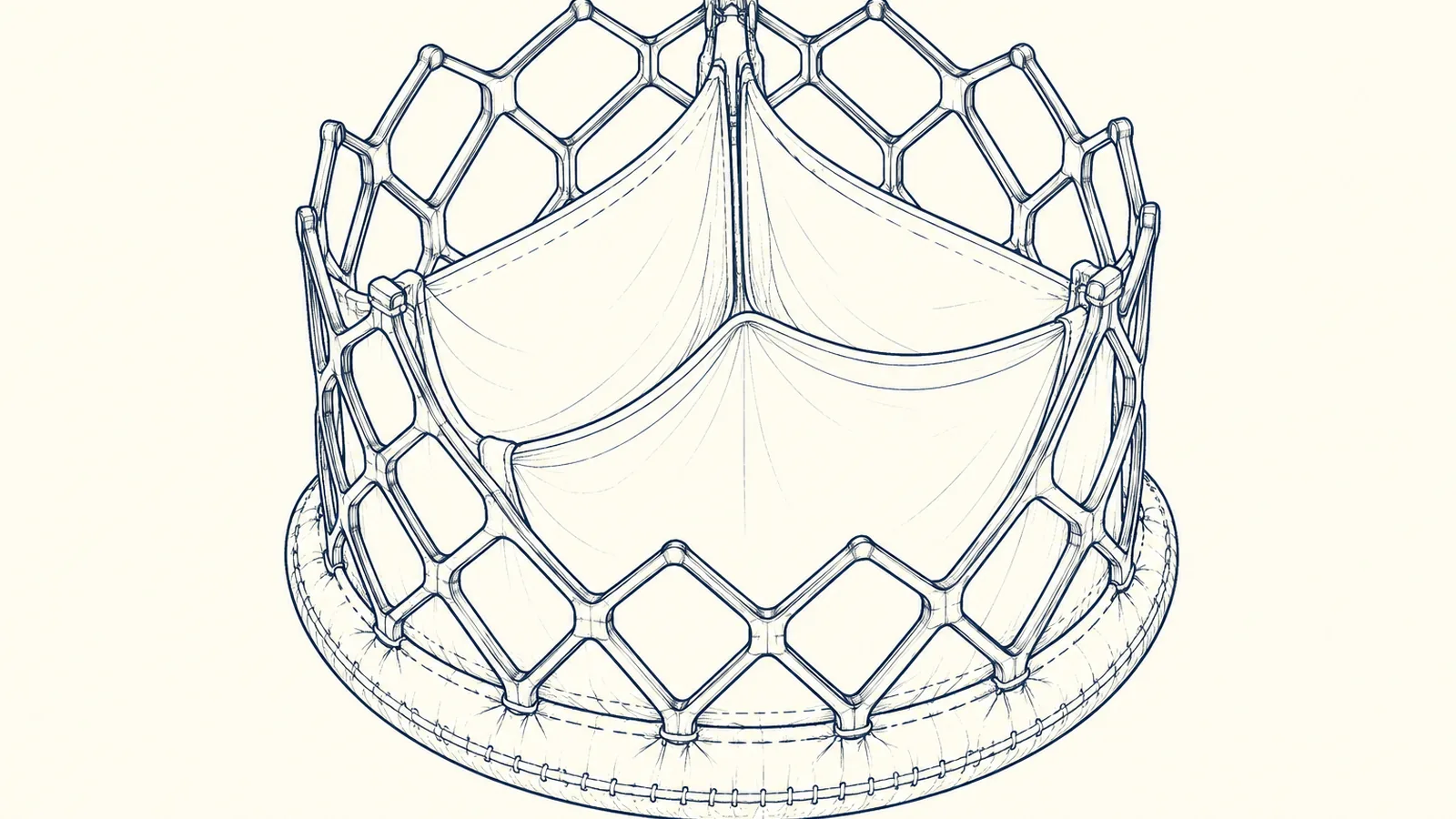
On October 1 the FDA said it had a device that does. The agency approved the Autus Size-Adjustable Valve, a surgically implanted pulmonary valve that goes in at about 13 millimeters, a size suited to a toddler or preschooler, and can later be widened with a balloon catheter, without reopening the chest, up to 22 millimeters, roughly the size of an adult’s. Acting Commissioner Kyle Diamantas called it a “historic turning point.” Yet in the trial that won approval, the feature the valve is named for was used in exactly 2 children.
implanted size to maximum expanded size
- Lower bound
- 13
- Upper bound
- 22
The FDA’s announcement also carried a second first that deserves more attention than it got: this is the first time the agency has approved a valve with polymer leaflets, rather than animal tissue, for any indication. Synthetic leaflets have a long record of not making it this far. A 2023 review of pediatric pulmonary valve technology found that prototype polymer valves commonly formed clots in animal testing, that calcification on polymer leaflets has been tied to mechanical stress, and that none had yet reached clinical or commercial use. The closest anyone came in children was a bioresorbable polymer-scaffold valve meant to be replaced by the child’s own tissue, and in its pediatric trial 92 percent of participants developed moderate or severe leakage within 12 months. Measured against that, the FDA’s statement that one-year data suggest the Autus leaflets hold up well over time means they cleared the early failure that sank their predecessor. It says nothing yet about the slow calcification that plays out across the decade a valve is supposed to last.
| Measure | Share |
|---|---|
| of trial participants had moderate or severe leakage within 12 months | 92 percent |
The approval rests on a single-arm study of 62 children at 12 U.S. sites, with no comparison group and a primary endpoint read at six months. At that mark the first 60 patients had acceptable blood flow and no more than mild leakage, every implant procedure succeeded, and there were no deaths, no strokes and no clot complications needing treatment. For open-heart surgery in small children, that is a clean safety record, and it should be said plainly. The growth claim is another matter. Only 2 of the 62 children had begun to outgrow their valves, with performance starting to slip, and both were widened successfully without surgery. The FDA itself describes that experience as limited.
The safety signals point toward the same long horizon. Frame fractures turned up in 3 patients and reduced motion in one leaflet in 2 others, none with symptoms. Here the mechanism matters, because a frame built to be ballooned open to a larger diameter is a frame under mechanical stress by design, and mechanical stress is exactly what the review links to polymer calcification. Silent fractures and sluggish leaflets are the kind of early finding that can stay quiet for years before they stop being quiet. To its credit, the FDA does not pretend otherwise: it says longer-term studies are underway to understand the risks of expansion and to show that a widened valve keeps working, and the children will be followed for 10 years.
The enthusiasm also has a balance sheet behind it. Edwards Lifesciences, which holds the approval, bought Autus Valve Technologies on February 6 for $128.9 million, after paying $11.5 million for the option, with up to $132.5 million more payable on regulatory approval milestones and net sales thresholds. The valve is also the first pediatric approval to come out of the FDA’s Total Product Life Cycle Advisory Program, a voluntary pilot that gives device makers early, frequent communication with a dedicated team of FDA advisors and grew out of the agency’s MDUFA V commitments to industry. None of that makes the valve worse or the surgeons who implanted it less skilled. It does mean the company with a nine-figure payment schedule riding on the device and the regulator that coached it to market are the two voices calling it historic, and the six-month data they are pointing to cannot yet carry that word.
For a family facing a lifetime of reopened sternums, a valve that collapses five operations into one or two would be worth celebrating, and the Autus valve may turn out to be the one that finally holds. We have seen promising pediatric valves look clean at the first checkpoint before, which is why the date that matters is not October 1. It is the expansion data that Edwards and the FDA report as more of those 62 children outgrow their 13-millimeter starting size over the next few years, and after that, the 10-year follow-up. Until those numbers arrive, the label is promising more than the evidence has shown.
Sources
- FDA: FDA Approves First Heart Valve Designed to Grow with Children
- MedTech Dive: Edwards’ adjustable heart valve for children lands FDA approval
- Edwards Lifesciences Form 10-Q, quarter ended June 30, 2026
- Konsek et al., Growing Heart Valve Implants for Children, J Cardiovasc Dev Dis (2023)
- Crago et al., Pediatric pulmonary valve replacements, Bioeng Transl Med (2023)
- FDA: Total Product Life Cycle Advisory Program (TAP)
- Circulation: Partial Heart Transplantation, Early Experience With Pediatric Heart Valve Replacements That Grow (2025)