How do you push electricity into a nerve with a device that has no battery, no wires, and no surgeon? I wanted that answer so much this week that I nearly skipped the second question. For anyone living with chronic pain, the second question is the one that matters: has this thing helped a single person yet?
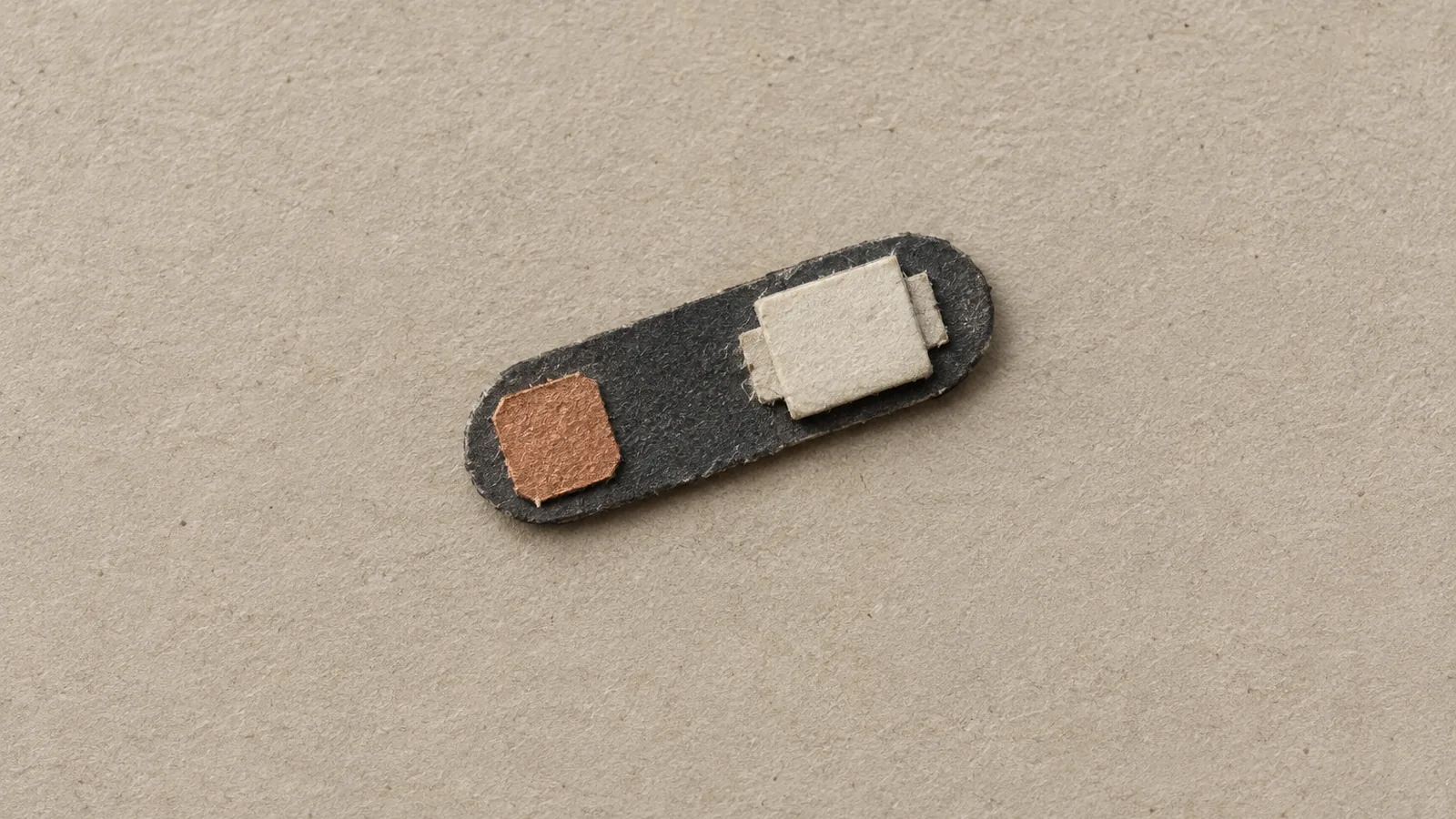
Engineers at NYU Abu Dhabi and Cleveland Clinic Abu Dhabi have built a stimulator about the size of a small seed. It goes in through a standard needle, settles beside a target nerve, and draws its power wirelessly from outside the body, so no surgery is involved. They published it in Science Advances. By the time it reached ScienceDaily, it had become a tiny device that can “control your nerves to treat chronic pain.” That promise is going out to a pain market where the current generation of nerve hardware has a long, ugly incident file, and I don’t think the two can be pulled apart.
Wait, how does a chip with no battery make a nerve fire at all? It borrows the energy. A source outside the body beams power through the skin, the chip catches it and turns it into small electrical pulses, and those pulses push the neighboring nerve into firing. The stimulation is programmable, and a clinician can find the chip again afterward with ultrasound or CT. I’ll admit the design won me over in about a paragraph. Peripheral nerve stimulation keeps running aground on bulky hardware, a battery that has to live somewhere in your body, and the operation needed to install both. A seed you inject avoids all of that, at least in the paper.
What the team actually showed is that the chip “successfully activated nerves in vivo.” In plain terms, a nerve fired on command inside a living body during preclinical testing. That proves the physics works in tissue, and it tells you nothing yet about anybody’s sciatica. Under its own cheerful headline, ScienceDaily concedes that the device’s “ability to relieve chronic pain or improve movement disorders in human patients has not yet been established.” Senior author Khalil Ramadi calls the work “a shift in how we think about treating nerve-related conditions.” I’m with him on the thinking, but treating is a word that needs patients behind it. Between a nerve that fires on command and a back that stops hurting sit safety studies, dosing, durability testing and controlled trials in people.
The gap matters because the audience for that headline is enormous. CDC survey data put chronic pain at 24.3 percent of American adults in 2023, up from 20.4 percent in 2019. And 8.5 percent now live with high-impact pain that frequently limits their work or life, up from 7.4 percent. That’s tens of millions of people desperate for anything that works, and a headline promising pain control reaches every one of them.
Those people have heard “we have a device for your pain” before. The incumbent is the spinal cord stimulator, an implanted system meant to override pain signals. A 2022 analysis in the Clinical Journal of Pain pulled the reports filed to the FDA’s MAUDE database on 10-kHz spinal cord stimulators from 2016 through 2020, 1,651 entries in all. Procedural complications made up 72.6 percent of them, and infections outside the spinal canal led that list. When something went wrong, the fix was usually removal: 50.9 percent of complications were handled by explanting the device, against 6.6 percent managed with incision and drainage and 5.0 percent with revision. Surgery to put it in, surgery to take it out. MAUDE runs on voluntary reports, so these figures can’t tell you how often things go wrong. They do show how the problems that got reported were fixed, and that pattern is hard to dismiss.
| Group | Value (percent) |
|---|---|
| Explant | 50.9 |
| Incision and drainage | 6.6 |
| Revision | 5.0 |
Then there’s the recall. The FDA has labeled Boston Scientific’s recall of its Infinion CX stimulator leads Class I, its most serious category, after 1,081 serious injuries were reported. The problem is mechanical stress where the lead is anchored, which can push its impedance too high or snap it outright until stimulation fails, and the remedy can mean removing or replacing the lead. The recall pulls unused leads off the shelf. The ones already inside people stay put, with routine follow-up.
Set side by side, those two records make the injectable chip look more interesting than its own hype. An infection around an implant and a lead that cracks at its anchor are exactly the problems a leadless device slipped in through a needle might avoid. It has no lead to fracture, and nobody has to open you up to place it.
They also make it look more fragile, because “might” is all anyone can say right now. A device this small and this new raises questions nobody has answered in a human body: how long it keeps working, whether it wanders off its nerve, how you retrieve it if it misbehaves. And the one I couldn’t stop turning over: the body walls off foreign objects with scar tissue over months, so what does that healing response do to a seed-sized chip pressed against the very nerve it’s supposed to talk to? To their credit, the researchers describe the technology as something that complements existing treatment options, including implants and medications, not a replacement for them. That framing didn’t make it into the headline.
If I were in that 8.5 percent, I’d treat this as an early, credible reason to hope the next pain device won’t take two operations, and I’d watch closely for the first human trial. What I would not do is let “treat chronic pain” in a 2026 headline change a single thing about my care today. I’m not putting any pain decision on hold for this chip until a patient, not a press release, tells me it worked.
Sources
- Science Advances: Elsherif et al., “An injectable, leadless bioelectronic interface for battery-free wireless peripheral neuromodulation” (2026)
- NYU Abu Dhabi news release on the injectable nerve-control device (2026)
- ScienceDaily: “Scientists created a tiny device that can control your nerves to treat chronic pain” (Oct 2026)
- Clinical Journal of Pain (2022): adverse events associated with 10-kHz dorsal column spinal cord stimulation, FDA MAUDE analysis
- MedTech Dive: Boston Scientific spinal cord stimulator lead recall tied to more than 1,000 serious injuries (2026)
- CDC/NCHS Data Brief 518: chronic pain and high-impact chronic pain in U.S. adults, 2023