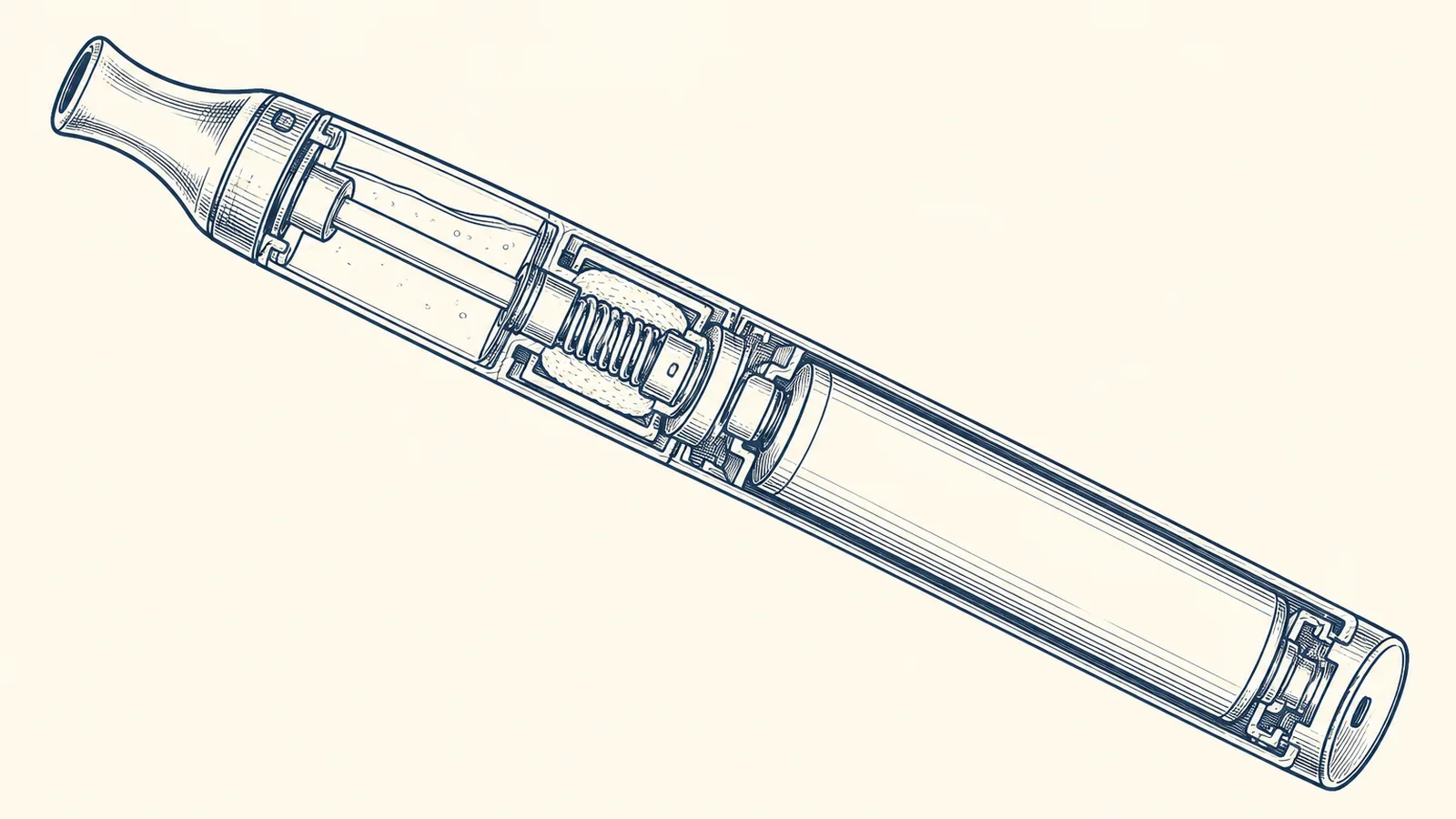
For years I filed vaping in the same mental drawer as smoking: a slightly less grim way to wreck your lungs, the thing you tell a friend to quit right after you tell them to quit cigarettes. Turns out I had plenty of company. A 2026 survey by the charity ASH, reported in the UK’s pharmacy press, found that 54 percent of adults believe vaping is as harmful as smoking, or worse.
The best evidence we have points the other way, at least for the people this actually matters to: adult smokers trying to get out.
In a Cochrane living review updated this year, a team led by Nicola Lindson at the University of Oxford pooled 80 randomized controlled trials and 29,861 people and asked a blunt question: when a smoker tries to quit, what actually works? Nicotine e-cigarettes came out on top. Against nicotine replacement therapy, the patches, gums and lozenges every pharmacy stocks, vaping produced about 4 more quitters for every 100 people who tried, and the reviewers graded that finding high-certainty, the top rung of the evidence ladder, built from 11 trials and just over 4,000 participants.
4 per hundred sounds like a rounding error until you remember what quitting actually looks like. Most attempts fail. Moving the success rate 4 points, reliably, across tens of thousands of people, is the margin that separates an aid worth recommending from one people buy mostly to feel like they tried. And on the question everyone actually worries about, Jamie Hartmann-Boyce, the senior author, now at the University of Massachusetts Amherst, put it flatly: there is “very strong evidence” that regulated nicotine e-cigarettes are substantially less harmful than smoking.
The question I kept circling was why a vape should beat a patch at all. Both deliver nicotine. If nicotine is nicotine, the patch should do the job. Here is how I read it, and it is my read, not the review’s: a patch pushes nicotine through the skin in a slow, flat trickle, topping up the blood over hours. It never meets the craving, and a craving is a spike, a sudden demand that a cigarette answers in seconds because smoke carries nicotine from the lungs to the brain almost instantly. A vape does that same fast delivery, on demand, and it hands back the piece no patch ever will: the lift of the hand to the mouth, the draw, the something-to-do with the urge. It replaces the chemistry and the choreography at once. That, far more than any slogan about safer nicotine, is why I think it keeps winning the head-to-head.
So why do most adults believe the opposite? Because for a decade the public-health apparatus taught them to. In June 2022 the FDA ordered Juul’s products off the U.S. market outright, a decision a federal court stayed within a day and the agency itself paused weeks later. The World Health Organization, in December 2023, urged governments to tax vapes, ban their flavors, and said plainly that it does not recommend letting them be sold as a way to help people quit. The product those same bodies waved through without much fuss, pharmaceutical nicotine replacement, is the one this review just watched lose the head-to-head. If you make nicotine patches, the official guidance has been very kind to you. The trial data, less so.
None of this makes vaping harmless, and the review does not pretend otherwise; its authors are clear that regulated vaping products are not risk-free, and nicotine still grabs on and does not let go easily. The honest claim is narrower and more useful than either camp tends to make it: for an adult who already smokes, switching completely to a regulated, nicotine-containing vape is very likely the less damaging road, and the likelier one to end in actually quitting. It is not an invitation for a teenager who has never touched a cigarette to start.
So here is what changed for me. If someone I love were still smoking a pack a day and the patch had already failed them twice, I would not spend another round steering them toward the gum because it carries the official seal. I would tell them to switch to a regulated vape, make a plan to get off that too, and I would stop apologizing for saying it. The trials are in. I am done pretending the option with the official blessing and the one the evidence actually backs are the same thing.
Sources
- Cochrane Database of Systematic Reviews – Lindson, Hartmann-Boyce et al., “Electronic cigarettes for smoking cessation,” 2026 living-review update (80 RCTs, 29,861 participants)
- ScienceDaily – summary of the updated Cochrane review on e-cigarettes versus other quit-smoking methods, including the “not risk-free” caveat.
- The Pharmaceutical Journal – report on the review, with the 54 percent ASH public-perception figure and the authors’ quotes.
- Science Media Centre – expert reaction to the review, with the 11-trial / ~4,000-participant NRT comparison and declared interests.
- World Health Organization – December 2023 call for governments to tax and restrict e-cigarettes and not permit their sale as a cessation aid.