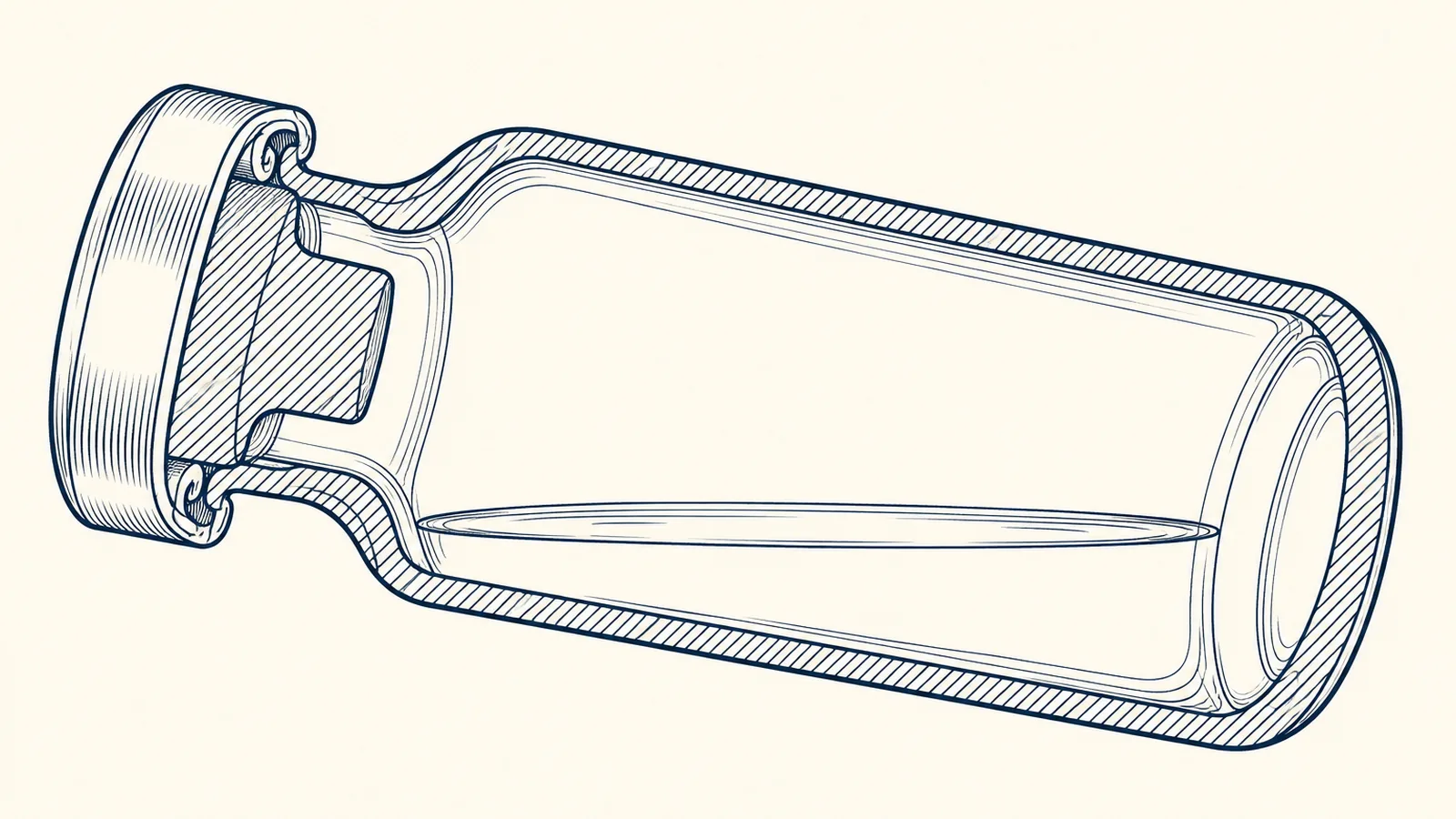
Jacqueline Shea had been running a commercial-stage company for six days when Inovio Pharmaceuticals told prospective investors what it expected to charge for its first approved drug. Voceryq, the DNA immunotherapy the FDA had cleared on October 30 for adults with recurrent respiratory papillomatosis, was anticipated to be priced, according to the company’s November 5 prospectus supplement, “at approximately $115,000 per dose, or $460,000 for the complete four-dose treatment series.”
Anyone who follows the disease would have recognized the figure. In August 2025 Precigen launched Papzimeos, the first approved drug for the same adult condition, at a list price of $115,000 per vial, or $460,000 for a full course. The second drug to reach this market is headed for the same list price as the first, down to the dollar.
Two approvals, one price tag
The two products share a target and not much else. Recurrent respiratory papillomatosis is driven by human papillomavirus types 6 and 11, which seed wart-like growths in the airway that surgeons cut out and the virus grows back, so that the worst-affected adults go under anesthesia three or more times a year. Precigen’s drug is an adenoviral vector given as four injections under the skin over 12 weeks. Inovio’s is injected into muscle with its CELLECTRA 5PSP device, four doses over nine weeks, according to Chief Commercial Officer Steve Egge on the company’s November 10 earnings call.
The regulatory records differ more sharply, and in a direction that makes the matching price harder to explain. Precigen had asked for accelerated approval and got a standard one instead, which, as MedCity News reported, spared it a confirmatory trial; in the pivotal portion of its study, 51.4 percent of 35 adults who had needed three or more surgeries a year went the 12 months after treatment without one. Voceryq got the accelerated approval Precigen was denied, granted on a reduction in surgical frequency, an intermediate endpoint the agency considers “reasonably likely to predict clinical benefit,” HCPLive reported, rather than proof of it. In the 26 patients in the efficacy analysis of Inovio’s uncontrolled RRP-001 trial, 7 went a year without surgery, or 27 percent. The studies enrolled different patients and were never run head to head, so the two percentages don’t rank the drugs. They do describe two very different levels of regulatory certainty.
| Measure | Part | Whole |
|---|---|---|
| patients in Voceryq's efficacy analysis | 7 | 26 |
The approvals differ. The price tags do not.
Nothing obliged the number to land where it did. When Precigen announced its price, analysts at Citizens JMP had been modeling about $200,000 per patient, MedCity reported, less than half of what the company asked. Precigen set the ceiling, and Inovio, arriving second with the weaker approval, met it instead of undercutting it. Asked on the call how Voceryq would compete with Papzimeos’s early uptake, Shea replied that “the strong uptake that they’ve seen really indicates the high unmet need.”
Paying full price for a conditional answer
Accelerated approval exists so that a patient facing a fifth operation on the voice box this year doesn’t have to wait for every question to be answered, and the price of that speed is supposed to be paid later, by the sponsor, in evidence. Inovio’s prospectus states the terms plainly: the FDA “may withdraw approval of VOCERYQ” if, among other things, the confirmatory trials fail to verify the predicted clinical benefit.
That trial has no final protocol. In its third-quarter results, Inovio said it expects to submit a draft to the FDA by the end of 2026 and to settle the final version in mid-2027. Chief Medical Officer Mike Sumner added the first concrete terms on the call: “the study should enroll at least 50 adult and pediatric patients,” and it will track surgical interventions for at least three years after treatment ends. A three-year study that hasn’t been finalized won’t be reporting anytime soon, and while the approved label covers only adults, the study meant to confirm it will also enroll children.
The commercial clock runs on a faster schedule. Egge said Inovio expects insurers covering about 80 percent of American patients to have policies in place within nine months of approval, and the company plans to apply for a permanent J-code, the billing identifier that turns a new drug into a routine claim. He put the prevalent adult population at “at least 25,000” in the United States, expected the product to be available to order about 60 days after approval, and planned full field deployment in the first quarter of 2027. Any insurer that covers Voceryq at its anticipated list price will be paying what a fully approved competitor charges for a benefit the agency has accepted only provisionally.
The runway, lengthened
The approval also did something for Inovio’s balance sheet that no sale has yet done. When the company reported its second-quarter results in August, it said its cash would last “into late first quarter 2027,” the same quarter it now expects to put its sales force in the field. By September 30 it held $48.4 million in cash and short-term investments. The November offering sold 58,747,235 shares at $1.05 plus pre-funded warrants for 12,681,337 more, and with the underwriters’ option on another 10,714,285 shares, Inovio put net proceeds at about $80.5 million, the prospectus’s estimate if that option was exercised in full. Warrant exercises after quarter end added $10.9 million, and the company now says its money will last into late fourth quarter 2027, past the launch.
Existing shareholders covered that extension. The prospectus counts 110,181,507 shares outstanding at the end of September and 179,643,027 afterward with the full option, before any of the pre-funded warrants are exercised. The quarter’s net loss was $49.2 million.
On the November 10 call, an analyst sitting in for Roger Song of Jefferies asked the competition question. Ted Tenthoff of Piper Sandler asked about partners abroad, and Yi Chen of H.C. Wainwright asked how many physicians had been trained on the device. Jefferies and Piper Sandler had been joint book-running managers on Inovio’s offering five days earlier, and H.C. Wainwright had been its lead manager. None of the three asked about the price.