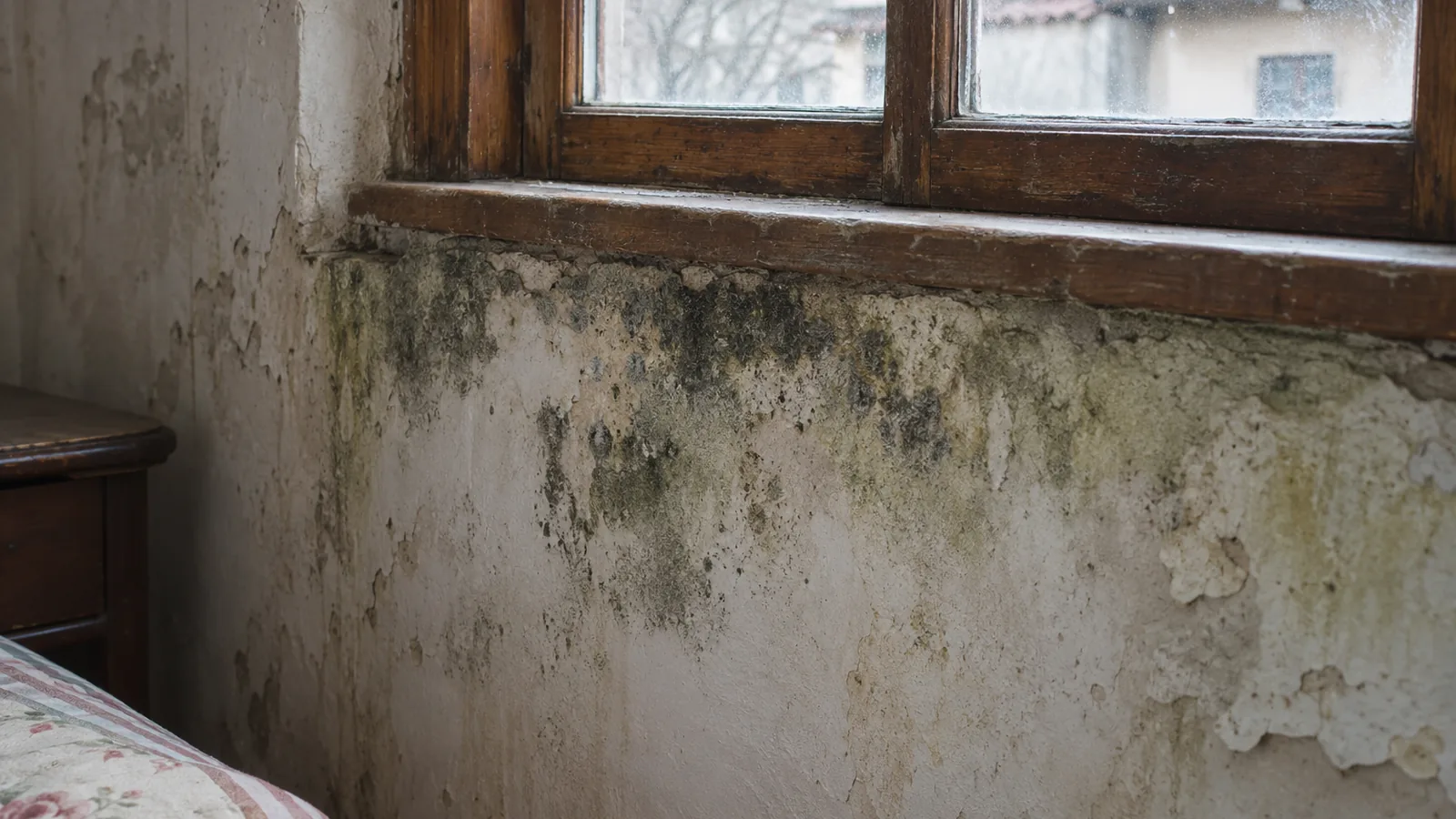
I have always filed a musty smell under chores. You catch it in the back bedroom or under the sink, crack a window, maybe set out a box of baking soda, and get on with your day. I didn’t expect that smell to show up as a predictor of who dies first. In a large cohort of China’s oldest adults, people who said their home smelled moldy died at a faster rate between 2011 and 2018 than people who smelled nothing.
The study, published November 11 in Environmental Health, draws on the Chinese Longitudinal Healthy Longevity Survey. That long-running national study of very old adults is run out of Peking University. Researchers at the Third Affiliated Hospital of Jinzhou Medical University and partner institutions followed 5,961 older adults across 89,405 person-years, and 3,731 of them died. After full adjustment, people who reported a moldy odor at home had a hazard ratio for death from any cause of 1.13 (95% CI 1.02 to 1.25). That means their death rate at any point in follow-up ran about 13 percent above the rate for people who reported no smell. Among rural participants the estimate rose to 1.22 (95% CI 1.06 to 1.41). The authors found no significant interaction across subgroups, though, so the numbers don’t show that rural homes are more dangerous than urban ones.
| Result | Value (HR) | Lower bound | Upper bound |
|---|---|---|---|
| All participants | 1.13 | 1.02 | 1.25 |
| Rural participants | 1.22 | 1.06 | 1.41 |
My first instinct was that this had to be poverty in disguise. Damp houses tend to be old, cold, crowded and badly ventilated. The people who live in them tend to be poorer and farther from a hospital, and all of that can shorten a life without any help from fungi. The models adjust for the differences they measured, and the authors report an E-value of 1.51. To explain the whole association away, an unmeasured factor would have to be linked to both the moldy smell and death by a risk ratio of about 1.51 each, beyond everything the model already includes. In a population this old and this poor, a hidden factor of that strength is easy to imagine. So I read the result as a signal worth chasing, not a proven cause.
The researchers also estimated a share of deaths. If the link is causal, 2.52 percent of deaths in the cohort (95% CI 0.40 to 4.73 percent) would be attributable to living with that smell, about one death in forty. More than six in ten participants died during follow-up, so that is a sizable slice of mortality for something as ordinary as a leaky pipe.
Wait, why would a smell predict death at all? The odor is probably a messenger rather than the culprit. The U.S. Environmental Protection Agency notes that some compounds molds produce “have strong smells and are volatile and quickly released into the air,” and that “a moldy odor suggests that mold is growing in the building and should be investigated.” So the nose is detecting a moisture problem. One plausible route to harm, and it is only a hypothesis, runs through the lungs: spores and fungal fragments drift through a damp room and get breathed in by someone whose lungs have lost much of their reserve. The World Health Organization’s 2009 dampness guidelines concluded that people in damp or mouldy buildings have “up to a 75% greater risk of respiratory symptoms and asthma.” For a frail 90-year-old, one bad chest infection can start a long decline. This study counted deaths from all causes, so it can’t say whether the lungs are the route. A breakdown by cause of death is the analysis I most want to see.
The exposure measure has a complication of its own. It depends on people noticing an odor, and the sense of smell fades with age. In a separate Chinese cohort of 97,327 adults, people who reported a poor sense of smell had a hazard ratio for death of 1.42 (95% CI 1.02 to 2.00) over a median 6.4 years. Some older participants in the mold study who couldn’t detect the mildew were probably counted as unexposed even though their own risk was already higher. Nobody can tell from these data which way that misclassification moves the estimate.
The smell isn’t rare, either. In the 2018 wave of the same survey, 14.1 percent of 12,866 adults aged 65 and older reported a musty smell at home, about one in seven. In that analysis, people without the smell had lower odds of respiratory disease (OR 0.77, 95% CI 0.66 to 0.90).
| Measure | Share |
|---|---|
| of adults 65 and older reported a musty smell at home | 14.1 percent |
The authors report no funding and declare no competing interests. Their conclusion is modest: exposure “may be associated with an increased risk of all-cause mortality,” and they want multicentre studies to confirm it. That’s the appropriate restraint for one observational cohort with a self-reported exposure. I still take the result seriously because of the people who have been waiting for something like it. Plenty of people have told a landlord or a doctor that a damp apartment was making them sick and been brushed off. Meanwhile the EPA’s own page admits that “the health effects of inhaling mVOCs are largely unknown.” Unknown was never the same as harmless. Now a mortality signal has held up after adjustment, and it points the same way the WHO’s respiratory evidence has pointed since 2009.
None of this requires buying a new product. The EPA’s moisture guide is blunt: “The key to mold control is moisture control.” It says water-damaged areas should be dried “within 24-48 hours,” and that anyone with mold growth “must clean up the mold and fix the water problem.” Covering up the smell does nothing about the water behind it, and the agency says plainly, “Do not paint or caulk moldy surfaces.” If my mother’s house smelled like that, I wouldn’t wait for the multicentre studies. I’d pull up the carpet, find the leak and have it dry that week.
Sources
- Environmental Health: Ma et al., household moldy odor and all-cause mortality in older Chinese adults (2026)
- Journal of Global Health: perceived olfactory dysfunction and all-cause mortality in 97,327 Chinese adults (2024)
- Biomedical and Environmental Sciences: Zhu et al., household chemical use and respiratory disease in older adults (2024)
- U.S. EPA: What does mold smell like?
- U.S. EPA: A brief guide to mold, moisture and your home
- WHO Regional Office for Europe: first indoor air quality guidelines on dampness and mould (2009)