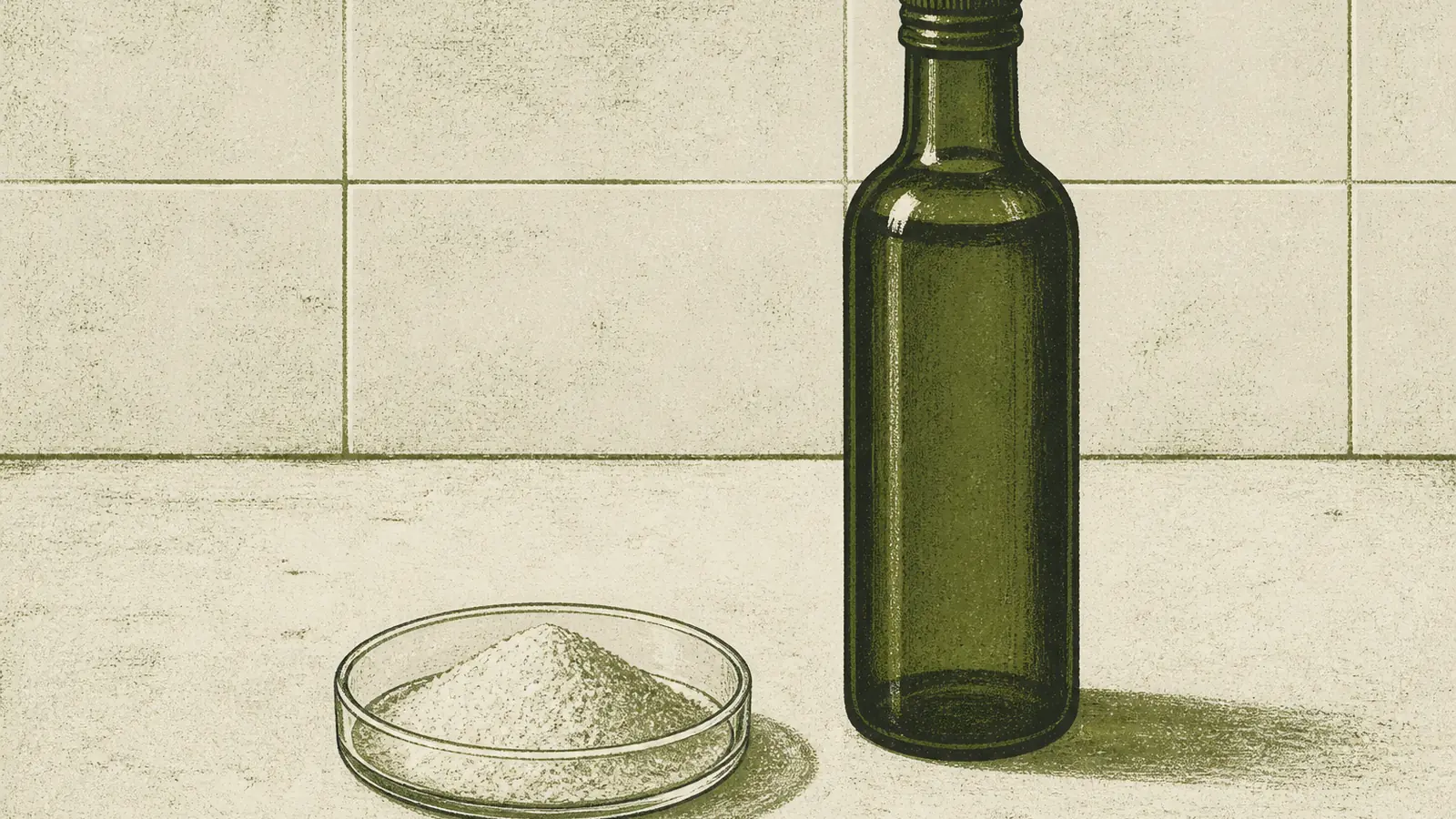
The headline going around this week says the fat in olive oil fuels pancreatic cancer and fish oil cuts disease in half, the kind of sentence built to be forwarded without being read. The paper underneath it, published April 29 in Cancer Discovery out of Yale’s genetics department, is more careful and considerably less useful at the dinner table than the headline suggests. The mice were the only test subjects, the tumor-accelerating effect of oleic acid showed up in male animals and largely vanished in female ones, and no one has run the experiment in people.
Christian Felipe Ruiz, working in Mandar Muzumdar’s lab, fed genetically engineered mice twelve high-fat diets matched calorie for calorie and varying only in their fat source, the panel built from the way Americans actually eat: olive oil, lard, high-oleic safflower oil, fish oil, vegetable oils, combinations of those. The mice carried a Kras mutation that drives the rodent equivalent of pancreatic ductal adenocarcinoma, the human disease that still kills roughly nine in ten of the people it finds. Diets rich in oleic acid sped tumor growth. Fish oil diets produced what Yale’s communications office calls a 50 percent reduction in disease compared with a standard fat control. The release gives the relative number; the absolute per-arm counts sit in the journal.
Then there is the part the headline skipped. The oleic-acid tumor-promoting effect was significant in male mice and largely absent in females. Fish oil suppressed cancer in both sexes. The authors do not pretend to know yet why the asymmetry exists; they flag it as one of the open questions the mouse work raises, not a mechanism they have settled. Reporting a finding that holds in half the animals as if it holds across the species is its own kind of slippage, and it is the one this week’s coverage is leaning on.
The mechanism the paper does work out is worth the read. Polyunsaturated fats, omega-3s chief among them, push tumor cells toward a form of programmed death called ferroptosis, in which lipid peroxidation runs away inside the cell and the membrane breaks down. Monounsaturated fats like oleic acid do the opposite, getting incorporated into membrane phospholipids in ways that resist oxidation, which keeps the cancer cell alive in conditions that should kill it. There is years of prior literature behind this biochemistry, and it is the more honest version of what cable is calling an olive-oil scare: certain fats reshape what cancer cells are made of, and what they are made of decides whether a particular kind of cell death can reach them.
What the public materials do not let a reader see is what exactly each of the twelve diets contained by ingredient, what the absolute disease burdens in each arm were, or what conflicts of interest the authors disclosed. Yale’s release names the funders cleanly enough, NIH carrying the load with the Lustgarten Foundation, Damon Runyon-Rachleff, the VA, the AACR, NSF, and several internal Yale centers in support. It routes a reader who wants the conflict-of-interest box, or the per-arm n’s, or the diet recipes to the journal page, which is where the press cycle rarely follows.
Ruiz has been straight with the outlets that bothered to ask. The diet intervention has not been replicated in humans. The team’s idea that the ratio of monounsaturated to polyunsaturated fats in the blood could one day serve as an early biomarker for pancreatic-cancer risk is exactly that, an idea, not a finding from this paper. Any clinical implications, if they land, would land first with people already at elevated risk: chronic pancreatitis, strong family history, late-onset diabetes. He has said the team does not yet have clear answers about what to change at dinner.
The piece worth writing in twelve months is the one in which someone tests whether shifting that blood-fat ratio in a high-risk patient cohort actually shifts anything that matters. Until then, what landed this week is a mouse mechanism paper, male-skewed in its headline finding, dressed in a dinner-table headline its own authors quietly refuse to defend.
Sources
- Cancer Discovery – Diet-induced phospholipid remodeling dictates tumor ferroptosis sensitivity in pancreatic cancer (Ruiz et al., Yale, 2026)
- Yale School of Medicine – “The Type of Fat – Not the Amount – Fuels Pancreatic Cancer” (2026)
- ScienceDaily – One fat helped pancreatic cancer grow while another cut disease in half (2026)
- MedicalXpress – Dietary fats shape pancreatic cancer risk via ferroptosis (2026)
- ScienceBlog – Why the fat in olive oil may be fueling pancreatic cancer (2026)