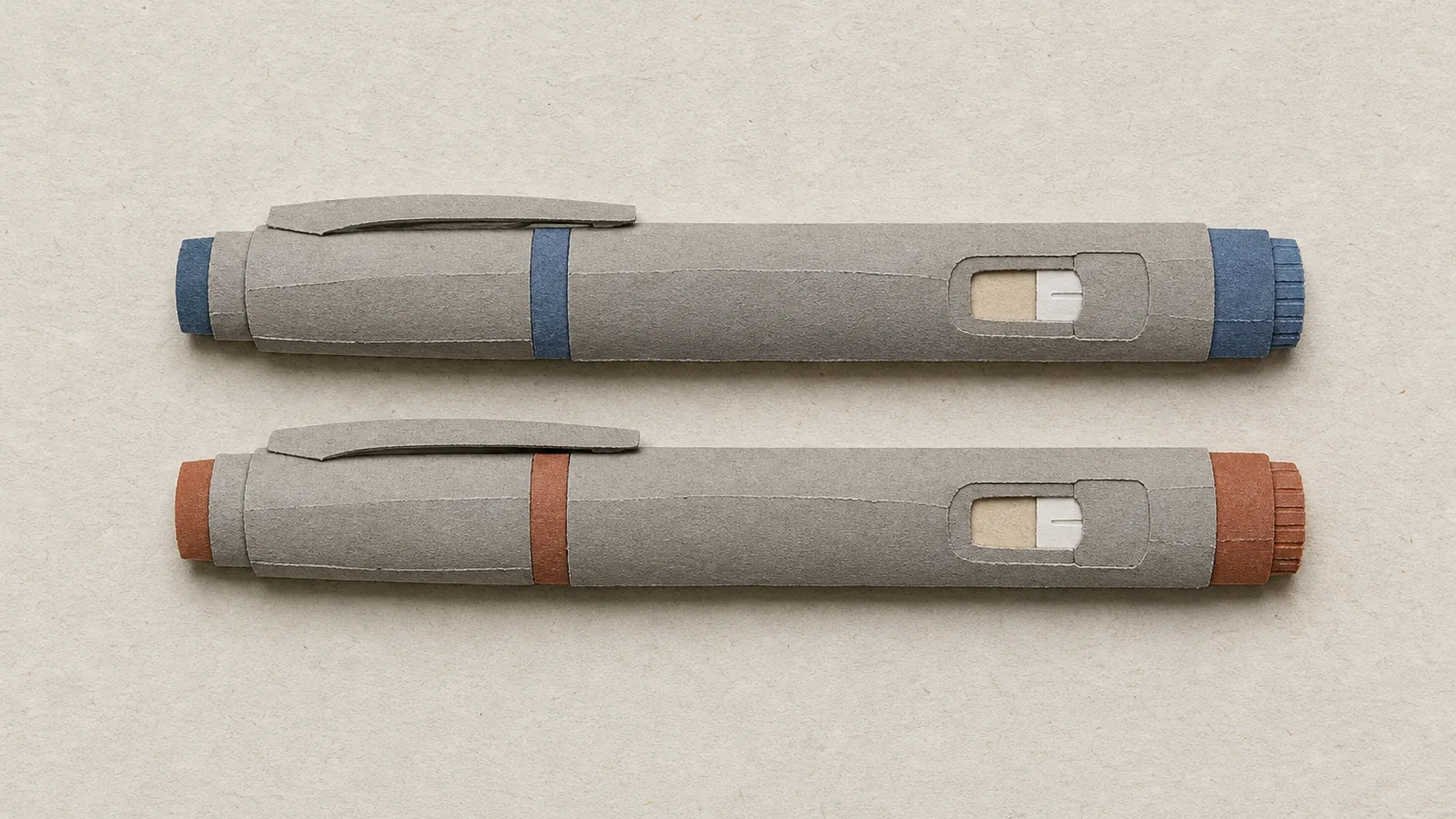
Two insulin pens that do almost exactly the same job in your bloodstream get treated by Medicare like two completely different drugs. That is not a metaphor. It is the accounting trick at the center of the loophole the Trump administration on Thursday proposed killing, eight months after the same administration quietly tabled the same fix.
Novolog is insulin aspart. Fiasp is insulin aspart. The active molecule is identical. Novo Nordisk took its own decade-old insulin, added two excipients (niacinamide and L-arginine) to make it absorb a touch faster, filed a separate FDA application, and treated the result as a new drug. Wait, why would the same molecule become two drugs? Because under the Inflation Reduction Act, Medicare cannot negotiate a drug’s price until it has been on the market for 9 years if it is a pill, 11 if it is a biologic, and each separate FDA application gets its own clock. So a minor reformulation, as the Commonwealth Fund laid out using the exact Fiasp-Novolog case, can reset the negotiation clock and keep Medicare paying brand prices for what is, biochemically, the same molecule with a slightly faster absorption curve.
The industry calls it lifecycle management. Policy analysts and the Commonwealth Fund call it product hopping, the same trick branded-drug makers have used against generics for years, now ported into the Medicare negotiation regime. And the stakes of closing it are not really about insulin. They are about what comes next: the GLP-1 class, the biologics for autoimmune disease, the big-ticket oncology infusions. Hold that thought.
The proposed rule the administration floated Thursday targets exactly this maneuver. It would let CMS treat a drug and its minor-tweak follow-on as a single negotiating unit when the active ingredient is materially the same. The rule is folded into the annual guidance setting how the agency picks the next twenty drugs and biologics for negotiation, with the next batch due to be named by February 1, 2027, and the negotiated prices kicking in for 2029. The official line from HHS is that this protects program integrity. Drugmakers, in the same article, claim the rule would “discourage them from improving drugs,” which is a striking defense given that the maneuver the rule targets is, by definition, a change small enough to leave the active ingredient materially intact. The whole arbitrage depends on the tweak being minor; the lobbying line depends on calling it an improvement.
Here is the kicker. This is not a new idea, and it is not a Trump idea. It is the same fix this same administration looked at and walked away from in October. STAT reported then that HHS tabled the loophole crackdown to “study it further” after drugmakers lobbied hard against it. Eight months of study apparently produced the policy that was already sitting on the shelf.
A reader who only saw Thursday’s headline would think the White House just landed a clean punch on pharma. It did not, because the much bigger giveaway the same administration handed the same industry last summer is still sitting there untouched. The One Big Beautiful Bill Act, signed July 4, 2025, broadened the IRA’s orphan-drug exclusion. Drugs originally approved for a rare disease and later approved for a much larger population now stay sheltered from negotiation in ways the original statute did not contemplate. Energy and Commerce Democrats, in a partisan press release walking through the mechanics, describe drugs that started life as niche rare-disease treatments and then went on to dominate huge categories getting kept off the negotiation list. The Center for American Progress, in its own analysis of the rollbacks, describes the orphan expansion as a meaningful drag on the savings Medicare negotiation was supposed to deliver, without putting a single dollar figure on it that I can responsibly quote here. That one is statute now. A proposed rule cannot touch it.
So the scoreboard, honestly. Pharma got the bigger loophole written into law and the smaller loophole delayed, then re-proposed eight months later, when the political weather had shifted. I will take the product-hopping fix over no product-hopping fix. But the regulatory clawback of one loophole does not undo the legislative expansion of another, and pretending otherwise is the favor the industry is hoping you do for it.
Now back to that thought I asked you to hold. CMS already finalized the IPAY 2028 guidance last September, which for the first time makes Part B physician-administered drugs eligible for selection alongside Part D drugs. That expansion does not, by itself, drag GLP-1s into the cone of consideration: Wegovy and Ozempic are Part D self-administered injectables, and they were already eligible as Part D drugs whose negotiation clocks are about to come due. What it does mean is that the universe of negotiable drugs now spans both pharmacy and physician-office channels at the same time the product-hopping rule is on the table. And that universe is full of franchises where the move is staring everyone in the face. Novo’s semaglutide is sold as Ozempic for type 2 diabetes and Wegovy for obesity, with an oral semaglutide pill (Rybelsus) already on the market for diabetes and an oral obesity version filed at FDA. Lilly runs the same franchise structure with tirzepatide across Mounjaro, Zepbound, and an oral GLP-1 pipeline candidate (orforglipron) in late-stage trials. The proposed rule, if it survives the comment period and the inevitable industry lawsuits, would be the difference between Medicare negotiating one semaglutide price and Medicare chasing every branded packaging of it.
My frank take. The mechanism this rule targets has cost the program money, and closing it is the right call regardless of who is in the White House. I am not going to pretend that calling Novo Nordisk’s bluff on Fiasp is somehow not worth doing because Trump also expanded the orphan exclusion. Both things are true. But if your read on the day is “the administration just cracked down on pharma,” sharpen the lens. The cheaper of the two giveaways is the one being walked back. The expensive one was signed into law eleven months ago, and the people who benefited from it are not refunding anything. Watch what happens in the comment period. The same lobbying that produced the October delay is about to start over.
Sources
- STAT, Trump administration revisits policy to close Medicare drug price negotiation loophole (June 12, 2026)
- STAT, Trump administration delays effort to address Medicare drug price negotiation loophole (October 3, 2025)
- Commonwealth Fund, How Medicare Negotiations Can Avoid Manufacturers’ Loopholes (Fiasp/Novolog case, 2023)
- House Energy & Commerce Democrats, orphan-drug exclusion expansion in the One Big Beautiful Bill Act
- Center for American Progress, Medicare Negotiation Is Working, but the Trump Administration’s Rollbacks Diminish Potential Savings
- Hogan Lovells, CMS Issues Final Guidance on IPAY 2028 Drug Price Negotiation Program (September 30, 2025)