For years I filed rheumatoid arthritis under bad genetic luck. Your immune system turns on your own joints, your knuckles swell, a doctor tells you it runs in families and hands you something to turn the immune system down. Cause unknown, more or less. Manage it and move on.
So what stopped me in the newest run of research is the direction the arrow keeps pointing. It points away from your DNA and toward the air on your street, and not in one study you could wave off but in three, on three continents, using three different methods, all landing in the same place: when fine-particle pollution climbs, rheumatoid arthritis gets worse, and it may be helping light the disease up in the first place.
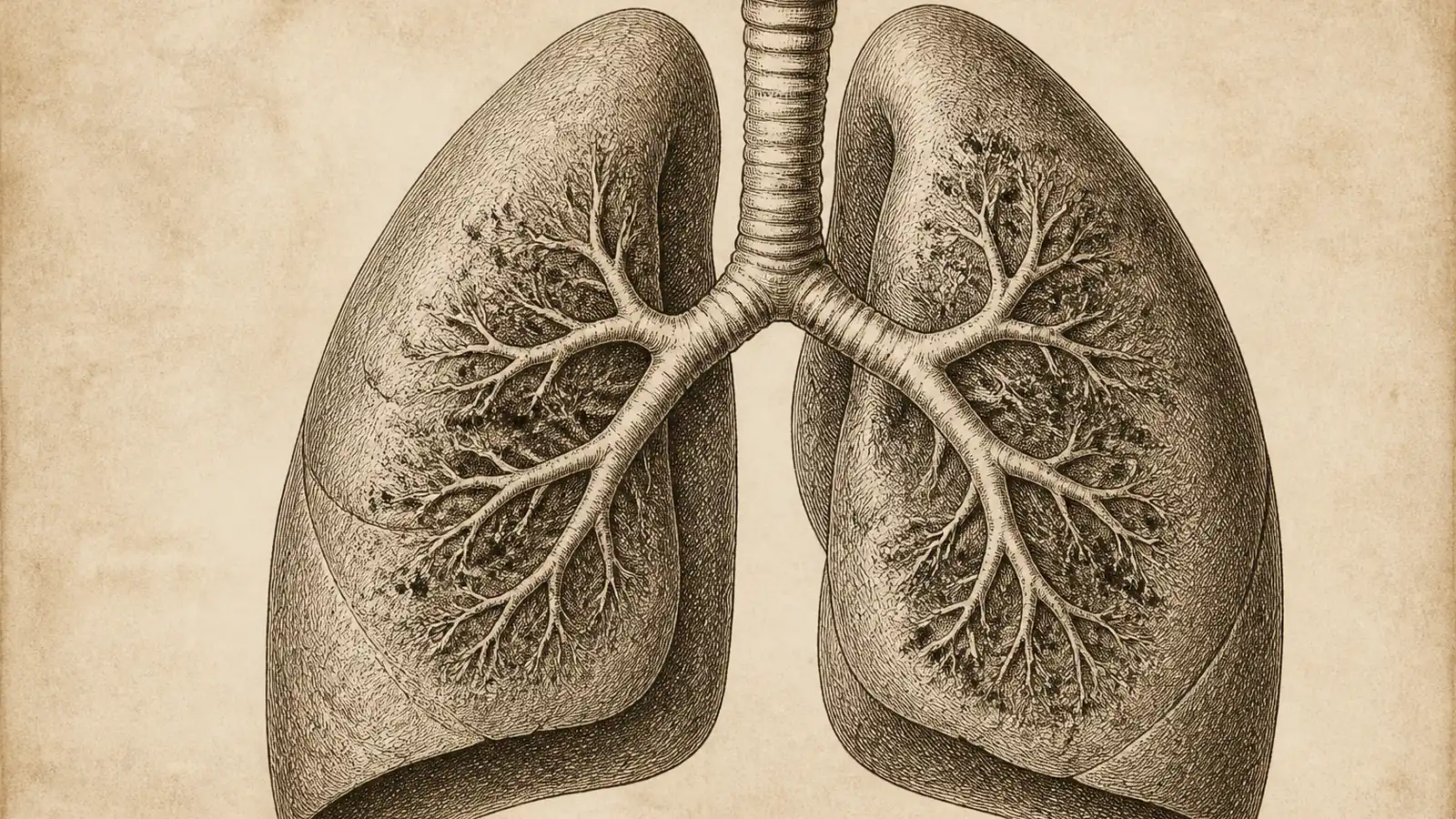
The claim that got me sitting up is bigger than dirty-air-makes-things-worse. The best-evidenced version says this disease of the joints may not begin in the joints at all. It may begin in your lungs.
The standard picture of RA is not wrong, and I do not want to strawman it. It is autoimmune, genetics load the gun, women get it two to three times as often as men, and the modern drugs, methotrexate and then the biologics, genuinely changed lives. But look at what the picture leaves out: the trigger. Ask why you got it this year, why you flared this month and not last, and the honest answer from most clinics is a shrug and a dose adjustment. The air outside the door barely enters the conversation. The new work moves straight into that gap.
Verona, Seoul, and 42,152 Californians
Start in Verona. Researchers there ran a case-crossover study on 888 RA patients, matching more than 3,000 clinic visits against 13,000-plus days of local pollution readings. Each patient is their own control: the design holds the fixed facts of a person, their genes, their job, their house, steady, and compares the air they breathed in the weeks before a flare against the air before a calm, low-activity visit. Carbon monoxide, nitrogen oxides, PM10, PM2.5, and ozone all ran higher in the 60 days before a flare. And when they tracked C-reactive protein, the blood marker of active inflammation, the dose-response was clean: once PM10 rose above 30 µg/m³, still under the EU’s annual limit of 40, the odds of an abnormal CRP ran 38 percent higher; above 40 it was 65 percent higher; above 50 it hit 150 percent. Read the bottom rung again. The joints were reacting to air a regulator would sign off on.
Then Seoul. At ACR Convergence in late 2025, a Seoul National University team reported on 1,056 RA patients followed from 2021 to 2024, with 1,724 flares between them. This one is a conference presentation written up by Healio, not yet a full peer-reviewed paper, so I hold it a notch looser. But PM2.5 again showed the strongest link, nudging up tender joint counts, swollen joint counts, and every disease-activity score they measured. Different country, different air, same fingerprint.
The heaviest study landed in April 2026. Using the California Multiethnic Cohort linked to Medicare records, researchers followed 42,152 older adults and watched 2,027 of them develop RA for the first time. This is the one that moves the story from flares worse to starts at all. For every 2 µg/m³ of long-term PM2.5, the risk of new-onset RA rose 20 percent (hazard ratio 1.20, 95% CI 1.16 to 1.23). For nitrogen dioxide, the tailpipe gas, it was 44 percent per 10 µg/m³ (1.44, 1.36 to 1.52). And the load fell unevenly: both the exposure and the risk ran highest in African American and Latino participants, the same groups the study measured breathing the dirtiest air. It was paid for by the National Cancer Institute and an NIEHS environmental-health pilot grant. Public money, not industry.
Wait, why would your knee care about your lungs?
This is the question I could not drop. What does a swollen knuckle have to do with what you breathe? The answer is the best-evidenced part of the whole story, and it is genuinely strange. Your lung is a huge, wet, immunologically busy surface. When fine particles pour in and lodge in that tissue, they set off inflammation, and inflammation switches on enzymes called peptidylarginine deiminases. Those enzymes do one specific thing: they chemically convert arginine, one of the amino acids in your own proteins, into a different one called citrulline. To your immune system the altered protein now looks foreign, and in a genetically primed person it builds antibodies against it, the anti-citrullinated protein antibodies, or ACPAs, that rheumatologists use to diagnose RA. This is the same citrullination-to-ACPA pathway that decades of research pinned on cigarette smoke, and industrial air emissions light up the same route. Pollution, near as I can tell, is a cigarette you never chose to light.
Here is the detail that reset how I think about the timeline. Those antibodies show up in the blood a median of 5.3 years before a single joint hurts. The autoimmunity is already running while the hands still feel fine, and the leading theory says the airway is where at least some of it gets started. By the time the diagnosis and the prescription arrive, the process has had a years-long head start, and much of that head start may have happened where the air met the tissue.
Observational is not the same as ignorable
I want to be straight about what this is and is not, because the wellness internet will oversell it in a heartbeat. The flare studies are observational. The case-crossover design is strong for catching short-term triggers, but it is not a randomized trial. The California study shows association, not proof, in older adults on Medicare, not everyone. And nobody has run, or ethically could run, a trial that assigns people to breathe filthy air for years. So this is not settled.
But observational is not the same as ignorable, especially when three independent designs, a clean dose-response, and a mechanism borrowed intact from smoking research all point the same way. That is about as much as environmental medicine ever gets, and it is a great deal more than the shrug most patients get handed.
And it lands somewhere uncomfortable. This is a changeable driver of a disease we treat as fixed and internal. We hand out expensive immunosuppressants to quiet the fire while the fuel line, the air outside the door, goes unmentioned in the exam room and unfixed by the agencies that set the limits. The WHO’s guideline for annual PM2.5 is 5 µg/m³; the US standard, tightened only in 2024, still sits at 9, nearly double it, and more than 90 percent of the world breathes air dirtier than the WHO line. Verona says joints react below even the looser official caps. That is not a problem you can supplement your way out of. It is a question about who decided this air was acceptable, and why their number runs so far above the one the biology keeps drawing.
So what would I actually do with this? If I had RA, or the antibodies and a family history, I would stop treating the air as background scenery. I would watch my local PM2.5 the way I watch the forecast, run a real HEPA filter in the room where I sleep, and skip the outdoor run on the bad-air days without feeling precious about it. None of that replaces a rheumatologist. But I would not wait for the exam-room conversation to catch up to the biology, because the antibodies clearly do not wait either.
Sources
- Rheumatology (Oxford) – Adami et al., environmental air pollution and RA flares, case-crossover (2021)
- Bone Reports – Adami et al., air pollution and RA flares, CRP dose-response (2021)
- Healio – higher air pollution may increase disease activity, flares in RA, ACR Convergence 2025
- Arthritis & Rheumatology / PMC – late-onset RA and air pollution in a multiethnic cohort (2026)
- Smoking and air pollution as pro-inflammatory triggers for RA, citrullination mechanism (PubMed)
- Environmental Research – industrial air emissions and anti-citrullinated protein antibodies (ScienceDirect)
- Arthritis Research & Therapy – antibodies pre-date the onset of RA by a median of 5.3 years (2016)
- WHO 2021 air quality guidelines – annual PM2.5 set at 5 µg/m³
- US EPA – 2024 revised annual PM2.5 standard of 9.0 µg/m³ (Federal Register)
- European Commission – EU air quality standards, PM10 annual limit of 40 µg/m³