I have started and quit French three separate times, and every time I quit I told myself the same comforting lie: that a brain past a certain age is running down a track it was handed at birth, and the most you can do is try not to derail it. So a headline claiming that people who speak four languages carry brains that look 13 years younger stopped me mid-scroll, half hopeful and half suspicious. Thirteen years is not a rounding error. It is the gap between your brain at 50 and your brain at 63. Before I let myself get excited, I went looking for the study behind the number. There isn’t one yet.
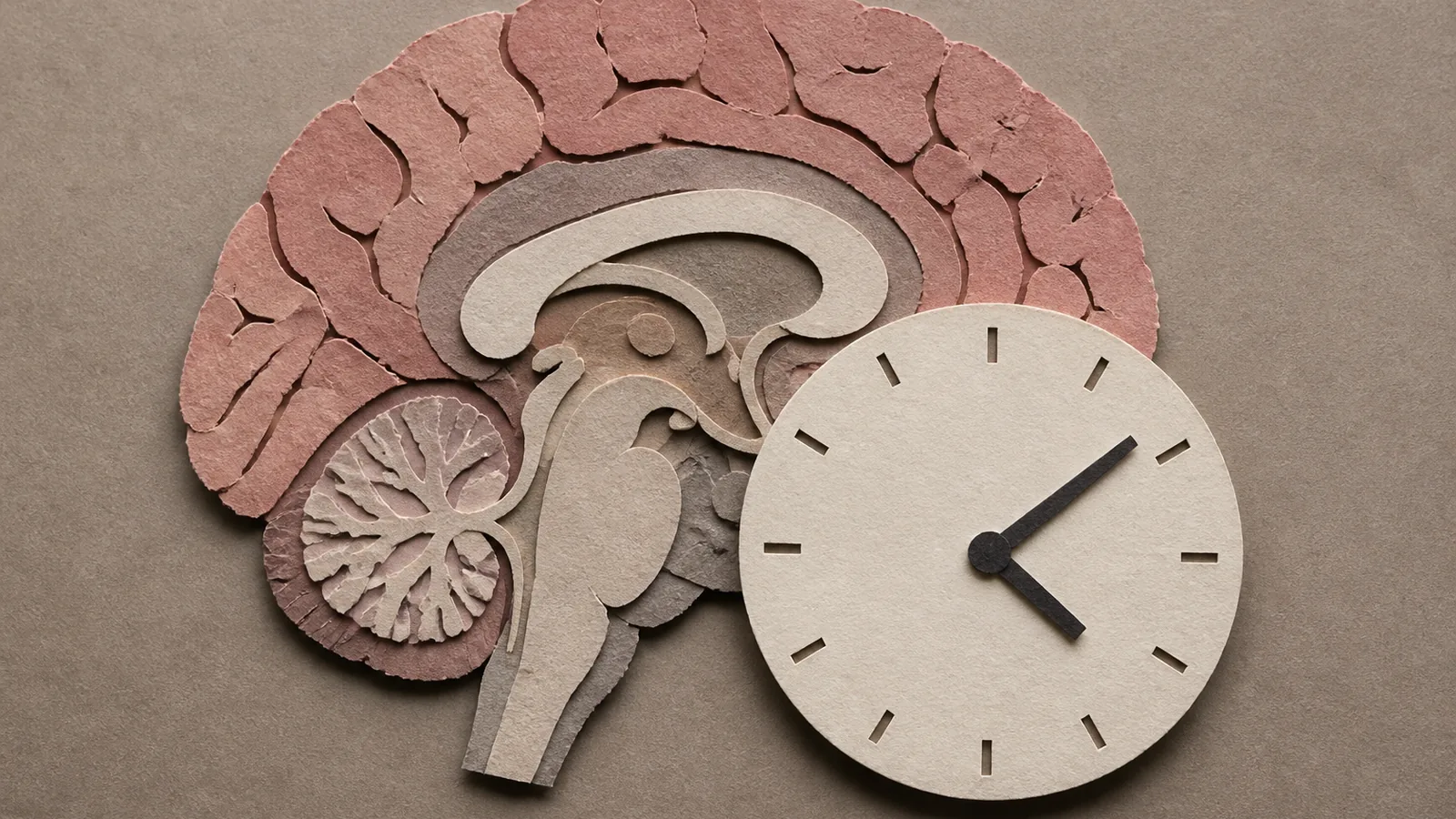
The evidence is as follows. At the Federation of European Neuroscience Societies Forum in 2026, Lucia Amoruso of the Basque Center on Cognition, Brain and Language presented a brain-aging clock her team built by scanning people with magnetoencephalography, which reads the faint magnetic fields your neurons throw off when they fire. They trained the clock on 728 people and tested it on 144 more, drawn from the Basque region, where participants spoke combinations of Spanish, Basque, French, and English. Bilinguals came out looking about 6 years younger than their birthdays. Trilinguals, about 7. The four-language speakers, about 13. “People who spoke more languages,” Amoruso said, “tended to have brains that looked younger than expected for their chronological age.”
So what would a second or third language be doing in there? This is the question I actually wanted answered, because the folk version, that it “keeps your mind sharp,” explains nothing. The leading idea is cognitive reserve, and it is more physical than it sounds. The theory goes that a bilingual brain never fully switches one language off. Both systems stay active, so every time you reach for a word your brain has to suppress the other language’s version of it, over and over through the day, without you noticing. Researchers think that constant refereeing lays down denser, more redundant wiring, extra roads through the same city, so that when age or disease starts closing lanes the traffic has somewhere else to go. The FENS finding is harder to wave off because it scaled: more fluency and earlier learning both pushed the effect further. A gradient like that is what a genuine biological effect would look like. It is also what you would see if people who master four languages simply differ from the rest of us in a dozen other ways, so the shape raises my interest without settling anything.
Then come the reasons to stay skeptical, and they stack up fast. Start with the obvious one: what FENS presented is a talk, not a paper. No methods section for outside eyes, no peer review, nothing you or I can pull apart. Next, “brain age” is not a measurement the way blood pressure is. It is the output of an AI model trained to guess age from brain patterns, and a model that guesses you are younger is not the same as a brain that is younger. Then there is the field’s own record. A decade ago, researchers found that studies confirming a bilingual advantage got published far more often than studies that found nothing, a clean case of publication bias. And when machine-learning tools were later turned loose on lifelong bilinguals and monolinguals, they could not reliably tell the groups apart. The advantage has kept shrinking every time someone tightens the methods.
The sturdier ground sits underneath the flashy talk, and it belongs to the same group. Last year Amoruso and her colleagues published an actual paper in Nature Aging, tracking 86,149 adults across 27 European countries with a related aging clock built from health and behavior data rather than brain scans. Multilingual people were about two times less likely to be aging faster than expected, and the pattern held when the researchers followed people over time. That is a large, careful study. It is also, unavoidably, correlational. People who master several languages are not a random sample of humanity; they tend to have more schooling and more money, both of which independently protect an aging brain. The honest question the data cannot yet answer is whether the languages did the work, or whether the kind of life that produces a polyglot was doing it all along. The authors concede as much, noting they cannot rule out lifestyle and social engagement.
This finding inconveniences specific parties. The money behind this work runs through the NIH, the Alzheimer’s Association, the Global Brain Health Institute, and the Davos Alzheimer’s Collaborative, an ecosystem whose center of gravity is the hunt for a billable Alzheimer’s drug. And what its own researchers keep surfacing is that one of the more promising things you can do for an aging brain is unpatentable. No pill to price at a thousand dollars a month, no infusion, no prior authorization form. Just the slow, unglamorous work of learning to think in another tongue. The intervention with the clearest dose-looking gradient in this whole picture happens to be the one nobody can bill you for, and I notice how little urgency there is to run the trial that would confirm it.
So I am not going to wait for the definitive trial, because for this question there may never be one, and the cost of being wrong is a few hours a week spent conjugating verbs. I reopened the French app I quit, and this time I am treating the fluency as the point instead of a box to check. I would rather bet a little effort on a free intervention with a plausible mechanism than keep repeating the comforting lie that my brain’s path was fixed at birth.
Sources
- FENS Forum 2026 – “Speaking another language could slow ageing in the brain” (Amoruso, unpublished brain-age clock presentation)
- Nature Aging (2025) – Multilingualism protects against accelerated aging across 27 European countries (86,149 adults)
- ScienceDaily – Multilingual people may have brains up to 13 years younger
- de Bruin et al., Psychological Science (2015) – Cognitive advantage in bilingualism: an example of publication bias?
- Machine learning finds no reliable difference between lifelong bilingual and monolingual cognitive profiles
- Nature news feature – Want a younger brain? Learn another language