I have a bad habit of treating every name I lose at a party as a small down payment on dementia. So when a headline told me my aging brain “may be trading memory for something more valuable,” relief came first. Suspicion came right behind it, about how good that relief felt, because a trade has two sides and only one of these has been measured.
a brain leaning on meaning catches the theme of the list and confidently remembers words that were never on it
The idea comes from Fabian-Xosé Fernandez, an associate professor of cognition and neural systems at the University of Arizona, writing with Sara N. Burke and Lynn Nadel in Perspectives on Psychological Science. The authors argue that later life is a developmental stage with its own priorities, not a long slide. “If we look at normative aging as a story of just decline, we are really missing the boat,” Fernandez said in the release accompanying the paper. The paper is a hypothesis assembled from existing research and runs no experiment of its own. The cost it describes, fuzzier details, turns up all over the older literature. The payoff it promises, wisdom, is the half nobody has put a number on.
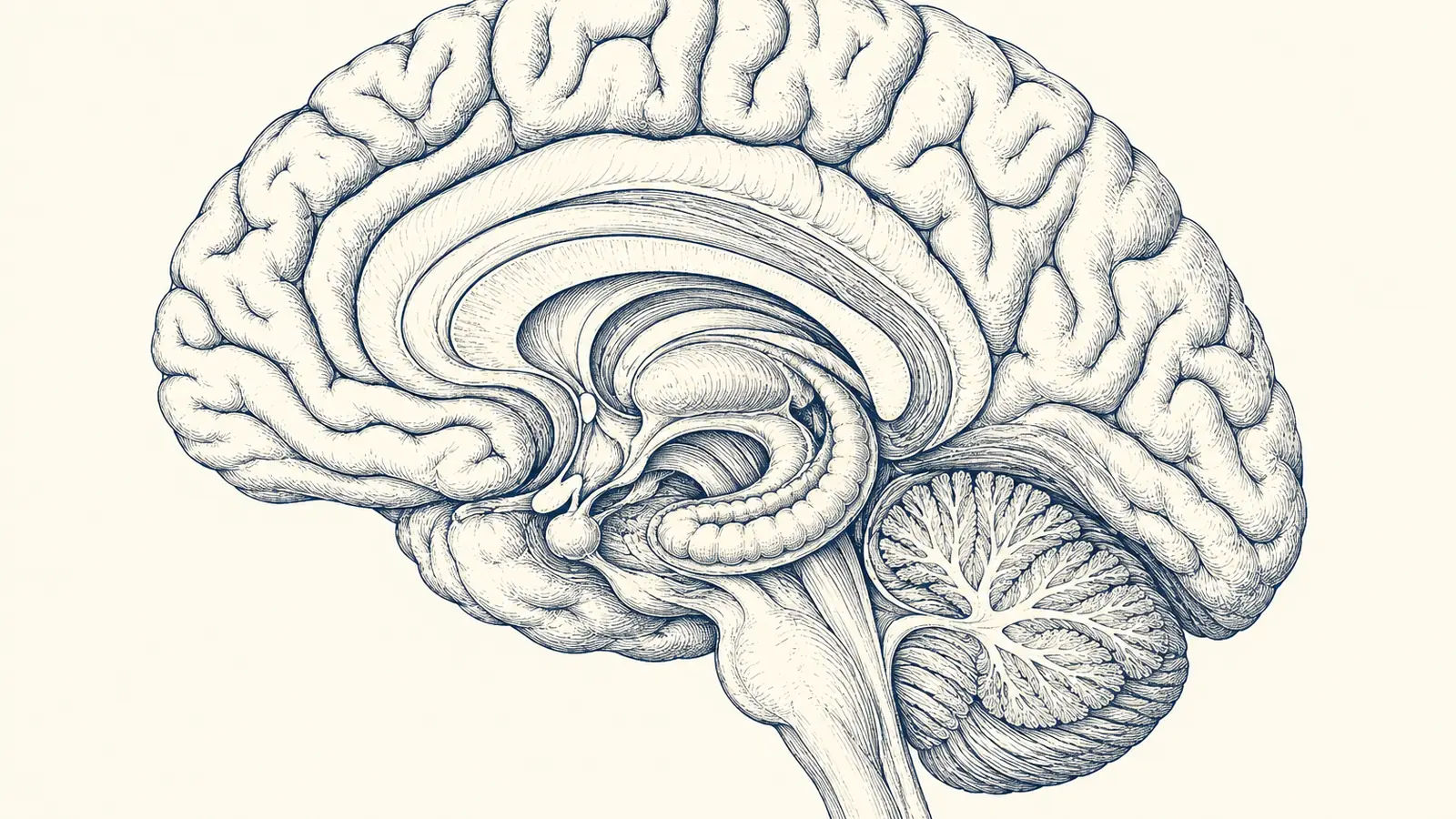
Start with the anatomy, because it’s lovely. Your hippocampus, the seahorse-shaped structure tucked deep in each temporal lobe, is the detail clerk. It stamps an event with who, where and when, so you remember you parked on level three beside the pillar with the chipped paint. Your frontal cortex pulls meaning out of a pile of experiences. The authors propose that in healthy aging the brain leans less on the clerk and more on the meaning-maker, a shift that usually unfolds between the fifth and seventh decades of life. By then, Fernandez argues, the way you process information should no longer be so “hippocampal-centric.”
Wait, why would a brain turn down its own recorder? I kept circling back to that. His answer is evolutionary: “Evolution may be saying that if you make it long enough, there’s a need to transmit this information,” he said, and the release notes the same shift shows up in animal models. On this reading the parking spot fades so the lesson survives: the judgment, the story you tell a grandchild, the warning you give a new hire. The older studies carry some of that picture, and drop some of it.
Older brains keep the gist, including gist that never happened
The friendliest evidence is behavioral. Joshua Hartshorne and Laura Germine pooled cognitive tests from 48,537 people online and found that abilities crest at wildly different ages. Processing speed peaked earliest, in the late teens by the older WAIS-III norms. Visual and verbal working memory peaked around 30. Vocabulary kept climbing until around 65 in the web data, or around 50 in the WAIS-III norms. Speed drains out of the system while stored knowledge keeps pouring in, which is the right shape for the hypothesis, though a bigger vocabulary is still a long way from better judgment.
Then there’s what the gist shift costs. Nancy Dennis, Hongkeun Kim and Roberto Cabeza scanned 14 older and 11 younger adults during word recognition. When older adults correctly recognized words they had studied, their hippocampus was less active than the younger group’s. When they wrongly “recognized” related words they had never seen, they showed stronger activity in the left middle temporal gyrus, a region the authors tie to semantic gist, and they made more high-confidence false alarms, 0.13 of their “old” responses against 0.09 for the younger adults.
So the lean toward meaning shows up on a scanner, and so does its price: a brain leaning on meaning catches the theme of the list and confidently remembers words that were never on it. That study measured the bill. It never tested whether anything valuable was bought with it.
Extra frontal activity, no extra performance
The frontal half of the story has a sharper problem. For years, researchers watched older brains light up more toward the front during memory tasks, and the popular reading was compensation, the front stepping in to help. In 2018 Alexa Morcom and Richard Henson tested that directly with fMRI data from adults aged 19 to 88. The extra prefrontal activity in older adults “does not carry any additional information related to participants’ performance” on two memory tasks, and they concluded it “reflects reduced efficiency rather than a way to maintain cognitive function.”
That cuts straight into the cheerful version. Fernandez’s camp has a fair reply: those were memory tasks, and the payoff of a frontal lean was never going to show up on a word list. I’ll grant it. Then somebody has to measure the payoff. Until a study follows the same people for decades and shows that leaning frontal buys better decisions, the upgrade is a hope with a nice diagram.
A clerk that won’t stop shouting
The Alzheimer’s piece of the paper is where it earns its keep. Fernandez rejects the old idea that Alzheimer’s is simply aging turned up to maximum. In normal aging, he says, the hippocampus quiets down; in many Alzheimer’s cases it is “hyperactive” instead. “They are completely different,” he said. The authors propose that amyloid and tau derail what he calls a “beautiful developmental transition.”
Here the older work is genuinely experimental. In a 2012 study in Neuron, Arnold Bakker, Michela Gallagher and colleagues compared 17 people with amnestic mild cognitive impairment against 17 matched controls. The patients’ left dentate gyrus and CA3, the circuitry that keeps similar memories from smearing together, ran hotter than the controls’, and the patients tended to call a new-but-similar picture “old.” Then the researchers gave them levetiracetam, an epilepsy drug, at 125 mg twice daily, with blood levels far below typical seizure-control levels. The overactivity dropped to a level no different from controls, and the patients made fewer false “old” calls on those look-alike pictures. The authors’ verdict: “increased hippocampal activation in aMCI is a dysfunctional condition.”
I find that almost physical: a circuit working so hard it confuses neighboring memories, and an old seizure drug letting it settle. The limits are just as concrete. It was 34 people, MCI is not confirmed Alzheimer’s, and scores on standard memory tests didn’t budge. What it shows is narrower than the framework needs. In this small group, extra hippocampal activity was hurting, not helping. That fits Fernandez’s proposed split between a clerk stepping back in healthy aging and a clerk shouting in early disease, but only the shouting has been caught on a scanner and quieted with a drug. The stepping back as a healthy design feature is still a proposal.
The authors’ practical prescription is modest: more social connection, especially across generations, so older people’s accumulated knowledge gets passed on. “There is tremendous value there, and we don’t do a good job of unlocking it,” Fernandez said. You don’t need a new theory of the brain to agree with that.
So where does that leave me? The fading of detail is documented, and so are the confident false memories riding along with it. Late-rising knowledge holds up across tens of thousands of test-takers. The claim that healthy aging and early disease push the hippocampus in opposite directions is the sharpest idea in the paper and the only part with a drug study behind it. The wisdom remains a hypothesis, and the one direct test of frontal compensation read it as inefficiency. I’m going to stop treating every lost name as a down payment on dementia, and I’m not calling it wisdom until somebody measures the wisdom.
Sources
- Fernandez, Burke & Nadel, Perspectives on Psychological Science (2026)
- Newswise: The Aging Brain Is Not Declining. It’s Adapting (2026)
- ScienceDaily: Your aging brain may be trading memory for something more valuable (2026)
- Bakker et al., Neuron (2012)
- Society for Neuroscience summary of Morcom & Henson, JNeurosci (2018)
- Dennis, Kim & Cabeza, Journal of Cognitive Neuroscience (2008)
- Hartshorne & Germine, Psychological Science (2015)