For about six years I have been the person at the coffee counter who asks for stevia, a little smug about it, because stevia comes from a leaf and the pink and yellow packets come from a factory, and somewhere along the way I decided that difference settled the question. So the finding that stopped me cold in a new mouse study out of Chile was not that the artificial sweetener misbehaved. It was that the leaf did too, and that the damage turned up in animals two generations down that had only ever drunk water.
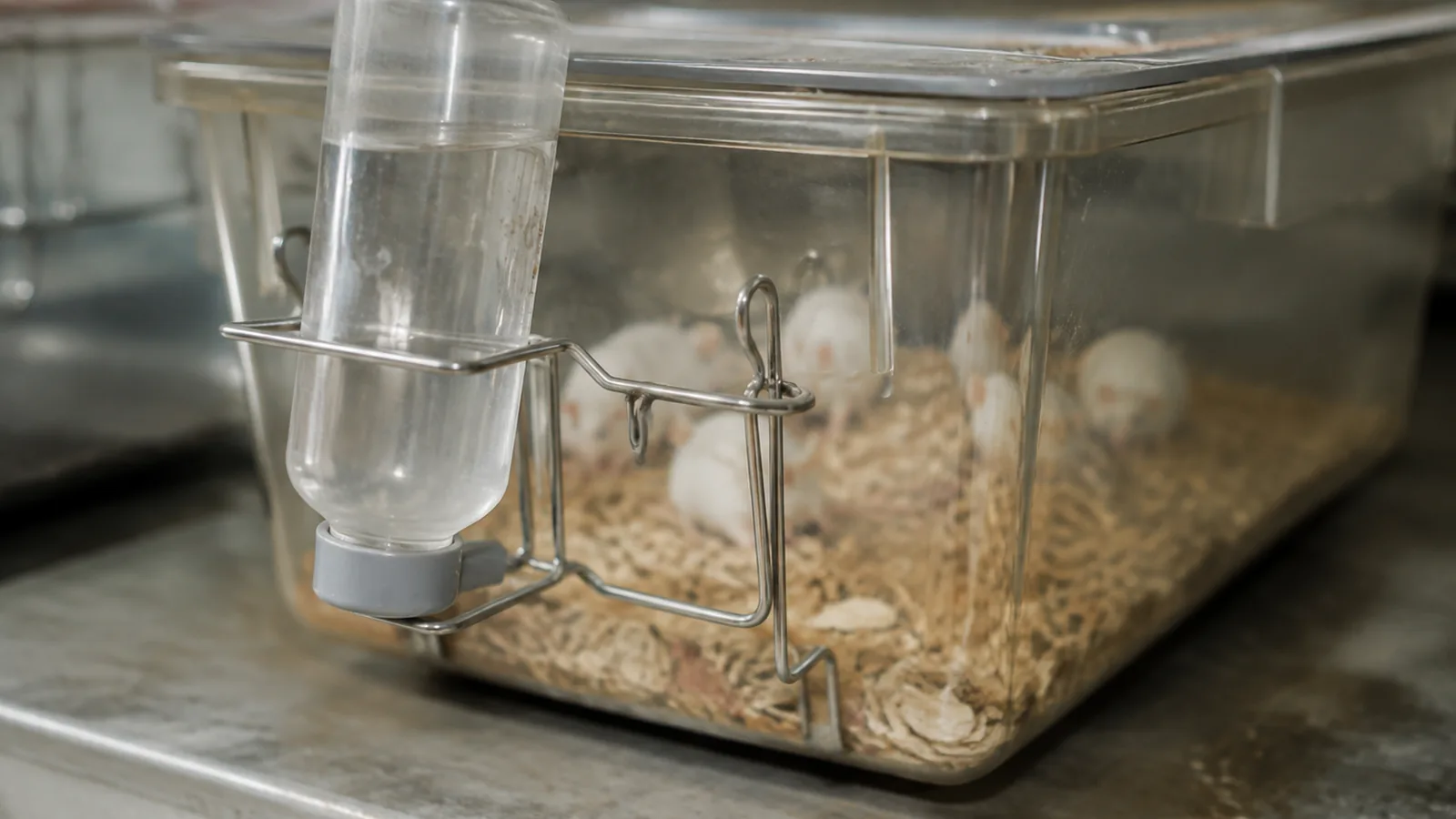
Here is what the team did. In a study published in Frontiers in Nutrition and pulled back into circulation by a ScienceDaily writeup on August 31, researchers at the Universidad de Chile did the thing most sweetener work skips: they followed the family tree. They took 47 mice, split them into three groups, and gave one plain water, one water with sucralose, one water with stevia. The dose was not some cartoonish overload. It was 0.1 mg/ml, roughly 5 to 15 mg per kilogram a day, pegged to the FDA-approved acceptable daily intake for people, which runs to 15 mg/kg a day for sucralose and 4 for stevia’s purified extract, the numbers that are supposed to mean “consume this every day of your life without worry.” Only the first generation, the parents, ever tasted it. Their pups and their pups’ pups got nothing but water and standard chow.
And the pups who never drank a drop still carried the mark.
Start with the parents, because that is where the mechanism gets its hooks in. Both sweeteners, the factory one and the leaf one, lowered the short-chain fatty acids in the gut, with acetate and valerate dropping in both groups. Short-chain fatty acids are what your gut bacteria make when they break down fiber, and they are not a footnote. Butyrate feeds the cells lining your colon directly. Acetate and propionate travel out to the liver and help set the tone for how the whole body handles sugar and fat. When you thin out the bacteria that make them, you are not just changing a stool sample, you are turning down a signal the gut has been sending the rest of the body the entire time.
Then the study followed that quiet signal into the next generation, and this is where I had to put the paper down and pace the kitchen. In the first generation of sucralose offspring, the ones who never touched it, acetate, propionate, butyrate, and valerate all came in significantly lower than controls, with p-values running from 0.001 to 0.009. Those differences are statistically solid, though 47 mice is still a size that asks to be replicated before anyone panics. By the second generation, the grandpups, the short-chain fatty acids were still depressed, and now the stevia line was showing it too. Blood sugar tracked alongside: first-generation sucralose males handled a glucose load worse overall than controls, and by the second generation, sucralose-line males woke up with higher fasting glucose than controls (p=0.026).
Wait, why would a grandchild who never drank sweetener inherit a gut problem? That is the question I could not let go of, and the study offers two plausible routes, though it is careful not to call either one proven. The first is the microbiome itself, handed off from mother to pup at birth and through nursing, so a dam whose bacterial community got reshaped seeds her babies with the reshaped version before they have eaten anything. The second sits in the animals’ own gene activity. The sucralose parents had ramped up two gut inflammation genes, Tlr4 and Tnf, and dialed down liver Srebp1, a master switch for how the body handles fat and sugar. The inflammation genes reset by the second generation. Srebp1 stayed suppressed all the way to the grandpups (p=0.03). The authors are blunt that their design cannot fully separate true inheritance from what a developing pup absorbed in the womb or at the teat, so read this as a lineage signature that persisted, not a proven case of heredity.
Now hold that next to the label, because the “natural” reflex I have been running on falls apart on contact with how these things are actually regulated. Sucralose is not GRAS at all; it is an FDA-approved food additive. And the stevia I have been feeling virtuous about is not the leaf. Whole-leaf stevia and crude leaf extracts are barred from the U.S. food supply for lack of safety data. What the FDA cleared as generally recognized as safe is a 95-percent-or-purer steviol glycoside extract, a factory product with a botanical origin story. The picture on the packet did a lot of quiet work on me that the regulatory file never backed up.
And the same authorities that set a lifetime-safe daily number are not as settled as that number implies. In 2023 the WHO looked at the human data and advised against using non-sugar sweeteners for weight control, naming sucralose and stevia among them and flagging possible long-term links to type 2 diabetes and cardiovascular disease. That is not a blanket safety reversal, and I am not going to pretend it is. It is narrower and, honestly, more damning for the way people actually use these: the bodies that green-lit a daily dose for life are now telling you not to use these products for the one thing most of us buy them for.
I want to be straight about the mess, because the sweetener literature genuinely is one. Recent headlines point in opposite directions, from “artificial sweeteners may help your gut microbiome” to sweeteners that “may blunt cancer therapy”, which tells you “sweetener” is not one thing and that dose, gut community, and timing all move the answer. This study is 47 mice, not people, and it read fecal bacteria rather than the gut wall (a choice the authors defend precisely because feces track what a dam passes to her offspring). It is a sharp signal, not a verdict.
But here is where it leaves me. I stopped believing that “zero calorie” means “zero consequence.” I am not tossing every sweetener over one rodent study, but I am doing the unglamorous thing instead: retraining my own palate toward less sweet, full stop, rather than betting my gut bacteria, and the ones I might hand down, on additives the regulators themselves are backing away from.
Sources
- Frontiers in Nutrition – non-nutritive sweeteners drive divergent gut and genetic responses across generations (2026)
- ScienceDaily – “Popular sweeteners may leave effects that last for generations” (Aug 31, 2026)
- WHO – Advice against non-sugar sweeteners for weight control (May 15, 2023)
- FDA – High-Intensity Sweeteners (regulatory status of sucralose and steviol glycosides)
- New Scientist – “Artificial sweeteners may help your gut microbiome” (2025)
- New Scientist – “Sweeteners may blunt cancer therapy” (2025)