For two years I have told anyone who asked the same boring, true thing about these drugs: they work because you stop being hungry. You eat less, you lose weight, done. The appetite explanation is true, and it covers most of what tirzepatide does. So the part of a new mouse study that stopped me cold was that the researchers took appetite off the table completely, fed both groups of mice the exact same amount, and the animals on the drug still burned more.
A furnace does not help much when you have thrown out most of the furnace.
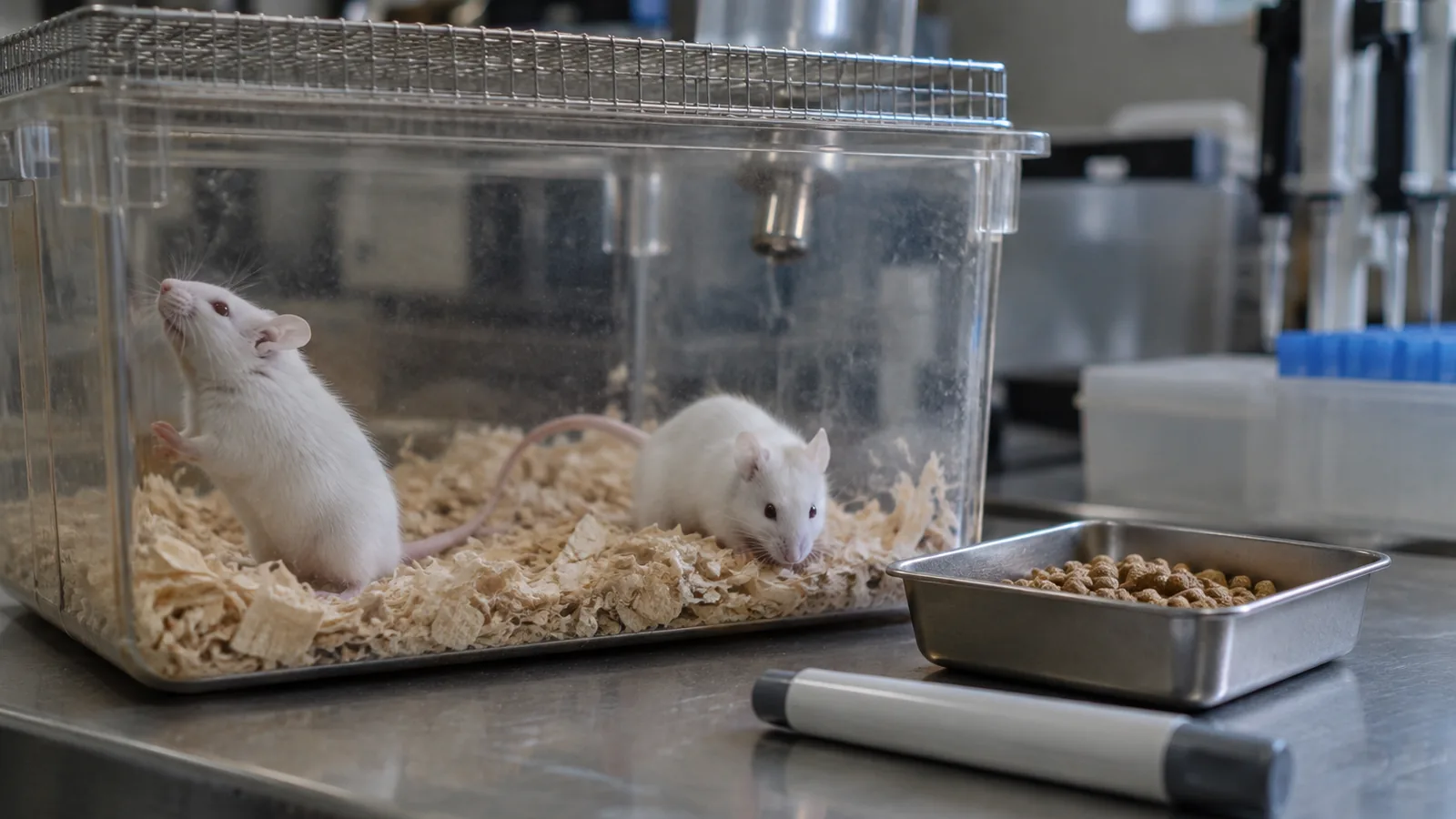
That is what the clever bit of the design buys you. A team at the University of Barcelona, led by Marion Peyrou, reported on September 26 that tirzepatide, the molecule sold as Mounjaro and Zepbound, activated brown fat in obese mice that had been fattened on a high-fat diet. The comparison animals were pair-fed, which means the untreated mice got precisely the same calories as the treated ones. If both groups eat the same and only one group ramps up its calorie-burning tissue, then whatever the drug is doing to that tissue is separate from making the mice less hungry.
And here is where I got genuinely curious, because brown fat is one of the strangest organs you own. Most of your fat is a warehouse. It sits there and stores energy. Brown fat is the opposite. It is packed with mitochondria carrying a protein called UCP1, and UCP1 basically pokes a hole in the cell’s energy machinery so the fuel leaks out as heat instead of getting banked as ATP. It is a furnace whose entire job is to waste calories on purpose. So why would a gut-hormone drug, a thing built to mimic GLP-1 and GIP so you feel full, reach all the way into that furnace and turn up the flame? That is the question the study chases, and the answer seems to be that tirzepatide’s dual receptor action does more than quiet the appetite circuits in the brain. In these mice it pushed the brown fat to pour out batokines, the signaling molecules brown fat uses to talk to the rest of the body, and to burn glucose and fat directly.
That is a genuinely elegant piece of biology. It is also, conveniently, the exact piece of biology a drugmaker would want to be true.
Think about the commercial narrative this finding unlocks. “Not just an appetite suppressant, a real metabolism drug” is a far better franchise than “makes you eat less,” and it is the framing that helps justify everything from cardiovascular-benefit claims to lifelong prescriptions. The released materials did not disclose the study’s funding, and the group is an academic one, so I am not going to accuse anyone of ghostwriting a press release. But when a finding flatters the manufacturer this neatly, the burden of proof goes up, not down. And the proof here is a mouse.
That matters more than usual for brown fat specifically, because brown fat is the one tissue that almost never survives the trip from mouse to human. Newborns are loaded with it. Adults are not. A grown person carries maybe a few grams of it, tucked around the neck and collarbones, and it shrinks with age and with obesity, which is to say it is scarcest in exactly the people lining up for these injections. A furnace does not help much when you have thrown out most of the furnace.
We have run this exact play before, too. The last great brown-fat hope was mirabegron, a bladder drug that hits the β3-adrenergic receptor. It really did switch on brown fat in adult humans and nudge up insulin sensitivity, which is why it launched a thousand hopeful headlines. Then the fine print arrived. In that same human trial, body weight did not budge. The doses that actually lit up brown fat also pushed up heart rate and blood pressure, and in mice with bad cholesterol clearance the same brown-fat activation made atherosclerosis worse. So when the Barcelona team reports that tirzepatide activated brown fat without the cardiac side effects that sank earlier attempts, I will point out, without much gentleness, that this reassurance was also measured in mice. Mirabegron looked clean in animals right up until human hearts got a vote.
The honest version is that this is a mechanism worth chasing, not a benefit you can bank. The good news is that someone is chasing it in people: there is a registered clinical trial measuring brown adipose tissue in humans on tirzepatide, which is the only thing that will settle whether any of this survives contact with an adult metabolism. That readout is the one I am waiting for.
So what would I do with this? Nothing yet, and I mean that as a compliment to the science, not a dismissal. If I were on tirzepatide I would take the weight loss for what the evidence says it mostly is, appetite doing the heavy lifting, and I would not switch drugs, start one, or talk myself into believing my own fat is quietly incinerating calories in the background off the strength of a mouse. I will get excited about my brown fat the day a human trial hands me a number to get excited about.
Sources
- ScienceDaily – Zepbound and Mounjaro may turn on the body’s calorie-burning brown fat (2026)
- Biomedicine & Pharmacotherapy – differential effects of tirzepatide on adipose tissues, brown fat as a key target (2026)
- Journal of Clinical Investigation – chronic mirabegron increases human brown fat, HDL, and insulin sensitivity without weight change
- PNAS – mirabegron-induced brown fat lipolysis exacerbates atherosclerosis in susceptible mice
- ClinicalTrials.gov – NCT06893211, effect of tirzepatide on brown adipose tissue in obesity
- Journal of Clinical Medicine review – mirabegron as a potential anti-obesity drug, dose-limiting cardiovascular effects
- New England Journal of Medicine (Cypess et al., 2009) – brown adipose tissue in adults declines with age and BMI