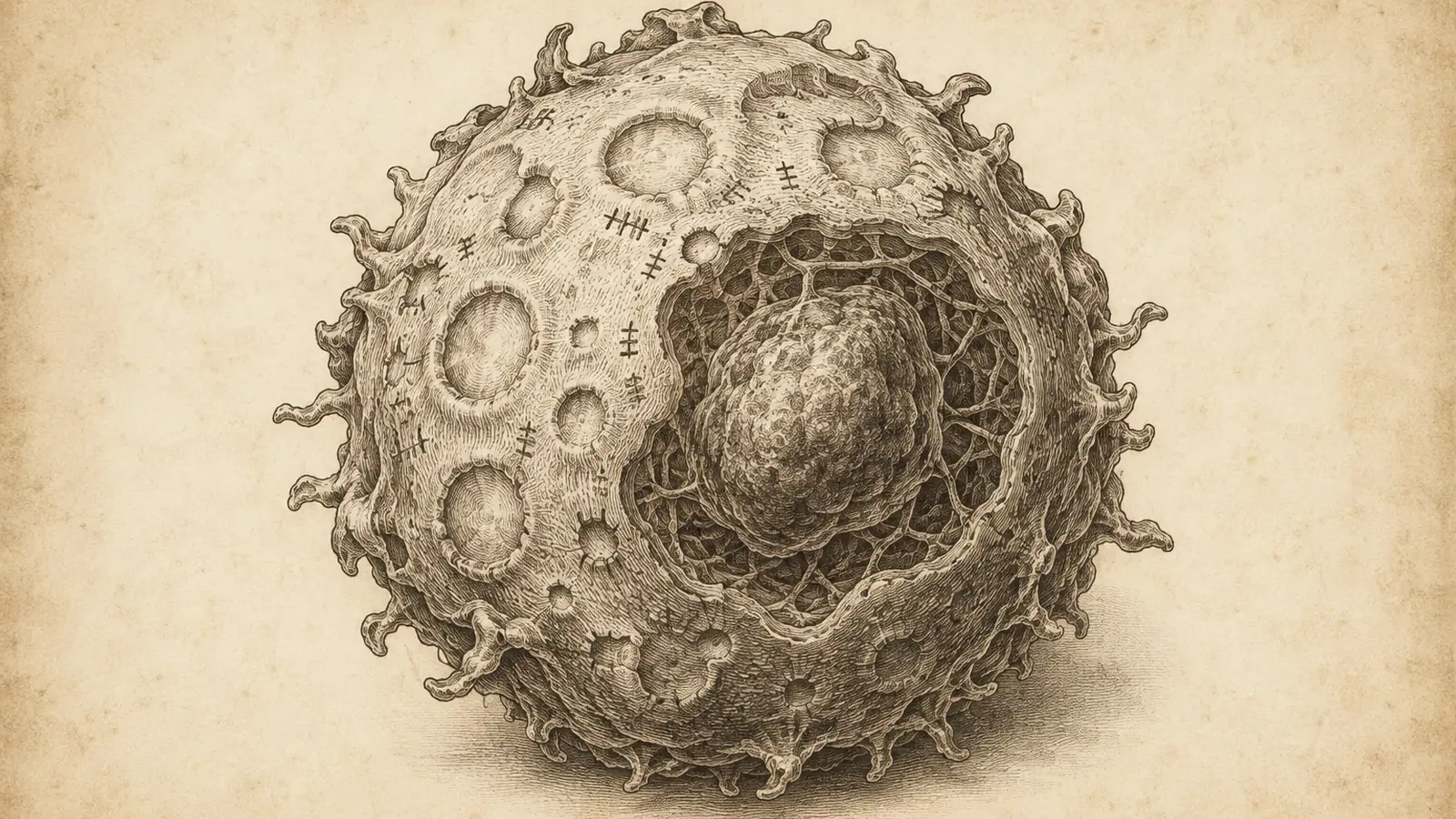
I always assumed the body kept short books. Lose the weight, grind through a rough few months, and your risk gauges quietly reset toward zero, the way a car passes inspection once you fix the brakes. That is what I believed, and it is roughly what the whole weight-loss industry sells you. Then I read the finding I could not shake: your immune cells can still read the old weight years after the scale says you are fine, which means the number everyone treats as the finish line can be nowhere near it.
That comes out of research led by Professor Claudio Mauro at the University of Birmingham, published in EMBO Reports. His team went looking for what happens inside immune cells after obesity, not during it, and found that the cells do not let go. They hold a chemical record of the heavier years for an estimated 5 to 10 years after the weight comes off.
What I did not expect was where that record lives. It sits in your helper T cells, the CD4 lymphocytes that quarterback the whole immune response, and it is written in DNA methylation: tiny chemical tags that clamp onto the DNA and change how loudly each gene gets read, without touching the sequence underneath. The genes themselves do not change. The tags just sit on top of them, turning some up and quieting others, and they stay put long after the reason for them is gone.
Wait, why would a T cell care what you used to weigh? That is where the biology turns unsettling. The obesity memory is thought to land on two systems you badly want working cleanly. One is autophagy, the cell’s self-cleaning crew, the machinery that hauls out damaged parts and recycles them so the cell stays healthy. The other is immune senescence, which is the biological word for the immune system growing old. In the cells carrying the mark, that memory is thought to leave autophagy running less cleanly and the cells aging faster. So the imprint is not a harmless souvenir. It is a T cell that cleans house worse and ages quicker, still circulating years after your last heavy summer.
That is the beat the tidy weight-loss story skips. Mauro’s read is blunt: short-term weight loss “may not immediately reduce the risk of some disease conditions associated with obesity, including type 2 diabetes and some cancers.” Sit with that. The scale can read normal, your clothes can fit, your doctor can nod at the chart, and the immune cells tied to that long-term risk can still be carrying the old obesity program. The number everyone treats as the finish line turns out to sit somewhere in the middle of the race.
I want to be straight about how strong this is. It is not a randomized trial, and the five-to-ten-year figure is Mauro’s estimate, not a stopwatch reading. His own words are that full reversal “may take several years of sustained weight loss maintenance, likely 5-10 years, though this requires further study.” What earns the attention is the consistency. The team saw the signal across four different human groups, people losing weight on injections, patients with a rare genetic obesity syndrome, volunteers in a ten-week exercise program, and joint-replacement surgery patients, plus mouse models on high-fat diets. A fluke does not usually show up that many ways at once.
It also does not stand alone. The idea that obesity carves a durable groove into the immune system has been building for years. A 2023 review in Nature Reviews Endocrinology laid out how obesity reprograms innate immune cells through what researchers call trained immunity, an epigenetic rewiring that helps explain why cardiovascular and metabolic risk lingers. And it is not only immune cells that hold a grudge. Fat cells keep their own epigenetic memory of obesity, a 2024 finding that helps explain the brutal snap-back so many people know firsthand. Put together, these papers say something the “just lose the weight” crowd has never wanted to hear. Your tissues keep the receipts.
Then comes the fix the study floats, and it is a drug. Mauro suggests “repurposing drugs like SGLT2 inhibitors, which have shown promise in reducing inflammation and promoting immune-mediated clearance of senescent cells.” Maybe. SGLT2 inhibitors are established diabetes drugs, and clearing out senescent cells is a legitimate target. But watch the move. A plausible biological finding is already being routed toward another prescription before anyone has tested whether an SGLT2 inhibitor touches this specific T-cell memory at all. Nobody has run that study. Right now it is a hypothesis in a lab coat, and it deserves to be read as one.
The finding I actually trust is the one that costs nothing. The obesity memory fades on its own, with time and sustained maintenance. Not in a heroic month, but over years of holding the line. That is not something anyone can bottle, which is probably why it gets a sentence in the press release while the drug gets the pitch.
So if I ever lost a large amount of weight, I would not treat the goal weight as the day my risk resets, and I would not let anyone sell me a single shot that supposedly wipes the slate. I would assume my immune cells are still holding the old file for years, keep the habits that let it fade, and stay on top of the diabetes and cancer screening the entire time. The body keeps long books. I would rather respect that than get blindsided by it.
Sources
- University of Birmingham – “Obesity leaves a lasting memory in immune cells” (press release, 2026)
- ScienceDaily – Obesity leaves a lasting memory in immune cells (2026)
- Inside Precision Medicine – Obesity Leaves Lasting DNA Methylation Memory in Immune Cells
- Technology Networks – Obesity Leaves a Lasting Epigenetic Memory in Immune Cells
- Nature Reviews Endocrinology – Obesity induces epigenetic memory in innate immune cells (2023)
- Nature Reviews Molecular Cell Biology – Fat cells have long-lasting (epigenetic) memory (2024)