I have spent years quietly annoyed at the number my doctor writes down first, the one calculated before anyone has looked at me, listened to my heart, or asked a single question. Body mass index is weight divided by height squared, a formula a Belgian astronomer worked out in the 1830s on populations, not patients. It cannot tell muscle from fat. It cannot tell where the fat sits. A study published August 7 in JAMA Network Open just put a hard number on how badly that blind spot fails people, and the twist is that the cheapest tool in the room beat the expensive new framework built to replace it.
The number that stopped me: when researchers led by Aayush Visaria at Rutgers checked BMI against an actual body-fat scan in 1,900 U.S. adults, BMI caught barely half of the people carrying too much body fat. Its sensitivity was 51 percent. On a direct scan of the body, BMI missed nearly one in every two people who were already over the line.
The reference standard matters, so let me be precise about it. The team used DEXA, the bone-density scan that maps fat and lean mass directly, and called it obesity at 25 percent body fat or more in men and 35 percent or more in women. By that yardstick, 68 percent of these adults, aged 20 to 59 and drawn from the national NHANES survey, carried excess fat. BMI labeled just 37 percent of them obese.
The part I did not see coming was how the alternatives stacked up. The researchers pitted BMI against the four-measurement framework the Lancet’s obesity commission proposed in 2025, which asks a clinician to combine BMI with waist circumference, waist-to-hip ratio, and waist-to-height ratio. Then they tested one lonely measurement on its own, a cloth tape pulled around the waist. On overall discrimination, the area under the ROC curve, waist alone scored 0.815. The full four-part Lancet framework scored 0.790. BMI came in last at 0.730. The tape measure, by itself, out-scored the whole apparatus built to fix BMI, and it flagged 71 percent of the truly obese at 92 percent specificity while it did.
Wait, why would one strip of cloth beat a formula and a four-part checklist? The answer is not statistical, it is anatomical, and this is where the biology got me. BMI treats your body as one undifferentiated lump of mass. Your waist does not. A tape at the navel captures central fat, and a big share of central fat is visceral, the metabolically loud kind that wraps around the liver, the pancreas, and the loops of the intestine. It does not just sit there. It pours a steady drip of inflammatory signaling into the bloodstream, nudges the liver toward insulin resistance, and rewires how the whole system handles sugar and fat. A tape around the middle is, crudely and cheaply, tracking the fat that actually hurts you. BMI is measuring gravity. That is why you can carry a “normal” BMI and a belly full of the dangerous stuff, the thin-outside-fat-inside pattern the formula misses every time.
So the cheap thing wins, and it wins because it looks at the right fat. That should be a clean populist win, a tape measure democratizing a diagnosis. Mostly it is. But the Lancet framework earns a harder look, because its wider net comes with a bill.
The Lancet approach did catch more true cases, a sensitivity of 88 percent, higher than waist alone. It buys that reach by loosening the definition. Under the expanded criteria, 69 percent of these adults get labeled obese, and the authors estimate that scaled to the U.S. population it would generate roughly 15.5 million false positives, people told they have a disease their body fat does not support. That is not a rounding error. That is 15.5 million adults wrongly classified, and I keep asking who that serves.
Because the timing is not neutral. An obesity diagnosis is no longer just a line in a chart. It is the gate to a GLP-1 prescription and the insurance coverage that pays for it, in the middle of the biggest weight-loss drug boom in a generation. Lower the bar for who counts as obese and you do not just relabel people, you make millions of them newly eligible for a drug that can run over 1,000 dollars a month. When a commission proposes criteria that sweep millions more into the diagnosis, it is worth reading who gains when the definition widens. This particular study is clean on that score, funded by the NIH and led by researchers whose own finding undercuts the expansion. But even here, the senior author disclosed grants from Daiichi Sankyo and Pfizer Japan and personal fees from Merck and Regeneron, outside this work. The point is not that anyone here is corrupt. It is that when an institution decides to expand what counts as a disease, the burden of proof sits on the institution, and “we added three more measurements” is not the same as “we made people healthier.”
A single waist cutoff carries its own baggage. Researchers have shown it can unfairly penalize shorter people, which is exactly why the waist-to-height ratio exists in the first place. And this study looked only at adults 20 to 59, so it says nothing yet about children or people over 60, where body composition shifts again. A tape measure is a screening tool, not a verdict.
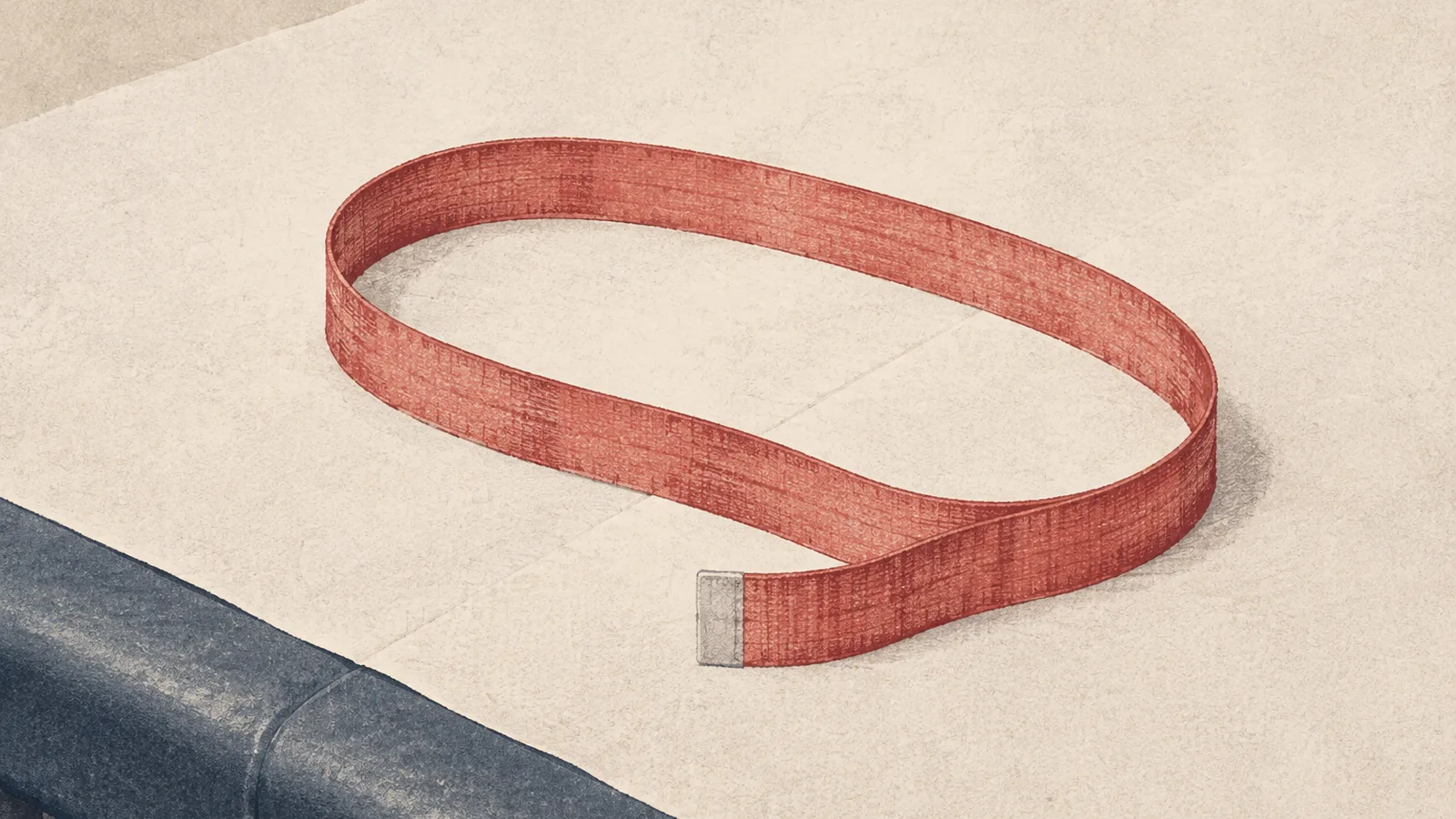
But the screening tool is the whole fight, and it just changed. What this readout delivers is not a new drug or a new gene. It is permission to stop pretending BMI is a serious instrument. So here is what I do with it. I keep a soft tape measure in the bathroom drawer, and it is the number I track now, not the one on the scale. I would ask my doctor to wrap my waist before she reaches for the BMI chart. And if the health system needs a four-part commission to reach a conclusion a strip of cloth already found, I will trust the cloth.
Sources
- JAMA Network Open – Visaria et al., “BMI, Waist Circumference, and the Lancet Definition for Obesity Diagnosis in US Adults” (2026)
- The Lancet Diabetes & Endocrinology – Commission on the definition and diagnostic criteria of clinical obesity (2025)
- Obesity Research & Clinical Practice – waist thresholds and shorter people (2022)