For years I filed Alzheimer’s away in my head as a one-way door. Plaques go in, memory comes out, and the timeline is the timeline. So the number that stopped me cold in a study out of the Netherlands this spring was this: roughly a third of people whose brains carry the full signature of Alzheimer’s pathology, the sticky amyloid plaques and the tangled tau, die without ever developing dementia. They carried the pathology and never lost their minds to it.
That figure comes straight from Evgenia Salta, the senior author on the paper and a group leader at the Netherlands Institute for Neuroscience. “Around 30% of older adults who develop Alzheimer’s disease never experience its symptoms,” she told reporters when the work landed in Cell Stem Cell this April. If you have spent any time being quietly afraid of this disease, sit with that. A third of the people who carry that pathology never cross into dementia at all. And if a brain can be packed with plaques and still hold, then the plaque was never the whole story.
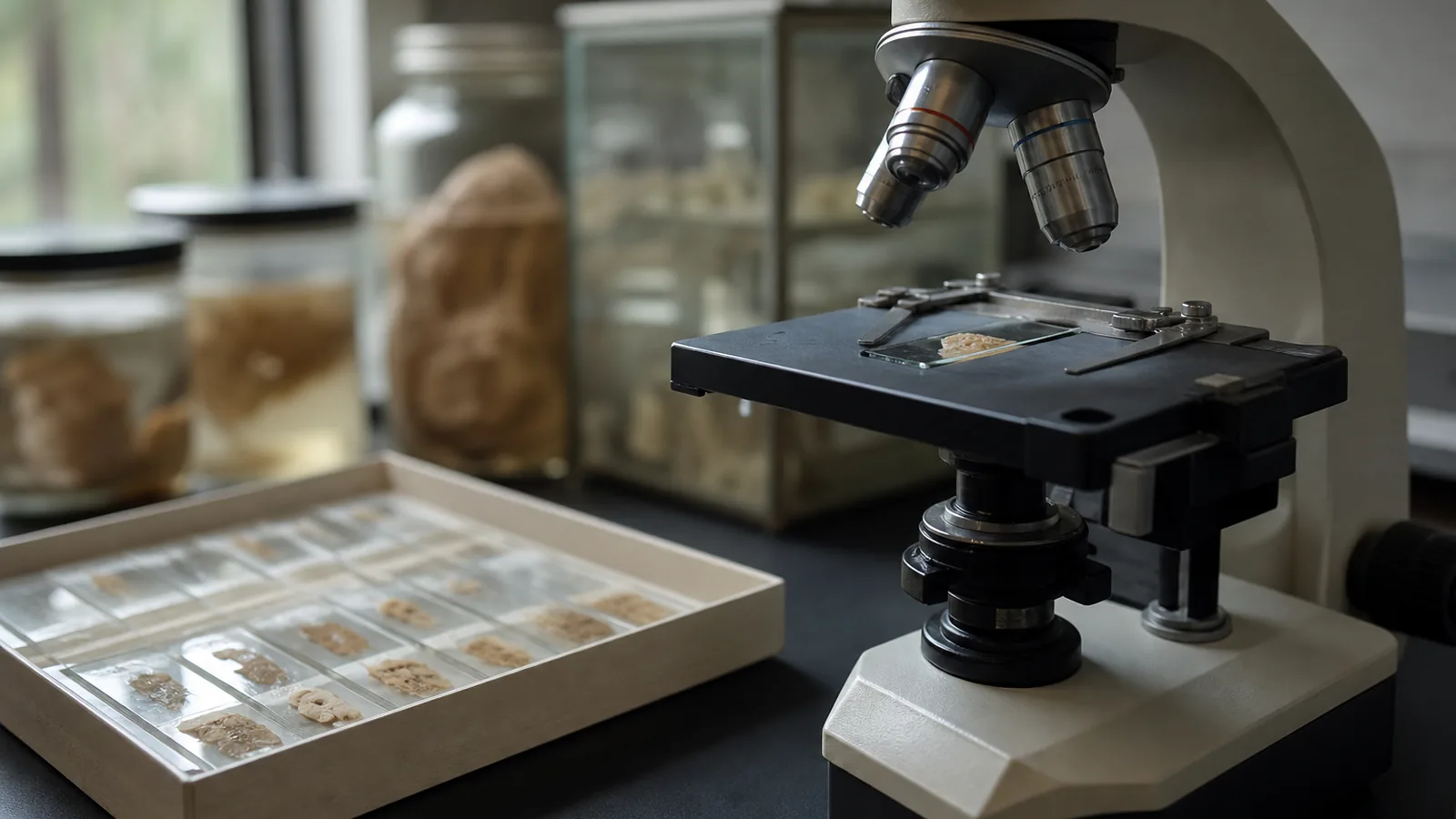
So what are their brains doing that the others’ aren’t? That’s the question Salta’s team went digging for, and where they went digging is the part I find genuinely thrilling: a tiny population of immature neurons, underdeveloped baby brain cells that stubbornly persist in the human hippocampus even past eighty. The hippocampus is your memory’s front office, and it’s one of the first regions Alzheimer’s burns down. Using tissue from the Netherlands Brain Bank, the team lined up three groups, healthy donors, people who died with Alzheimer’s dementia, and the resilient ones with the pathology but no symptoms, then read out what those young cells were actually doing at the level of their gene activity.
Here is where I expected the answer to be simple. More baby neurons, more resilience. Grow more, remember more. That’s the tidy story, and it’s the one a decade of “boost your neurogenesis” wellness copy has been selling you.
It isn’t what they found. The resilient brains did not have dramatically more of these immature neurons. What set them apart was how the cells behaved: in the people who kept their memories, those young neurons had switched on survival and stress-coping programs while running lower signals of inflammation and of cell death. Same cells, about the same number, a completely different posture. One group’s neurons were bracing and holding on; the other’s were quietly giving up. This is a clue, not a solved mechanism, because the field is still arguing over whether these cells are even what they look like.
Wait, why would behavior matter more than headcount? That’s the part that got its hooks into me, because it flips the whole intuition. It suggests the young cells aren’t valuable mainly because they grow up into replacement neurons. Salta’s own metaphor is the one that made it click: they “may act as a sort of fertilizer in a garden that has started falling apart.” Not new plants. Fertilizer. The cells sit in failing tissue and pour something supportive into the soil around them, keeping the neighbors alive while the disease does its worst. A resilient brain, on this reading, isn’t one that regrows. It’s one whose youngest cells refuse to stop feeding the ground.
I want to be honest about how thin the ice is, because the story only gets stranger the further down you go. The whole field rests on a fight neuroscience has never settled: whether adult human brains make new neurons at all. In 2018 two teams published almost simultaneously and reached opposite conclusions, one finding essentially no new neuron production in the hippocampus past childhood, the other finding it humming along into old age. Reviews since have called it, with visible exhaustion, a dogma “overturned, again and again,” pinning much of the disagreement on something as mundane as how long the tissue sat in fixative. Salta doesn’t pretend otherwise. “We assume the cells’ function based on the data,” she said, “but we cannot confirm it in this type of study.” You’re looking at frozen snapshots of dead tissue and inferring what living cells were doing.
But the number that keeps pulling at me is that 30 percent, because of what it does to the story you’ve been told about this disease. For decades the establishment sold Alzheimer’s as a straight line: amyloid plaques accumulate, plaques cause dementia, so clear the plaques and you win. A generation of amyloid-clearing drugs mostly failed, and even mainstream reviewers now concede the cascade remains “a working hypothesis, no less but certainly no more.” Nothing punctures the plaques-equal-doom framing quite like a third of people carrying a brain full of plaques and staying cognitively resilient to the end. If plaques and tangles alone were destiny, those people shouldn’t exist. They do. The resilience data is the receipt.
I’m not going to pretend a brain-bank study changes what I do on a Tuesday. But it did change one thing. I’ve stopped treating a future amyloid scan as a verdict. If a third of people carry that pathology and keep their minds, then a plaque on a scan is a risk factor, not a sentence, and I’d want to know what my own neurons were doing before I let a picture of my brain decide the rest of my life. I would still get the scan. I just wouldn’t grieve it.
Sources
- ScienceDaily – “Scientists discover why some brains resist Alzheimer’s” (2026)
- Medical Xpress – “Not all Alzheimer’s leads to dementia: The mystery of cognitive resilience,” with Evgenia Salta quotes (2026)
- Cell Stem Cell – Salta et al., immature neurons and cognitive resilience in the aged human hippocampus (April 2026)
- Frontiers in Aging Neuroscience – “In 2024, the amyloid-cascade-hypothesis still remains a working hypothesis, no less but certainly no more”
- Science Translational Medicine – “Adult neurogenesis in humans: Dogma overturned, again and again?”