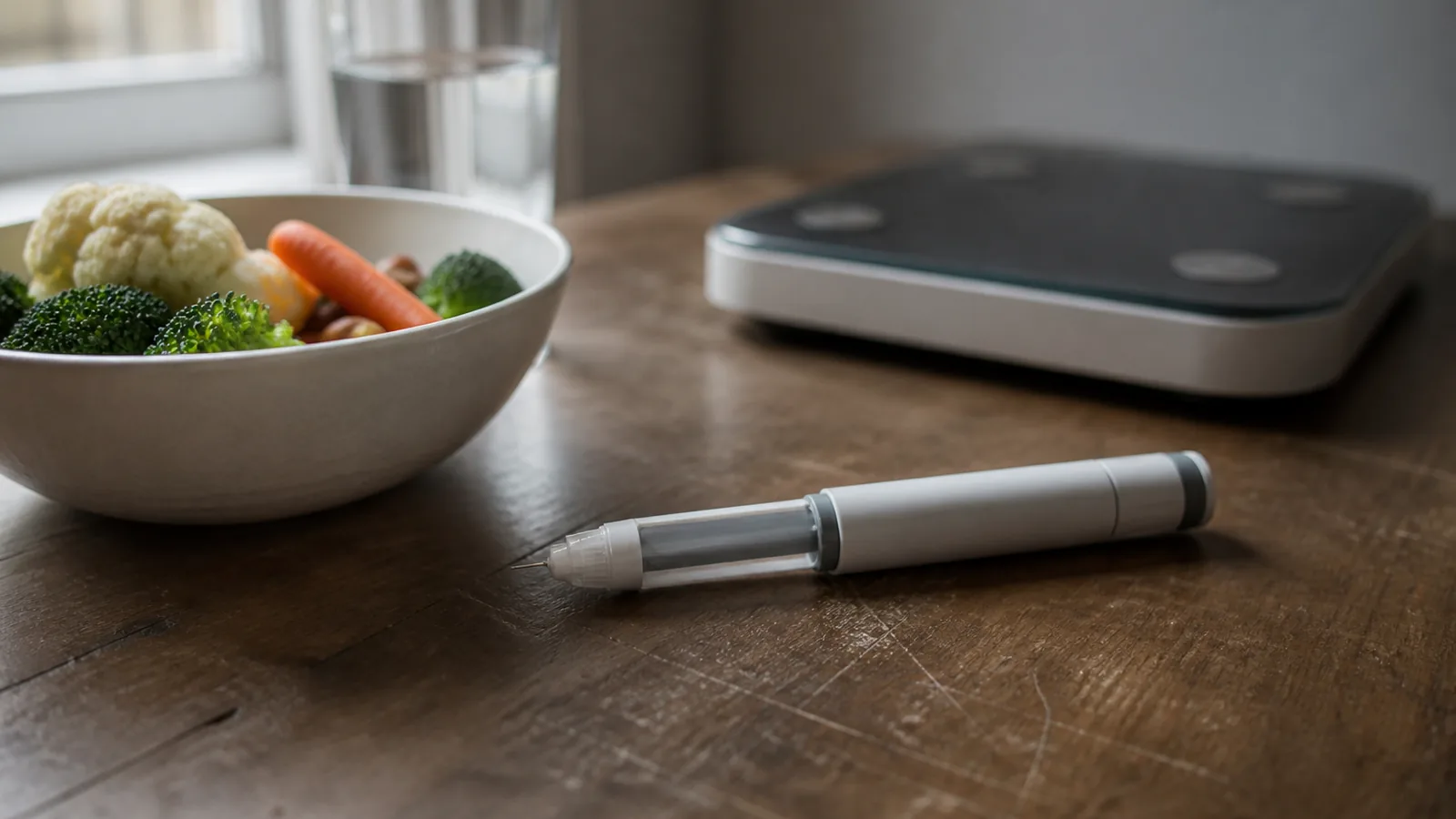
I spent years believing the same quiet lie most of us do: that the weight comes back because we got lazy, that the rebound is a character flaw with a calorie count attached. The biology says something stranger, and honestly, something much more forgiving. Your body does not passively let the fat creep back on. It rebuilds it on purpose, following a set of instructions it wrote down while you were heavier and never erased.
That is the through-line of an essay published this week on ScienceDaily by two obesity researchers at the University of Copenhagen, Valdemar Johansen and Christoffer Clemmensen. Their claim is blunt: the human brain evolved to guard body fat through famine, so once you lose weight it treats your former, heavier size as the number to defend. Hunger hormones climb. Cravings sharpen. The body burns fewer calories at rest than its size says it should. None of it is metaphor, and none of it is about your resolve.
But the memory isn’t only in your head. It is written into the fat itself. In 2024 a team led by Ferdinand von Meyenn at ETH Zurich took fat biopsies from people with obesity before and up to two years after bariatric surgery, compared them against tissue from people who had never been heavy, and found the formerly-obese fat cells were still reading their genes differently long after the weight was gone. Wait, why would a fat cell hold onto a record of a body that no longer exists? In the mice they studied alongside the patients, the team traced that lingering difference to histone modifications, the chemical switches that decide which genes a cell reaches for, sitting right on the machinery that governs how a cell answers a fatty meal. When they fed those previously-obese mice a rich diet again, the animals piled the weight back on faster than mice that had never been heavy. The cell was primed. It remembered.
You can watch this defense system run in real bodies over real years. When NIH researcher Kevin Hall and colleagues followed fourteen “Biggest Loser” contestants, their resting metabolism was burning roughly 500 calories a day slower than their body size predicted, and that measurement came six years out, not in the middle of the crash diet. Leptin, the hormone that tells your brain the fat stores are stocked, had cratered to almost nothing by the show’s finale and never fully recovered. So the brain reads that low leptin as a famine warning and does exactly what a famine demands: it pours on hunger and pulls back the furnace. These people were not weak. They were being overruled from the inside.
The appetite side gets rewritten too. In the POUNDS LOST trial, the participants whose fasting ghrelin climbed the most after losing weight were the ones most likely to regain it. Ghrelin is the go-eat signal that rises out of your gut, and in the people who rebounded, weight loss pushed it up and it stayed up. So picture the full committee: the gut is lobbying the brain to eat, the metabolism is idling low to spend less, and the fat cells are quietly holding the old blueprint in case it is needed. It is not one villain. It is a coordinated defense, and it does not disband when you hit your goal weight.
Which brings us to the drugs, and to the part the enthusiasm keeps skating past. GLP-1 medicines like semaglutide work by imitating one of those gut hormones, the one that tells the brain to put the fork down. They work. But they are a hand pressed on the scale, not a rewrite of the instructions underneath, and the instant you take the hand away, the instructions are still sitting there. Novo Nordisk’s own STEP 1 trial extension is the receipt: patients lost 17.3 percent of their body weight on the drug, and one year after stopping they had regained two-thirds of it, roughly 11.6 of those percentage points back on.
Read the trialists’ own conclusion and you can almost hear the shareholder call underneath it. Obesity is chronic, they wrote, and “ongoing treatment is required” to keep the benefit. That is honest biology. It is also, very conveniently, a product you can never finish. A cure you take once threatens a revenue line, while a drug whose weight comes back the moment you stop is a subscription with a metabolic lock built in. I don’t think semaglutide is a scam. Patients lose 17.3 percent of their body weight on it, and for some people that trade is medically worth making. What I want us to say out loud is that the same rebound biology that makes these drugs useful is the biology that makes them permanent, and that the company selling the injection is also the one funding the trials that frame lifelong use as the only responsible path. Those are not separate facts.
So where does that leave the rest of us, the ones still deciding whether to start anything? The most uncomfortable finding in this whole story is also the most useful one: the fat-cell memory gets laid down while you are gaining, and no one yet knows how to erase it. That quietly reframes prevention from nagging into strategy. Not regaining is a different and genuinely easier fight than losing, and never writing the memory in the first place is easier than either.
I came into this expecting to write one more lecture about willpower, and I am leaving with less patience for that lecture than I have ever had. If I were carrying weight I wanted gone, I would stop treating the rebound as my personal failing and start treating it as an opponent whose moves I could see coming: lose slowly to protect the leptin and muscle a crash diet strips, expect the ghrelin-driven hunger surge and plan for the specific evenings it will hit, and walk in clear-eyed about whether I am picking up a tool I can set down or a drug I can’t. And I would not wait for a guideline to call prevention the easier medicine. The fat cells already voted; I would rather not give mine anything new to remember.
Sources
- ScienceDaily / The Conversation – Johansen & Clemmensen, “Your brain may be wired to regain lost weight” (2026)
- Nature – Hinte et al., “Adipose tissue retains an epigenetic memory of obesity after weight loss” (2024)
- Obesity – Fothergill et al., “Persistent metabolic adaptation 6 years after The Biggest Loser competition” (2016)
- PubMed – Wilding et al., “Weight regain and cardiometabolic effects after withdrawal of semaglutide: the STEP 1 trial extension” (2022)
- Journal of the Endocrine Society – Rise in fasting ghrelin predicts future weight regain, POUNDS LOST (2023)