For years I filed it under the cost of doing business: if you want the fat gone, you hand over some muscle too. It is the quiet asterisk on the injectable weight-loss drugs everyone is on, and it is why the gym crowd side-eyes them. So when I read that a lab in Israel switched off a single protein and watched mice get leaner and stronger at the same time, the opposite bargain from the one Ozempic offers, my first reaction was flat disbelief. Leaner and more muscular is not supposed to be a package deal.
The protein has a name only a molecular biologist could love, MTCH2, so the Weizmann Institute team calls it Mitch. It sits on the outer membrane of your mitochondria, the little furnaces inside every cell, and its day job is to help those furnaces fuse into big, efficient networks. Hold onto that word, efficient. It is not the compliment it sounds like.
Here is where I started sitting up. When Prof. Atan Gross and his team deleted Mitch from human cells, the mitochondrial network stopped fusing and broke apart into small, separate units. The cells, suddenly worse at making energy the easy way, dropped into something like a permanent energy shortage. And a cell that is short on energy does what you would do if the pantry ran dry. It starts burning whatever it can reach. Wait, why would making a cell worse at producing energy be the good outcome here? Because the cell answers the shortage by cranking up respiration and reaching for fat. In doctoral student Sabita Chourasia’s experiments, more than 100 metabolic substances shifted every few hours, and the direction was unmistakable: the cells stopped leaning on carbohydrates and protein and started pulling fat straight out of their own membranes to burn as fuel.
Then comes the second move, and this is the one that reframes the obesity conversation for me. Fat cells do not just appear. They mature out of progenitor cells that fill up with lipid, a process called adipogenesis. Strip Mitch out of those progenitors and the same energy-starved conditions choke the process: the genes that turn a progenitor into a fat cell get suppressed, the raw materials run short, and the differentiation of new fat cells drops sharply along with fat accumulation. So you get both things at once. Existing fat gets pulled apart for fuel, and the pipeline that would build new fat cells stalls. That is what the group reported in The EMBO Journal, under a title as dry as the finding is loud: “MTCH2 controls energy demand and expenditure to fuel anabolism during adipogenesis.”
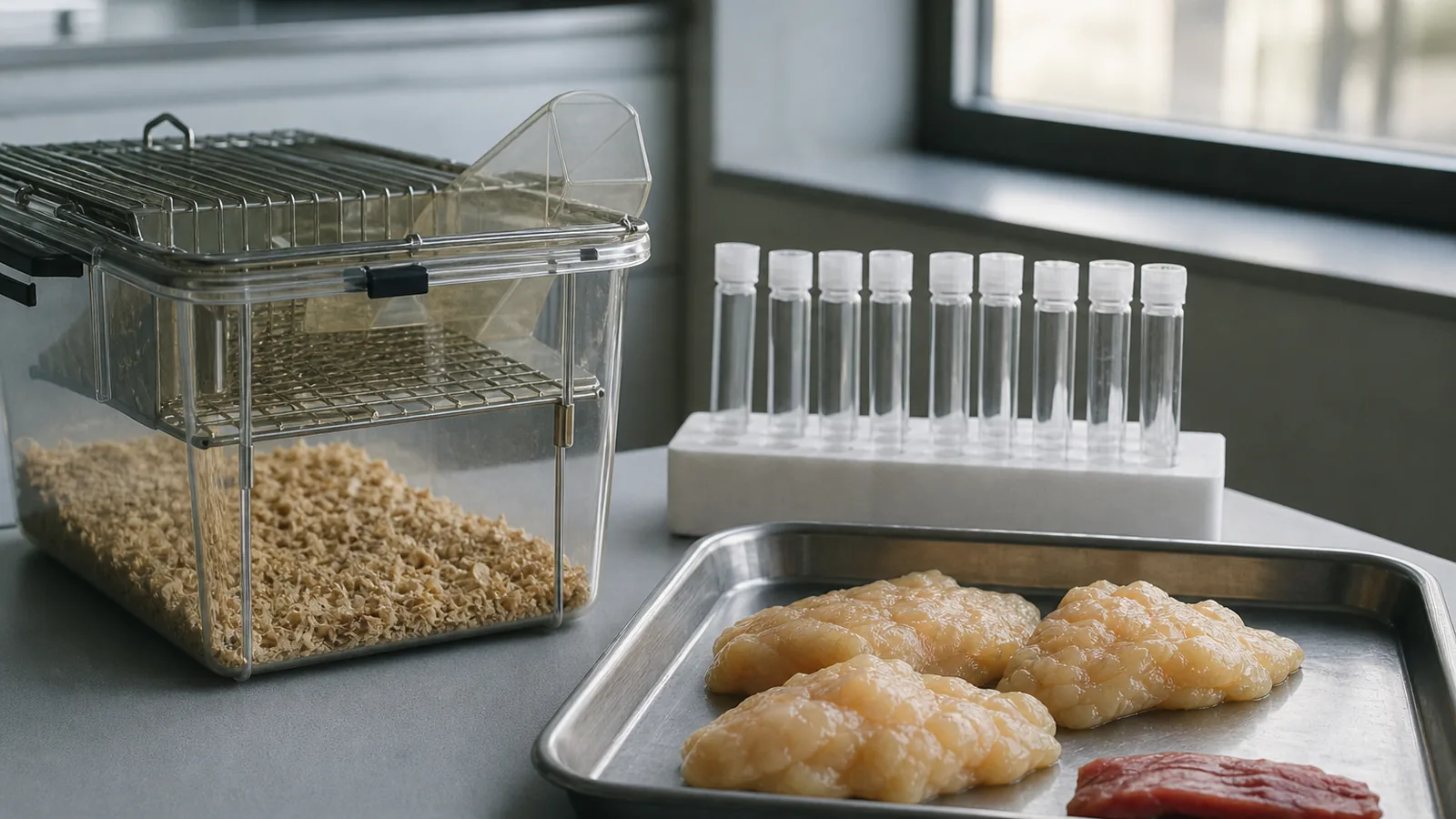
The mouse data is where it gets genuinely hard to look away. Animals engineered to lack Mitch in their muscle did not just resist obesity. They built more muscle fiber, ran longer on stamina tests, and showed better heart function than their normal littermates. Leaner and more athletic, from turning one protein down. And there is a human thread underneath it: the researchers note that Mitch tends to run elevated in women with obesity. Higher Mitch, more efficient mitochondria, easier fat storage. That is a correlation and not a verdict, but it is exactly the kind of quiet signal that makes you want to go measure your own.
Now for the part the excitement wants you to skip, and it is not a disclaimer, it is the actual biology. Deliberately making your mitochondria less efficient is a strange bet to place on purpose. Those fragmented, energy-starved cells burn fat, sure, but your membranes, your myelin, half the machinery that keeps you upright is built from lipids too. Nobody has shown what happens when you flip this switch everywhere, for years, in a living animal instead of for hours in a dish. This is a study in cells and in mice. The cited work reports no human trial, and no person has taken a Mitch-blocking anything. The honest label is promising target, not finished drug.
It is worth saying plainly who is telling you this. The same Weizmann lab is working with the Institute’s Yeda and Bina translational units to develop a small molecule that inhibits Mitch, which is to say there is a commercial obesity drug at the end of this rainbow. That does not make the biology wrong. It does mean the enthusiasm arrives pre-funded, and you should read every “switch” and “breakthrough” with that in mind.
But here is why I can’t wave it off. The whole pitch of the GLP-1 drugs is dramatic fat loss, and their best-documented liability is that they take lean muscle along for the ride. In the STEP 1 body-composition data, people lost roughly 15 percent of their body weight on semaglutide, and when researchers broke down what that weight actually was, close to 40 percent of it came off as lean mass, not fat. The Mitch mechanism runs the other way. In the mice, silencing it did not waste muscle, it strengthened it. If that holds up in a body that isn’t a mouse, and that is a mountain of an if, it points at a version of weight loss that does not quietly hollow you out.
So where does that leave me. I am not chasing a Mitch supplement, because there isn’t one, and anyone selling you a “mitochondrial fat switch” pill today is selling you nothing. But I have stopped treating the tradeoff I opened with as a law of nature. When the first human trial of a Mitch inhibitor reports out, I will go straight to one line in the results: whether the muscle grew or melted. If it grew, that is the weight-loss story I would actually pay attention to.
Sources
- ScienceDaily – “Scientists discover a protein switch that burns fat and blocks new fat cells” (2026)
- The EMBO Journal – Chourasia et al., “MTCH2 controls energy demand and expenditure to fuel anabolism during adipogenesis” (2024)
- Medical Xpress – “Blocking Mitch, an energy-control protein, prevents fat accumulation in human cells” (2025)
- Circulation – “Muscle Mass and Glucagon-Like Peptide-1 Receptor Agonists: Adaptive or Maladaptive Response to Weight Loss?” (2025)
- New Atlas – “Scientists discover protein that blocks fat storage and boosts metabolism”