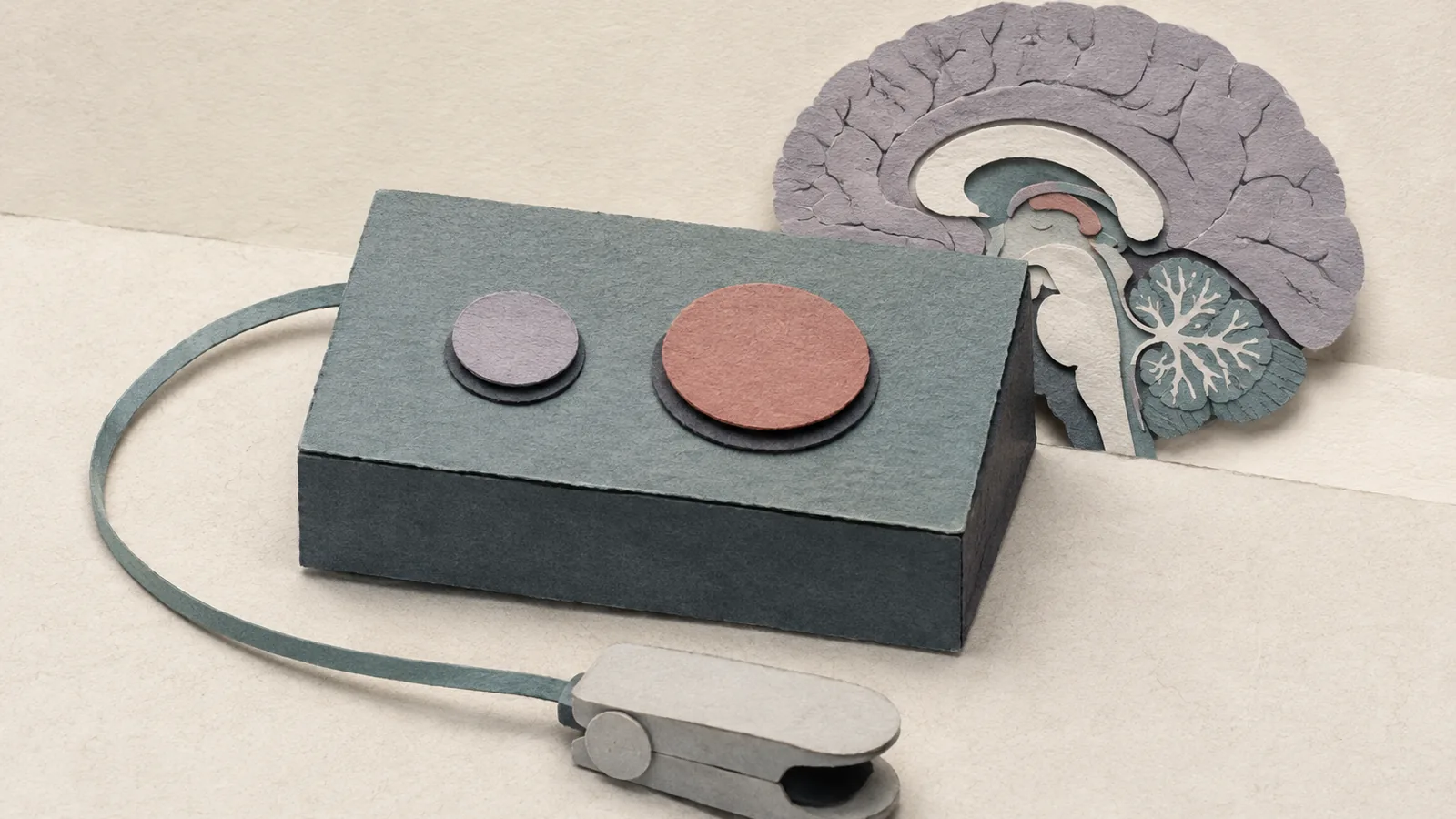
I have spent years telling people that a long, slow exhale is the off switch. The physiological sigh before bed, box breathing before a hard talk, the 4-7-8 your yoga teacher swears by: all of it sold as the way to talk your nervous system down off the ledge. So when I read that a lab had people stretch a single exhale to eight full seconds and then watched what they did next, I braced for caution. Steadier hands, more measured choices. Instead the slow breathers reached for the bigger gamble.
That is the finding in a study published in Neuron this year, out of the German Institute of Human Nutrition in Potsdam, led by Wenhao Huang in Soyoung Q Park’s lab. The team sat 41 healthy adults, average age around 25, in front of a visual pacing bar and had each of them run the same set of risky money decisions twice: once at their own normal breathing pace, and once on a guided rhythm of a 2-second inhale and an 8-second exhale. Every person did both, so each participant was their own control, a cleaner design than comparing two separate groups.
The bets weren’t hypothetical. Each was a 50-50 gamble with wins of 10 to 30 euros against losses of 5 to 15, three seconds to decide, and three of the choices paid out in actual cash at the end. During the long exhale, people said yes to the risky bet more often. And a long exhale is a parasympathetic move, the “rest and digest” branch, the thing we reach for precisely because we want to feel calm and safe. You would expect a calmer heart to make you more careful with your money. Wait, why would slowing your heart down crank up your appetite for a gamble?
The answer comes down to where the boldness came from, and it is not what you would guess. People did not stop caring about losing. Their sensitivity to the downside barely moved. What changed was the upside: the potential reward simply glowed brighter, and that rearranged something I thought I understood about what calm does to us. On the slow breath, the participants whose hearts showed the biggest jump in variability, the fingerprint of that parasympathetic shift, also showed the strongest reward-related activity in the ventromedial prefrontal cortex and the precuneus, two regions that help the brain assign value and stitch together your sense of your own body. The way Huang’s team frames it, the breathing-and-heart interplay made the brain more receptive to rewards. The calm did not make people reckless. It made the win look better.
So let me sit on the word everyone is reaching for, because “bolder” is running across every headline and bolder sounds like a gift. The study did not measure whether the choices were good. It measured whether they were riskier, and they were. That distinction is exactly what gets sanded off when a finding turns into a wellness talking point. Someone is already drafting “breathe long to make braver moves.” Braver and greedier can look identical from the inside.
And look at who was in the room. One of the collaborating institutions is the German Naval Institute of Maritime Medicine. This is dual-use physiology, and a navy has obvious reasons to care: divers, pilots, and operators make high-stakes calls with their own bodies working against them, and a breathing trick that reliably nudges reward-seeking is a tool. I’m not crying conspiracy. But when a “just breathe” study has military medicine on the author list, “bolder in whose interest” is a fair thing to ask, and it is one more reason not to hand this technique your biggest decisions.
And this is one small, early experiment. 41 young people, a lab, tidy little bets the authors themselves admit may not match the decisions you make with your actual life. They want the same test run with balanced reward-and-loss ranges and in the kind of high-pressure settings where it would actually be used, before anyone leans on it. That is the right instinct. One clever study is not a life rule.
I am not going to stop doing the long exhale. It still does what it does, and it turns out it does more than I thought, reaching all the way into how my brain prices a reward. But I have changed when I do it. The 8-second exhale stays for winding down at night. I will not reach for it in the ten minutes before I sign something, place a bet, or make any decision where a little extra hunger for the upside is exactly the wrong nudge.
Sources
- Neuron – Huang et al., “Slow breathing impacts inter-organ dynamics modulating brain function and risk behavior” (2026)
- DZD / German Institute of Human Nutrition – “Slow Breathing Can Influence Brain Activity and Decision Behavior”
- ScienceDaily – “A longer exhale may push your brain toward bolder decisions” (2026)
- PsyPost – coverage of the breathing-and-risk study, with task and protocol detail