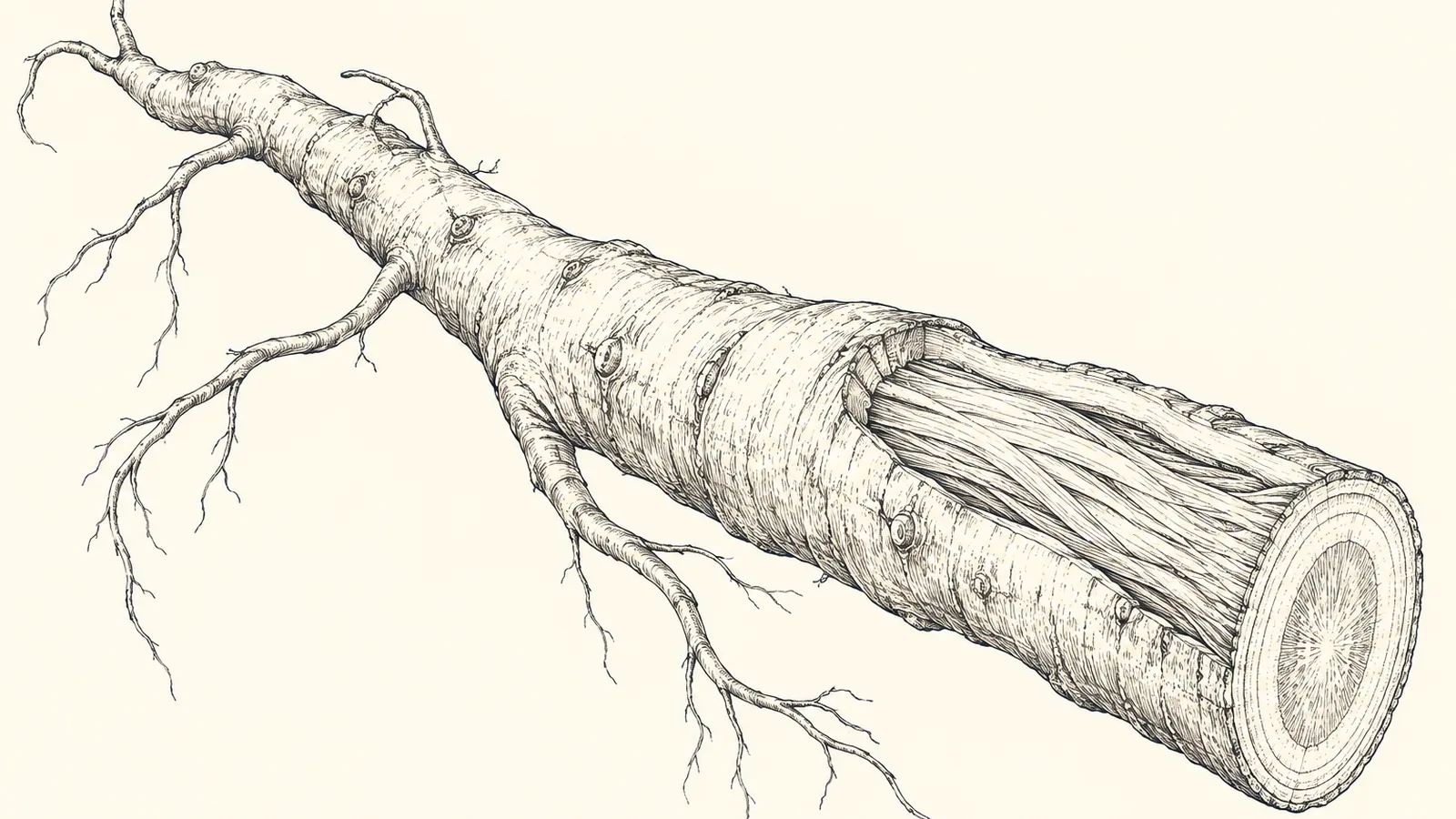
In 1962 Howard Lotsof was 19, hooked on heroin in New York, and looking for a new high when he swallowed a bitter white powder made from a West African shrub. By his own account he found a way out. When the long ibogaine trip wore off, the withdrawal he had braced for never came, and he spent the rest of his life trying to get American medicine to take that seriously. When he died in 2010, ibogaine was still banned in the United States. On October 5, the FDA asked the public to help design the first clinical trials of the drug.
The delay makes sense once you look at where ibogaine has been kept. Since the Controlled Substances Act of 1970 it has sat in Schedule I, a category defined by three findings: high potential for abuse, no currently accepted medical use in treatment in the United States, and no accepted safety for use under medical supervision. Schedule I research is legal on paper. In practice, every study has to clear DEA registration and drug-supply rules on top of FDA review, and that is a lot of overhead to put on a plant molecule nobody can own outright. The White House admitted as much in April, when its executive order told the FDA and DEA to build a Right to Try pathway for psychedelics, ibogaine compounds included, and to sort out the Schedule I authorizations such a pathway would require. Nobody orders two agencies to clear an obstacle that isn’t there.
What the FDA put out this month is modest. It’s a request for information, so no approval and no trial, just the agency sketching the early-phase studies it has in mind and asking outsiders to poke holes in them. The sketch is cautious: small groups dosed in sequence at rising levels, a starting dose that has to be justified by existing data and may not exceed 10 mg/kg, and safety monitoring aimed squarely at cardiac and neurologic harm. HHS wants federally supported work to focus on adults with opioid use disorder and adults with PTSD. The formal notice is in docket FDA-2026-N-10429, and comments close November 20. Michael Davis, who directs the FDA’s Center for Drug Evaluation and Research, summed up the agency’s posture in one sentence: “With ibogaine, there are important scientific questions as well as serious safety concerns.”
The second half of Davis’s sentence deserves to be taken at face value, and the biology explains why. Each heartbeat ends with potassium flowing out of the heart’s muscle cells so they can reset for the next one. Ibogaine appears to block the hERG potassium channel that carries much of that current. The reset slows, and on an ECG the QT interval stretches. If it stretches far enough, the heart can fall into torsades de pointes, a twisting, chaotic rhythm that kills.
A 2024 case report in Cureus shows what that looks like in a person. A 47-year-old man with a long heroin history took a single 200 mg dose at an alternative detox center and went into cardiac arrest four times: once at the center, twice in the emergency department and once in intensive care. He had no structural heart disease. After he was resuscitated his corrected QT measured 636 ms, and it took eight days of treatment to bring it down to 441 ms. His dose worked out to 2.6 mg/kg, well under the FDA’s proposed 10 mg/kg starting ceiling, which tells you a dose cap can’t do the protecting by itself. The protection has to come from ECG screening, telemetry and a team that knows what torsades looks like.
The wider record points the same way. When Kenneth Alper and two colleagues reviewed every ibogaine death they could document outside West Central Africa from 1990 through 2008, they found 19. In 12 of the 14 cases with adequate postmortem data, advanced preexisting illness, mostly cardiovascular, or commonly abused drugs explained or contributed to the death. They found no signature pattern of brain toxicity. They also flagged uninformed use of nonstandard preparations as a risk. That is the kind of danger a cardiac workup and a supervised protocol are designed to catch, and five decades of prohibition sent the drug to places where neither was guaranteed: the alternative detox center, the self-run detox, the clinic across the border. On this point the FDA’s caution is earned.
| Measure | Part | Whole |
|---|---|---|
| deaths where preexisting illness or other drugs explained or contributed | 12 | 14 |
None of that cardiac evidence is new, and neither is Lotsof’s claim. What changed is the politics. Executive Order 14401, signed April 18, rests its case on more than 6,000 veteran suicides a year and a veteran suicide rate more than twice that of non-veteran adults. It orders ARPA-H to put at least $50 million of existing funds into partnerships with states running psychedelic programs, and it tells the Attorney General to review any Schedule I product for rescheduling once it finishes Phase 3 and wins approval. The FDA has moved in step. It finalized guidance on psychedelic clinical investigations in July, let an early-phase study of noribogaine, an ibogaine derivative, go ahead for alcohol use disorder, and now has ARPA-H and NIDA funding ibogaine research. In 1970 Washington declared the drug medically worthless by statute without running the trials. In 2026 it is reopening the question by executive order, and still without new trials. Both times the decision came first and the data was asked to catch up.
The states got there before Washington. In 2025 Texas lawmakers approved $50 million for a consortium of universities, hospitals and drug developers to run ibogaine trials aimed at FDA approval, in an effort led by former Governor Rick Perry. The state is entitled to at least 20 percent of revenue from any successful drug, and a quarter of that share goes to a fund for Texas veterans. Taxpayers put up the money and taxpayers share in the return, all for a drug the federal government spent half a century calling useless. A Rice University analyst quoted in the same report pointed to the cost problem: ibogaine’s risks of cardiac trouble and sudden death make it more expensive to study and to give than other psychedelics.
That cost problem is mostly about money. Opioid addiction treatment in this country is organized around maintenance, with methadone and buprenorphine often taken daily for months or years and dispensed and billed on a recurring schedule. Ibogaine, as Lotsof described it, works on a different premise: one supervised session that interrupts the cycle. That contrast doesn’t prove anyone buried the drug on purpose. It does explain why a one-dose botanical with no patent-rich company behind it and an expensive cardiac safety problem sat untouched while private capital went elsewhere, and why the money finally arriving is public.
What happens next is up to Davis’s center. Once the docket closes on November 20, two things will show whether this is a research program or a political prop: whether CDER turns the comments into a published framework for early-phase ibogaine trials, and whether the first sponsors file investigational applications under it. If both happen, the 1970 verdict gets its first test in a properly monitored clinical trial in 56 years. If the docket goes quiet, the question Lotsof raised in 1962 keeps waiting.
Sources
- FDA: FDA Seeks Public Input to Support Ibogaine Research (Oct 5, 2026)
- Federal Register: FDA request for information on early-phase ibogaine trial design, Docket FDA-2026-N-10429
- White House: Executive Order 14401, Accelerating Medical Treatments for Serious Mental Illness (Apr 18, 2026)
- Cureus via PMC: Multiple Episodes of Cardiac Arrest Induced by Treatment With Ibogaine: A Case Report (2024)
- Alper, Stajic and Gill: Fatalities Temporally Associated with the Ingestion of Ibogaine, Journal of Forensic Sciences (2012)
- Texas Tribune: Texas approves $50 million for ibogaine research, led by Rick Perry (Jun 11, 2025)
- New York Times obituary via MAPS: Howard Lotsof Dies at 66; Saw Drug Cure in a Plant (2010)