For most of my life I kept my immune system and my memories in two different drawers. One fought off colds, and the other held my grandmother’s kitchen. It never occurred to me that the same question sits under both: where, physically, does a body keep what it has learned? Susumu Tonegawa answered it twice. First he caught immune cells cutting up their own DNA and stitching it back together. Decades later, his lab used light to switch on a handful of brain cells in a mouse and gave it a fear of a place where nothing bad had ever happened to it.
In the cells that defend you, the genome gets rewritten on the fly.
Tonegawa died July 11 at 86, MIT announced. He was the son of a textile-company engineer in Nagoya. He finished his PhD at the University of California, San Diego in 1968, and when his U.S. visa was about to run out he went to the newly opened Basel Institute for Immunology in Switzerland. That detour is how he became, in the words of Nature’s obituary, Japan’s first Nobel prizewinner in physiology or medicine.
The puzzle he walked into still makes me grin. You carry about 20,000 genes, yet your immune system turns out hundreds of millions of different antibodies, according to MIT. Do the arithmetic and the genome falls embarrassingly short. One camp argued that every antibody had to be spelled out somewhere in the DNA you were born with anyway. Another suspected the body was doing something stranger, but nobody had caught it in the act.
In 1976, he and Nobumichi Hozumi caught it. They took DNA from a mouse embryo and from an antibody-producing tumor, cut both with the same molecular scissors, and went fishing for the stretch that codes for part of an antibody. In the embryo, the probe stuck to two separate fragments. In the antibody-making cell it found only one, because those pieces had been snipped out of their original spots and joined together.
- 1976catches antibody genes rearranging
- 1981joins MIT
- 1987wins the Nobel alone
- 1994founds MIT's learning and memory center
- 2013lab plants a false memory in mice
Wait, why would a cell take scissors to its own genome? Because shuffling is cheaper than storing. A developing immune cell doesn’t warehouse a gene for every antibody it might ever need. It keeps a modest deck of gene segments and physically cuts and pastes them into a new combination, the process now called V(D)J recombination. That’s how a small genome stretches to cover hundreds of millions of possible antibodies. In the cells that defend you, the genome gets rewritten on the fly. The work won him the 1987 Nobel Prize in Physiology or Medicine, and he was its solo recipient.
Most scientists would have worked that seam for the rest of their careers. Tonegawa joined MIT’s Center for Cancer Research in 1981, and after the antibody work he did something I find wonderfully stubborn: he left immunology at the top of it and started over in neuroscience, where he had to prove himself all over again. The immune system remembers pathogens. He wanted to know how a brain remembers a Tuesday.
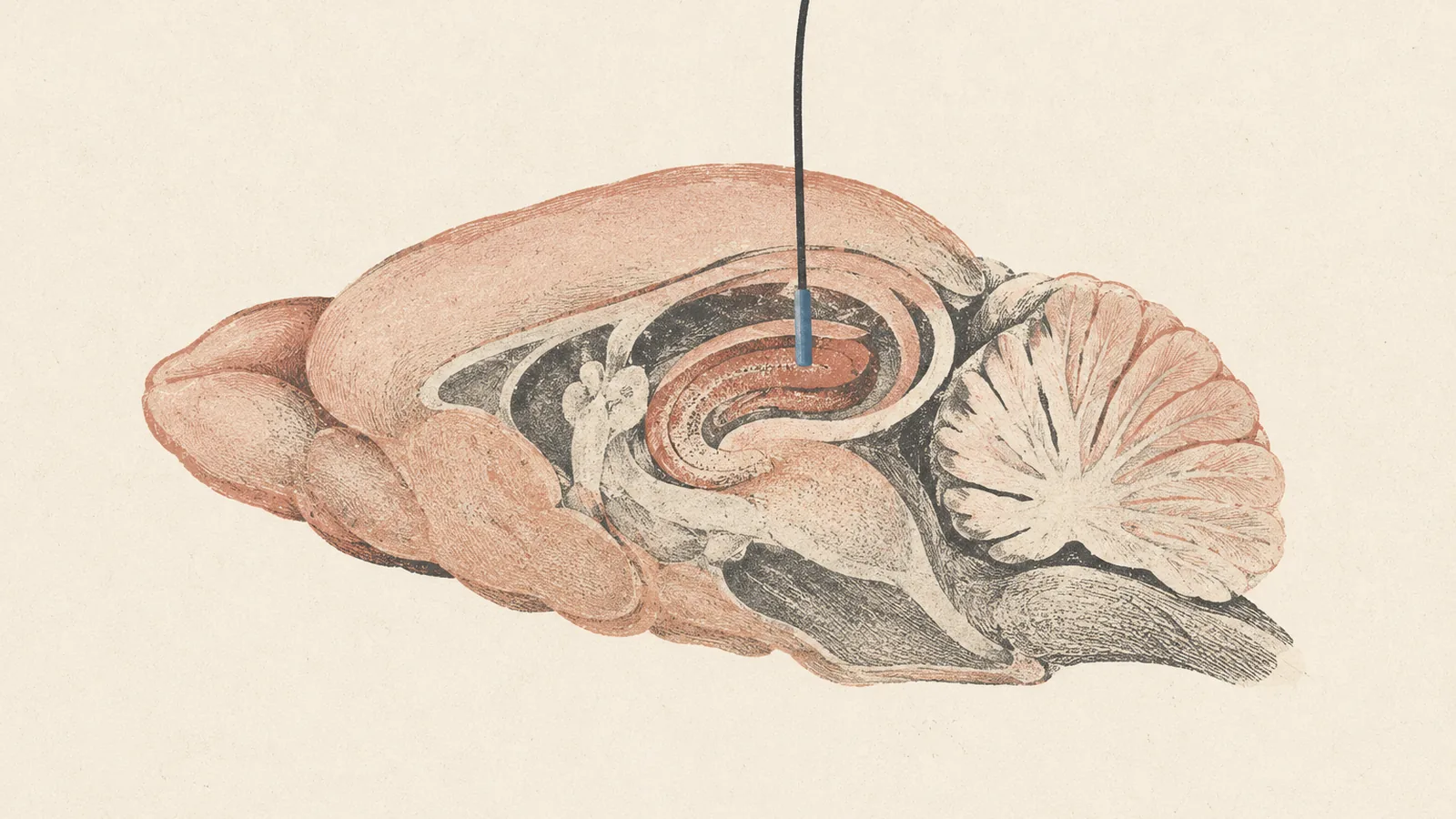
His target was the engram, the physical trace a memory leaves in a specific set of brain cells. In 2013 his lab planted a memory of something that never happened. First the team let mice explore a box where nothing bad happened, and they engineered the hippocampal neurons that fired there so those exact cells would switch back on under pulses of light. The next day the mice went into a very different box. At the moment each one got a mild foot shock, the researchers turned on the light and reawakened the memory of the first box. When the mice went back to that first box, where they had never been hurt, they froze in fear.
The amygdala, the brain’s fear center, became more active during that false recall, just as it does when a mouse recalls something that actually happened. “Whether it’s a false or genuine memory, the brain’s neural mechanism underlying the recall of the memory is the same,” Tonegawa said at the time. I read that line twice. In a mouse, at least, a memory stopped being a ghost and became an address: a cluster of cells you could tag, point to and switch on.
The lab didn’t stop at the hippocampus. Later work showed that engrams extend beyond the hippocampus and are stored across a widely distributed complex that spans many brain circuits. That makes a single memory less like a file in one drawer and more like a web strung across the brain. The same habit runs through both halves of his career, and there’s something a little defiant about it. When a field is busy arguing about where the body keeps what it knows, go into the molecules and cells, find the answer, and put it on the table.
He also built a place to do that work. In 1994 he founded MIT’s Center for Learning and Memory. It became the Picower Institute for Learning and Memory in 2002, and he directed it through the end of 2006. “Few scientists have reshaped our understanding of biology as profoundly as Susumu Tonegawa,” the institute’s current director, Myriam Heiman, said in MIT’s obituary.
I came to his story expecting a tidy immunology obituary and left suspicious of the word “impossible.” Plenty of people assumed the antibody repertoire was written in at birth, and that a memory was too slippery to pin to particular cells. He caught the first being rewritten and helped put the second under a light switch. From now on, when someone tells me what a living cell can’t do to itself, I’m going to ask who actually went in and looked.