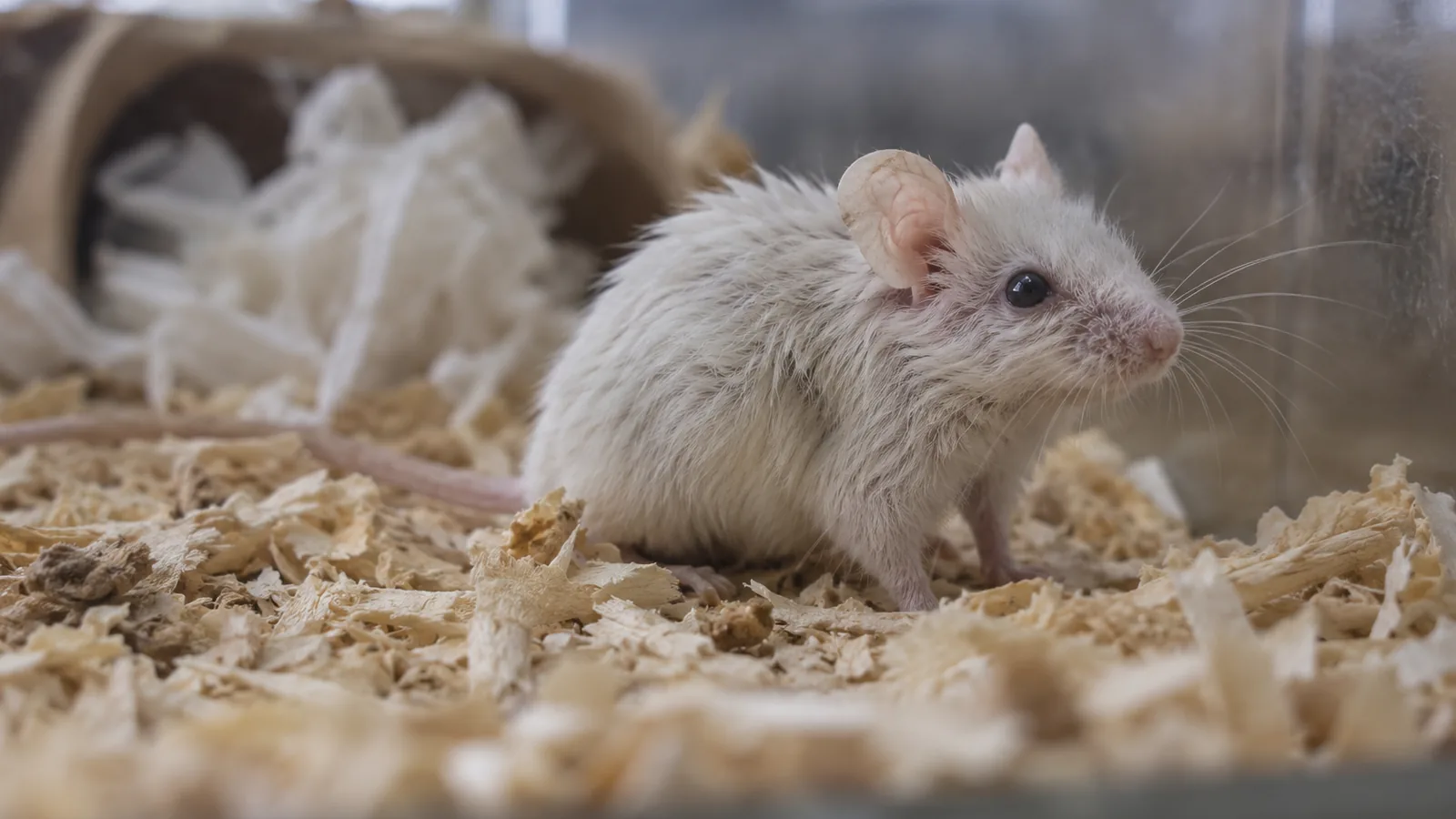
When a headline puts “hidden driver of aging” and “simple amino acid” in the same breath, I feel two pulls at once. One hand goes for my wallet and the other goes for the original paper. This month’s version ran on ScienceDaily on October 12: scientists had found a protein whose decline helps drive aging, plus a simple amino acid called D-serine that “fights memory loss in mice.” Fair enough, it says mice. The headline leaves out something else, though. When another lab gave the same amino acid to mice with Alzheimer’s-type amyloid disease, more of their hippocampal neurons died.
So which result do you believe? Both, as far as each one goes. Anyone eyeing a tub of D-serine powder is standing in the gap between them.
The memory result isn’t new either. Scroll far enough down the ScienceDaily page and it admits the findings were “originally published in March 2023 in PLOS Biology,” in a paper by Leng, Yuan and colleagues at Xiamen University. Three and a half years later it’s back in feeds with a supplement-shaped hook. I opened the paper expecting thin biology. It’s careful work, and that’s why the repackaging bugs me.
A protein with two jobs
The protein is Menin. The Xiamen team found it fading with age in one specific set of neurons in the hypothalamus, the small knot of tissue at the base of your brain that runs hunger, temperature and hormones. The surrounding support and immune cells held steady. Inside those neurons Menin does two jobs. It sits on NF-κB, the cell’s master inflammation switch, and keeps it quiet. It also binds the gene for PHGDH, the enzyme that starts the cell’s own serine production. Some of that serine gets flipped into its mirror-image form, D-serine. NMDA receptors, the docking stations neurons use to lay down memories, need a co-agonist in a particular slot before they open properly, and D-serine is one of the molecules that fills it. Glycine is another.
Wait, why would one protein keep inflammation in check and also run a supply line for a memory molecule? The mice answer that when Menin is taken away. Knock it out of those neurons and both systems fail at once. Hypothalamic inflammation climbs, and D-serine drops in the hypothalamus and in the hippocampus, the brain’s memory center, so synapses weaken. The animals then age faster in every way the team checked: thinner skin, lower bone mass, worse memory and shorter lives, with 14 controls against 16 knockouts in the survival curve. Then the team ran it backward. They delivered Menin back into the hypothalamus of 20-month-old mice, which is old for a mouse. Within 30 days several aging markers had improved, and in a separate survival analysis with 19 mice per group the treated animals lived longer.
Three weeks of drinking water
The D-serine experiment is the narrowest result in the paper, and it’s the one that became the headline. Mice aged 22 months got D-serine in their drinking water for three weeks, at about 100 mg per kilogram a day by the authors’ estimate, and their learning and memory improved. The abstract calls this a rescue. The discussion settles on the softer word “attenuate.” Skin thickness and bone mass didn’t budge, and the authors say plainly that the benefit “is limited to cognitive improvement.”
That fits a picture where D-serine tops up one of Menin’s outputs, the synapse supply line, and leaves the rest of its work undone. The authors raise that possibility themselves, along with the simpler one that three weeks wasn’t long enough. Either way, “fights memory loss” makes a three-week fix to one branch of the system sound like a remedy. The only human data in the paper is a blood comparison of D-serine levels between a handful of people aged 22 to 26 and a handful aged 83 to 94. It’s a hint, and nobody should dose themselves on it.
Funding came from the National Natural Science Foundation of China, the National Key R&D Program of China and regional and university grants, and the authors declared no competing interests. The supplement gloss arrived later, with the repackaging.
One dose, one afternoon
To its credit, ScienceDaily does call D-serine “an experimental approach rather than a proven treatment for brain aging,” and for human evidence it points to a small 2016 trial. Avellar and colleagues in Brazil gave 50 healthy adults over 65 (average age 73) a single 30 mg/kg dose of D-serine stirred into orange juice, with plain juice as the placebo, in a randomized, double-blind crossover. One test moved. On the Groton Maze, a spatial learning task, people averaged 56.00 errors on D-serine and 58.38 on placebo, a statistically significant gap (p = 0.03). Working memory, set-shifting, visual attention and mood didn’t change, and the paper reports no correction for running that many tests. In a post hoc look, people whose blood D-serine rose more tended to improve more.
So the human evidence is one dose on one afternoon, with one test of several clearing the bar. The authors asked for long-term studies. A single afternoon can’t tell you what months of daily scoops would do.
The same molecule in a sicker brain
D-serine isn’t a gentle brain tonic. It turns up NMDA receptor signaling, and when that signaling runs too hot it kills neurons. Neuroscientists call that excitotoxicity.
Ni and colleagues, writing in Frontiers in Aging Neuroscience in 2023, worked with knock-in mice that develop amyloid plaques. Amyloid mice that also lacked serine racemase, the enzyme that makes D-serine, had less reactive gliosis at nine months and kept more neurons in the hippocampal CA1 region at twelve. Then the team gave ordinary amyloid-model mice D-serine in their drinking water from nine to twelve months of age and compared them with amyloid mice drinking plain water. Neuron loss in CA1 got worse. Healthy mice drinking the same D-serine water showed no such effect. The study used only male mice and a single model, so it can’t settle the question. It does undercut the word “simple” in that headline.
So why would one molecule help one old brain and hurt another? These two papers can’t answer that directly, since they used different mice, doses and timelines. My best guess, and it is a guess: a healthy old brain that has simply run low gets a fading signal restored, while a brain already under amyloid stress takes the same push on circuits that are overexcited. If that’s even partly right, the people most eager to try D-serine for their memory are the people least able to know which kind of brain they’d be giving it to.
Kidneys are the other warning on the ScienceDaily page, and the record there is calmer than the warning sounds. A 2021 cross-species safety review by Meftah, Hasegawa and Kantrowitz found kidney injury very common in rats at 500 mg/kg or more, with none reported in mice, rabbits or the other species tested. Of 490 people who had received D-serine in published and presented trials, one developed protein in the urine after four weeks at 120 mg/kg, and it cleared within a few days of stopping. For scale, the Xiamen mice drank about 100 mg/kg a day and the Brazilian volunteers took a single 30 mg/kg dose, though per-kilogram doses don’t carry over cleanly from one species to another. The human safety record also comes from supervised research. The review’s authors describe monitoring kidneys “as per FDA guidance” in their own trials, with set rules for pausing or stopping treatment. Someone stirring powder into a smoothie has none of that.
| Setting | Dose |
|---|---|
| Rats: kidney injury very common | 500 mg/kg or more |
| Human proteinuria case after four weeks | 120 mg/kg |
| Xiamen mice | about 100 mg/kg a day |
| Brazilian volunteers | single 30 mg/kg dose |
An inflamed control center
I’d hate for the supplement chatter to bury the bigger idea, which is that aging may be partly run from the hypothalamus, through inflammation. A Nature atlas of about 1.2 million mouse brain cells from the Allen Institute found the most age-sensitive cell types concentrated around the hypothalamus’s third ventricle. Across the brain, immune and inflammation genes rose with age while genes for neuronal structure and function fell. The atlas didn’t test Menin, and its hotspot isn’t the exact nucleus the Xiamen team studied. It still points the same way, toward an inflamed control center at the base of the brain that falls behind on many jobs at once. If that holds up, the inflammation and whatever keeps it in check are the target. A powder that tops up one output of that system is a much smaller prize.
The Xiamen paper is careful science that came back around three and a half years late with a one-molecule hook attached. I’m not buying D-serine. If my mother asked me about it for her memory, I’d tell her to wait for a trial in older adults that runs for months, not one afternoon.
Sources
- PLOS Biology – Leng, Yuan et al., Hypothalamic Menin regulates systemic aging and cognitive decline (2023)
- Frontiers in Aging Neuroscience – Ni et al., Regional contributions of D-serine to Alzheimer’s disease pathology in male AppNL–G–F/NL–G–F mice (2023)
- Oncotarget – Avellar et al., The effect of D-serine administration on cognition and mood in older adults (2016)
- Frontiers in Psychiatry – Meftah, Hasegawa, Kantrowitz, D-Serine: A Cross Species Review of Safety (2021)
- Nature – Jin et al., Brain-wide cell-type-specific transcriptomic signatures of healthy ageing in mice (2025)
- ScienceDaily – Scientists find hidden driver of aging and a simple amino acid that fights memory loss in mice (October 2026)